Understanding Rod Weight and Line Matching
The most critical decision you will make is selecting the correct weight class. Fly rod weights are measured on a scale from 1 to 12, but this does not refer to the physical weight of the rod itself. Instead, it refers to the weight of the fly line the rod is designed to cast. A 3-weight rod is lightweight and designed for small trout in delicate streams, whereas a 7-weight or 8-weight rod is built for larger species like bass, steelhead, or saltwater fish. If you are looking for a versatile starter rod, a 5-weight is widely considered the 'goldilocks' option, capable of handling most freshwater scenarios from small creeks to larger rivers.
Decoding Rod Action: Fast vs. Slow
Action refers to where the rod bends during a cast. This is often categorized as Fast, Medium, or Slow action. A Fast Action rod bends primarily near the tip. These are excellent for long-distance casting and punching through wind, as they recover quickly, but they require more precise casting technique to avoid 'whipping' the line uncontrollably. A Slow Action rod bends much further down the blank, often toward the handle. These are much more forgiving for beginners, as they provide a rhythmic, sweeping motion that helps time the cast, though they struggle in windy conditions. For those transitioning from beginner to intermediate, a Medium-Fast Action offers the best balance of control and casting distance.
Material Composition and Durability
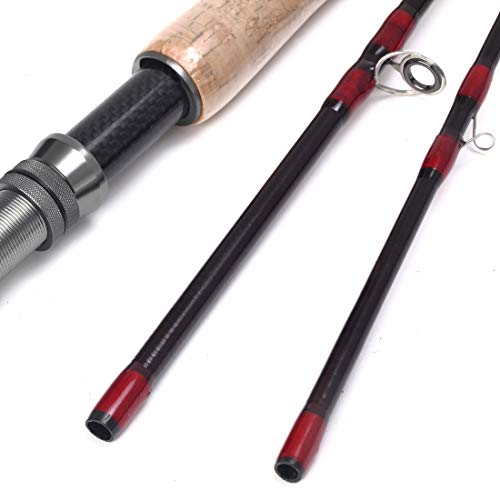
Most modern fly rods are constructed from graphite (carbon fiber) or fiberglass. Graphite rods are the industry standard because they are incredibly lightweight and offer high sensitivity, allowing you to feel the subtle 'thump' of a fish hitting your fly. However, graphite can be brittle. A hard strike against a rock can snap a high-modulus blank. Fiberglass rods, while heavier and less sensitive, are much more durable and offer a slower, more rhythmic bend that many traditionalists love for small stream fishing. When browsing generic options, look for descriptions mentioning 'high-modulus graphite' if you want performance, or 'composite' if you want a balance of cost and durability.
Length and Casting Environment
The length of the rod dictates your control and casting arc. A shorter rod (7 to 8 feet) is ideal for tight, brushy banks where you don't have much room to swing the line. These rods are easier to maneuver in confined spaces. Longer rods (9 feet or more) provide the leverage needed for long casts on open rivers and lakes, helping you reach fish that are sitting far from the bank. For a general-purpose setup, a 9-foot, 5-weight rod is the most common configuration for a reason: it provides enough length for distance while remaining manageable for most anglers.
Final Decision Logic
To make your final selection, start with your target species. If you are chasing trout in small ponds, prioritize a 3 or 4-weight rod with a medium action. If you want a single rod that can do almost anything, settle on a 9-foot, 5-weight, fast-action graphite rod. Always ensure the rod comes with a protective tube, as the primary cause of failure in fly rods is improper storage and impact damage during transport.