Understanding Carry Styles and Placement
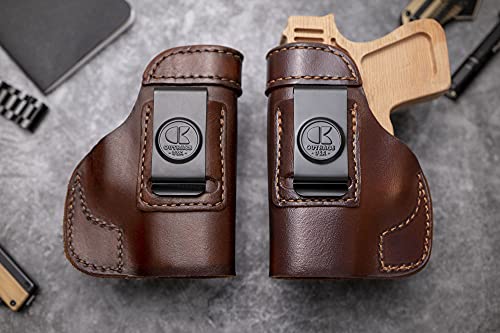
The first decision in your purchase journey is determining how you will carry your firearm. Outbags USA offers various configurations, but most users fall into one of three categories: IWB (Inside the Waistband), OWB (Outside the Waistband), or dedicated tactical/belt rigs. IWB holsters are designed for concealment, sitting between your body and your belt to minimize the printing of the firearm against your clothing. These are ideal for everyday civilian carry. OWB holsters, conversely, are worn on the outside of your belt. While they are more visible, they often provide better airflow and are much easier to draw from quickly, making them a favorite for range use or duty scenarios. If you are looking for a setup that prioritizes speed and accessibility over concealment, OWB is your best bet.
Material Durability and Environmental Resistance
The material of your holster dictates its lifespan and how it reacts to the elements. Most premium holsters utilize Kydex, a thermoplastic known for its extreme rigidity and ability to hold its shape over years of heavy use. Kydex is excellent for providing 'click' retention, where the firearm snaps into place. However, if you prefer a more organic feel that conforms to the contours of your body, leather remains a classic choice, though it requires more maintenance to prevent moisture damage. When selecting a holster, consider your climate. If you operate in humid or wet environments, a high-grade polymer or treated Kydex will prevent the degradation or stretching that can occur with natural materials, ensuring your firearm stays securely seated.
Retention Levels and Safety Mechanics
Retention is the most critical safety feature of any holster. It is the mechanism that prevents the firearm from falling out during physical activity or being stripped from your belt by an adversary. There are generally three levels of retention: passive, active, and hybrid. Passive retention relies on the snugness of the holster material to hold the gun, while active retention requires a deliberate movement—such as a slight finger depress or a specific angle of the draw—to release the weapon. For professional or high-activity use, look for holsters with adjustable active retention. This allows you to fine-tune the tension so that the holster is tight enough to be secure, but not so tight that it slows down your reaction time in an emergency.
Compatibility and Fitment Logistics
A common mistake is purchasing a holster based on the firearm model alone without considering the specific configuration of your weapon. For example, if your handgun is equipped with a weapon-mounted light (WML) or an extended magazine baseplate, a standard holster will not fit. Always verify that the holster is specifically designed for your exact setup. Additionally, pay attention to the mounting hardware. A holster is only as secure as the belt it is attached to. Look for wide, reinforced loops or modular mounting systems that distribute the weight of the firearm evenly across your waistline to prevent the holster from sagging or shifting during movement.