#TOP1

For arachnologists, backyard explorers, and nature enthusiasts alike, identifying a spider is more than just a curiosity—it is a gateway to understanding the complex ecosystem around you. Unlike general insect guides, spider-specific field guides require a higher level of taxonomic precision. Because many species look nearly identical to the untrained eye, a subpar guide can lead to frustrating misidentifications. Whether you are trying to distinguish a harmless jumping spider from a medically significant species or simply documenting the biodiversity of your local garden, choosing the right reference tool is essential for accuracy and safety.
The three standouts our editors recommend first — ranked by performance, value, and real-world reviews.


| SELLER | SELLER SCORE | AMAZON FULFILLED | PRIME | FREE SHIPPING |
|---|---|---|---|---|
| Amazon.com | 9.68 | Yes | Yes | Yes |

National Audubon Society Field Guide to Insects and Spiders: North America (National Audubon Society Field Guides)
| SELLER | SELLER SCORE | AMAZON FULFILLED | PRIME | FREE SHIPPING |
|---|---|---|---|---|
| Amazon.com | 9.68 | Yes | Yes | Yes |
Every serious backyard naturalist requires this definitive reference to truly understand the miniature world crawling beneath their feet. The National Audubon Society Field Guide to Insects and Spiders provides an essential roadmap for navigating the complex biodiversity of North America. Whether you are a seasoned entomologist or a curious hiker, this guide transforms every walk in the woods into an educational expedition. Published by Knopf under the Random House umbrella, it delivers the authoritative taxonomic depth you expect from the Audubon name. It is a durable, portable companion that turns a simple glance at a garden bug into a moment of genuine scientific discovery. You won't just see insects anymore. You will actually recognize them.

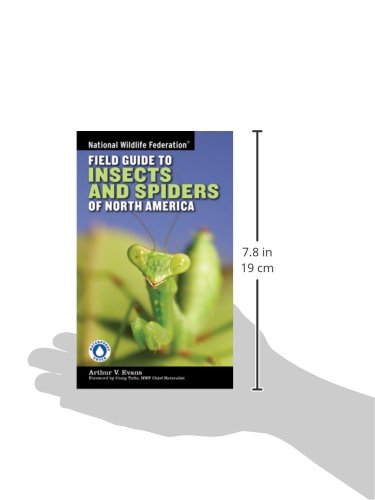
National Wildlife Federation Field Guide to Insects and Spiders & Related Species of North America
| SELLER | SELLER SCORE | AMAZON FULFILLED | PRIME | FREE SHIPPING |
|---|---|---|---|---|
| Amazon.com | 9.68 | Yes | Yes | Yes |
Nature enthusiasts and backyard explorers require this specific guide to truly decode the tiny, complex ecosystems living right under their feet. This Sterling edition serves as an essential companion for anyone trying to identify the diverse array of North American invertebrates encountered on a hike or in a garden. Because this is a used book in good condition, you get a reliable, high-quality reference tool without the premium price tag of a brand-new hardcover. It is a practical, hands-on resource that turns a simple walk through the woods into a deep dive into the world of insects and spiders. Having this level of detail accessible makes every outdoor observation feel significantly more meaningful.

| SELLER | SELLER SCORE | AMAZON FULFILLED | PRIME | FREE SHIPPING |
|---|---|---|---|---|
| Amazon.com | 9.68 | Yes | Yes | Yes |

| SELLER | SELLER SCORE | AMAZON FULFILLED | PRIME | FREE SHIPPING |
|---|---|---|---|---|
| Amazon.com | 9.68 | Yes | Yes | Yes |

| SELLER | SELLER SCORE | AMAZON FULFILLED | PRIME | FREE SHIPPING |
|---|---|---|---|---|
| Amazon.com | 9.68 | Yes | Yes | Yes |

| SELLER | SELLER SCORE | AMAZON FULFILLED | PRIME | FREE SHIPPING |
|---|---|---|---|---|
| Amazon.com | 9.68 | Yes | Yes | Yes |


| SELLER | SELLER SCORE | AMAZON FULFILLED | PRIME | FREE SHIPPING |
|---|---|---|---|---|
| Amazon.com | 9.68 | Yes | Yes | Yes |

| SELLER | SELLER SCORE | AMAZON FULFILLED | PRIME | FREE SHIPPING |
|---|---|---|---|---|
| Amazon.com | 9.68 | Yes | Yes | Yes |

| SELLER | SELLER SCORE | AMAZON FULFILLED | PRIME | FREE SHIPPING |
|---|---|---|---|---|
| Amazon.com | 9.68 | Yes | Yes | Yes |
| SELLER | SELLER SCORE | AMAZON FULFILLED | PRIME | FREE SHIPPING |
|---|---|---|---|---|
| Amazon.com | 9.68 | Yes | Yes | Yes |

| SELLER | SELLER SCORE | AMAZON FULFILLED | PRIME | FREE SHIPPING |
|---|---|---|---|---|
| Amazon.com | 9.68 | Yes | Yes | Yes |

| SELLER | SELLER SCORE | AMAZON FULFILLED | PRIME | FREE SHIPPING |
|---|---|---|---|---|
| TheProductsHub | 9.49 | No | No | No |



| SELLER | SELLER SCORE | AMAZON FULFILLED | PRIME | FREE SHIPPING |
|---|---|---|---|---|
| Amazon.com | 9.68 | Yes | Yes | Yes |


| SELLER | SELLER SCORE | AMAZON FULFILLED | PRIME | FREE SHIPPING |
|---|---|---|---|---|
| Amazon.com | 9.68 | Yes | Yes | Yes |
| SELLER | SELLER SCORE | AMAZON FULFILLED | PRIME | FREE SHIPPING |
|---|---|---|---|---|
| Amazon.com | 9.68 | Yes | Yes | Yes |

Butterflies and Skippers of Ohio (BULLETIN OF THE OHIO BIOLOGICAL SURVEY NEW SERIES)
| SELLER | SELLER SCORE | AMAZON FULFILLED | PRIME | FREE SHIPPING |
|---|---|---|---|---|
| olimpianbooks | 9.91 | No | No | No |
True lepidopterists demand academic precision rather than settling for the superficial illustrations found in standard field guides. This bulletin from the College of Biological Sciences at Ohio State University serves as a serious scholarly resource for anyone deeply invested in the regional entomology of the Ohio Biological Survey. Because this is a used copy in good condition, you are getting a piece of specialized scientific literature that feels substantial and authoritative. It is a niche find that bridges the gap between casual nature observation and rigorous biological study. Whether you are a researcher or a dedicated hobbyist, this text provides the specific regional depth that generalist books simply cannot match.

The most critical factor in selecting a spider guide is its geographic focus. Spiders are highly sensitive to microclimates and regional ecosystems. A guide focused on North American arachnids will be useless if you are hiking in the Mediterranean or the Australian outback. When browsing, look for guides that specify their coverage area—such as 'Spiders of the Pacific Northwest' or 'Common European Webweavers.' If you are a generalist, look for continental-scale guides, but be aware that these often sacrifice the granular detail found in region-specific volumes.
You must decide whether you are a casual observer or a serious student of arachnology. Beginner-friendly guides typically focus on 'charismatic megafauna'—the spiders most likely to be seen, such as orb weavers, wolf spiders, and jumping spiders. These guides prioritize large, colorful photographs and simplified descriptions of behavior and habitat. However, if you intend to conduct formal citizen science or professional research, you will need a technical manual. Technical guides often move away from color photos in favor of highly detailed line drawings of genitalia (epigynes and pedipalps), which are often the only definitive way to distinguish between closely related species.
A spider guide is only as good as its illustrations. Because spiders are often small and possess intricate patterns, look for guides that utilize high-resolution macro photography or scientifically accurate scientific illustrations. A good guide should provide 'diagnostic keys'—a step-by-step decision tree that asks questions about leg length, eye arrangement, or web structure to lead you to a specific genus or species. Avoid guides that rely solely on vague descriptions like 'brown and hairy,' as these are insufficient for accurate identification.
If you are using a guide for field identification in areas where venomous species are present, ensure the book includes clear, highlighted sections on medically significant spiders. A high-quality guide will not only show you what a dangerous spider looks like but will also describe its unique behaviors, such as the specific way it retreats or the structure of its web, to help you maintain a safe distance during observation.
Consider where you will be using the guide. If you are a heavy trekker, a lightweight, softcover pocket guide is preferable to a heavy, coffee-table-style hardcover. For those working in damp or humid environments, look for guides printed on weather-resistant paper or consider digital field guides that can be accessed on a waterproof device. However, remember that digital tools often require battery life and signal, making a physical book a more reliable companion in deep wilderness settings.
Quick answers about Insect Spider Field Guides before you buy.
Share of top-ranked products by brand, from our editorial analysis.
We've carried out a comprehensive analysis of 1,957 reviews on Insect Spider Field Guides, using our selection criteria to identify the best options in the science & math. Our findings reveal that most customers typically select Insect Spider Field Guides priced around $28.33, with top brands including sterling, national geographic, knopf, houghton mifflin, university of california press, university of texas press, peterson books, national geographic kids and princeton university press and harbour publishing.
Our team of expert editors reviewed these high-quality items and handpicked the top 17 Insect Spider Field Guides for your consideration. We've also done extensive research on numerous sellers, identifying the best ones in the science & math category — including and amazon.com and theproductshub.
We are dedicated to assisting our users in finding the right spiders Products based on their needs, saving them considerable time when choosing which Insect Spider Field Guides to buy. We take pride in the number of satisfied users we've helped through our thorough and insightful reviews.
Compare the top 17 picks at a glance — select a column to sort.


