Understanding the Jobber Standard
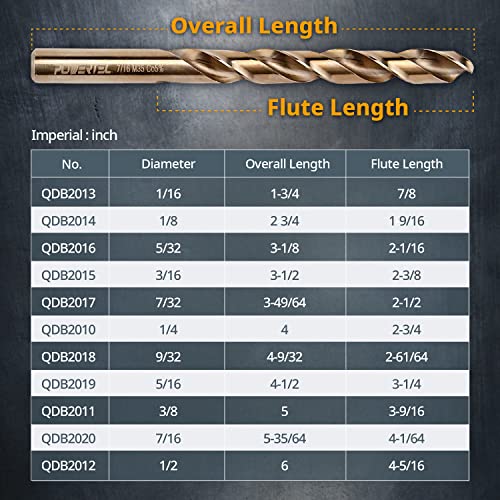
The term 'jobber' refers to a specific range of drill bit sizes that are most commonly used in general drilling applications. These bits are typically shorter and stiffer than 'long series' bits, which makes them less prone to walking or bending under pressure. When shopping for Ivy Classic bits, you should first determine if you need a single specialized bit or a comprehensive set. A set is almost always the more economical choice for a standard toolbox, as it provides a graduated range of diameters that allow you to step up or down in size depending on the pilot hole requirements of your project.
Material Composition and Coating
The most critical factor in choosing a jobber bit is the material it is made from. Most high-quality jobber bits are crafted from High-Speed Steel (HSS). This material is favored because it maintains its hardness even when subjected to the heat generated by high-speed friction. If you are working primarily with softer materials like wood, plastic, or light aluminum, standard HSS is more than sufficient. However, if your work involves harder metals or repetitive heavy-duty drilling, look for bits that feature specialized coatings. Coatings like Titanium Nitride can significantly reduce friction and heat buildup, extending the life of the cutting edge and preventing the bit from dulling prematurely during intense use.
Point Geometry and Flute Design
The 'point' of the drill bit determines how easily it starts a hole. A standard 118-degree point is the industry norm for general-purpose drilling. It is versatile and works well across a wide variety of materials. However, if you find yourself frequently drilling into harder metals, you might look for a 135-degree split point. Split points are designed to prevent 'walking'—that frustrating moment when the bit slides across the surface of your workpiece instead of biting in. Additionally, pay attention to the flute design. The flutes are the grooves that pull the waste material (chips) out of the hole. Deep, clean flutes are essential for preventing heat buildup and ensuring that the bit doesn't clog, which is a leading cause of bit breakage.
Shank Type and Compatibility
While most jobber bits feature a cylindrical shank designed to fit into standard three-jaw chucks, it is important to verify your tool's capacity. If you are using a small precision hand drill, ensure the largest bit in the set is compatible with your chuck's maximum clamping diameter. For most DIY and professional applications, the standard round shank is the most reliable, offering a secure grip that minimizes slippage during high-torque operations.
Recommendation Logic
When making your final decision, use this hierarchy: First, define your primary material (Wood/Plastic vs. Metal). If it is metal, prioritize coated HSS. Second, evaluate your project scope. If you are starting a new workshop, opt for a multi-piece set to ensure you have the necessary diameters for pilot holes. Finally, prioritize bit stability. If you work with precision materials where accuracy is paramount, choose bits with a split-point design to ensure immediate, centered engagement.