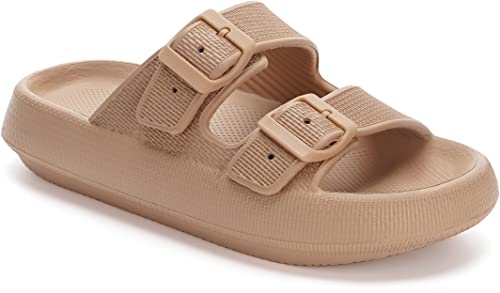
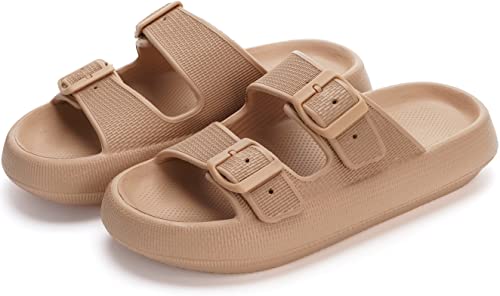
The defining characteristic of a high-quality men's sandal is the footbed. Unlike flat, cheap flip-flops that offer zero arch support, premium options from Cushionaire often feature contoured footbeds designed to mimic the natural shape of the human foot. When evaluating a pair, look for deep heel cups, which help stabilize the foot and prevent lateral sliding. Additionally, check for longitudinal arch support. If you have high arches or flat feet, a sandal with a molded EVA (Ethylene Vinyl Acetate) footbed will provide the necessary cushioning to prevent plantar fasciitis and fatigue during extended periods of standing.
Evaluate Material Durability and Weight
Material choice dictates where and how you can wear your sandals. Most contemporary men's sandals utilize EVA or high-density foam because these materials are incredibly lightweight and water-resistant. However, there is a trade-off between softness and longevity. A very soft, squishy sole might feel great for the first ten minutes, but it may compress permanently after a few weeks of heavy use. Look for 'high-rebound' foam materials that maintain their shape over time. If you plan on using your sandals near water, ensure the straps are made of synthetic materials that won't degrade or become heavy when wet. Avoid leather-heavy designs if you intend to wear them in the surf, as salt and moisture can damage the material.
Consider Strap Construction and Security
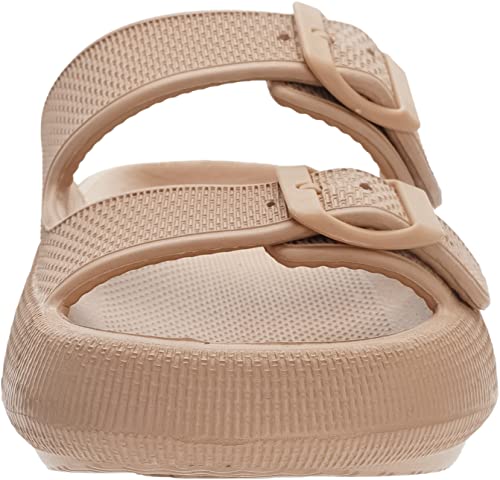
A sandal is only as functional as its fastening system. For casual slides, the upper strap should be wide enough to distribute pressure across the top of your foot, preventing the 'digging' sensation often found in thin-strapped models. For more active use, such as walking on uneven terrain, look for sandals with adjustable straps—often utilizing hook-and-loop closures or buckles. This allows you to tighten the fit around the ankle and midfoot, ensuring the sandal moves with your foot rather than flopping around, which can lead to blisters or tripping.
Match the Style to the Occasion
Decision-making should be driven by your primary use case. If your goal is relaxation, a simple slide with a cushioned footbed is the gold standard for ease of use. If you are a traveler, prioritize a 'hybrid' sandal—one that offers the breathability of an open toe but the security of a closed heel. For those who prefer a minimalist aesthetic, look for monochromatic colorways that can transition from a beach boardwalk to a casual outdoor dinner. Always consider the tread pattern on the outsole. A textured, multi-directional grip is essential if you will be walking on wet surfaces or gravel paths.