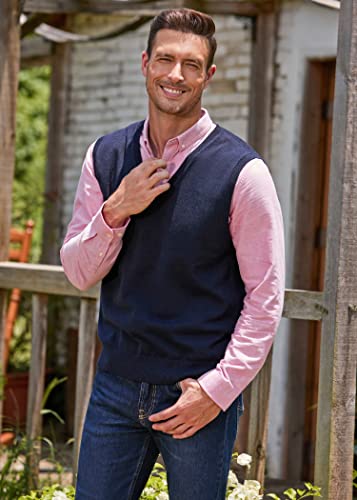
Prioritize Fabric Composition and Texture
The most critical decision factor for any Kallspin sweater vest is the material blend. Because these vests are designed to be worn close to the body and often over other layers, the breathability and warmth of the fabric are paramount. Look for blends that incorporate high-quality synthetic fibers mixed with soft cotton or wool-like textures. A vest with a higher cotton content will offer better breathability for indoor office environments, preventing overheating when layered over a long-sleeved shirt. Conversely, if you intend to use the vest as an outer layer for cooler transitional seasons, seek out denser, more insulating knits that provide a structured look and trap heat more effectively. Pay close attention to the 'hand-feel' described in product details. A smooth, fine-gauge knit is ideal for formal settings, while a chunky, cable-knit texture is better suited for casual, rugged aesthetics.
Evaluate the Knit Pattern and Visual Weight
Kallspin offers various knit styles that dictate the 'formality level' of the vest. A fine-gauge, solid-colored knit is the most versatile option. It fits seamlessly under a blazer or suit jacket without adding unnecessary bulk to your torso. This is the 'workhorse' of a professional wardrobe. On the other hand, textured patterns such as ribbed edges, diamond knits, or cable weaves add visual interest and a sense of heritage to an outfit. While these textured vests are incredibly stylish, they carry more 'visual weight.' This means they should be paired with simpler, flatter fabrics—like a plain poplin shirt—to avoid a cluttered appearance. If you prefer a minimalist look, stick to smooth surfaces. If you want to make the vest the centerpiece of your outfit, embrace the intricate patterns.
Mastering the Fit and Silhouette
A sweater vest lives or dies by its fit. Because it lacks sleeves, the armholes and the hemline are the primary indicators of a well-chosen garment. For a professional look, the armholes should be high enough to prevent gaping when you move your arms, but not so tight that they constrict your shirt underneath. The hem should ideally hit just below your belt line. A vest that is too long will bunch up at the hips, while one that is too short will expose your shirt midriff when you reach upward. Furthermore, consider the 'taper.' A modern, slim-fit vest will follow the contours of your torso, providing a clean line that works well with tailored trousers. If you prefer a more relaxed, traditional aesthetic, a standard fit provides more room for movement and layering over thicker flannel shirts.
Color Coordination and Versatility
When building a collection, start with a foundation of neutral tones. Navy, charcoal, heather gray, and deep burgundy are the pillars of a functional wardrobe. These colors are easy to coordinate with almost any shirt color and transition effortlessly from day to night. Once you have mastered the neutrals, you can experiment with seasonal hues or bolder patterns. When choosing a color, consider your skin tone and the existing palette of your outerwear. A dark-colored vest provides a slimming effect and a sense of gravity, making it perfect for evening wear, while lighter grays and earth tones feel more approachable and casual for daytime use.