#TOP1

The landscape of artificial intelligence is no longer defined by simple algorithms, but by the architecture and complexity of neural networks. Whether you are an enterprise developer building large-scale language models or a researcher experimenting with computer vision, selecting the right network architecture is the single most critical decision in your deployment pipeline. A neural network is not a one-size-fits-all commodity. It is a specialized mathematical structure designed to solve specific classes of problems, ranging from pattern recognition and sequence prediction to generative synthesis.
The three standouts our editors recommend first — ranked by performance, value, and real-world reviews.


| SELLER | SELLER SCORE | AMAZON FULFILLED | PRIME | FREE SHIPPING |
|---|---|---|---|---|
| Amazon.com | 9.68 | Yes | Yes | Yes |
| SELLER | SELLER SCORE | AMAZON FULFILLED | PRIME | FREE SHIPPING |
|---|---|---|---|---|
| Amazon.com | 9.68 | Yes | Yes | Yes |
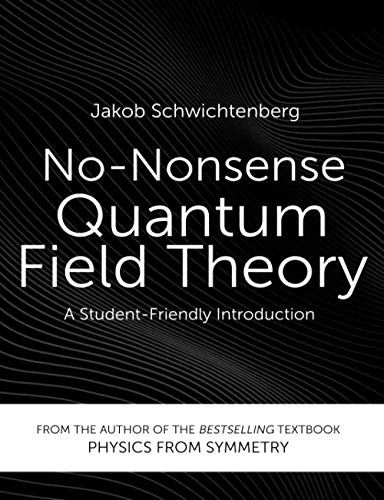

No-Nonsense Quantum Field Theory: A Student-Friendly Introduction
| SELLER | SELLER SCORE | AMAZON FULFILLED | PRIME | FREE SHIPPING |
|---|---|---|---|---|
| Amazon.com | 9.68 | Yes | Yes | Yes |
Why does the most complex subject in modern physics often feel like it is written in a language only a handful of people can speak? No-Nonsense Quantum Field Theory: A Student-Friendly Introduction aims to dismantle that barrier by providing a clear, accessible entry point for learners. Instead of getting lost in impenetrable mathematical jargon or overly dense academic prose, this book focuses on making the core concepts digestible. It serves as a vital bridge for students who are ready to tackle the complexities of field theory but need a guide that prioritizes clarity and intuition. It positions itself as an essential toolkit for anyone serious about mastering the fundamental building blocks of our universe without the typical pedagogical headaches.



| SELLER | SELLER SCORE | AMAZON FULFILLED | PRIME | FREE SHIPPING |
|---|---|---|---|---|
| Amazon.com | 9.68 | Yes | Yes | Yes |
| SELLER | SELLER SCORE | AMAZON FULFILLED | PRIME | FREE SHIPPING |
|---|---|---|---|---|
| Amazon.com | 9.68 | Yes | Yes | Yes |
| SELLER | SELLER SCORE | AMAZON FULFILLED | PRIME | FREE SHIPPING |
|---|---|---|---|---|
| Amazon.com | 9.68 | Yes | Yes | Yes |


Make Your Own Neural Network: An In-depth Visual Introduction For Beginners
| SELLER | SELLER SCORE | AMAZON FULFILLED | PRIME | FREE SHIPPING |
|---|---|---|---|---|
| Amazon.com | 9.68 | Yes | Yes | Yes |
Make Your Own Neural Network is a visual powerhouse designed to demystify complex machine learning concepts for absolute beginners. Instead of drowning you in dense, intimidating mathematical proofs, this ABIS BOOK publication leans heavily into an in-depth visual approach that makes the architecture of artificial intelligence feel intuitive. It is an independently published resource that prioritizes clarity, making it an excellent starting point for anyone intimidated by traditional technical manuals. The layout helps bridge the gap between abstract theory and actual understanding, ensuring you aren't just reading about networks, but actually seeing how they function. At a very accessible price point, it serves as a low-barrier entry into the fascinating world of neural networks without the usual academic headache.

| SELLER | SELLER SCORE | AMAZON FULFILLED | PRIME | FREE SHIPPING |
|---|---|---|---|---|
| Amazon.com Services LLC | 0.00 | No | No | No |

| SELLER | SELLER SCORE | AMAZON FULFILLED | PRIME | FREE SHIPPING |
|---|---|---|---|---|
| Amazon.com Services LLC | 0.00 | No | No | No |
| SELLER | SELLER SCORE | AMAZON FULFILLED | PRIME | FREE SHIPPING |
|---|---|---|---|---|
| Wise Books Worldwide | 9.55 | No | No | No |

Learning Deep Learning: Theory and Practice of Neural Networks, Computer Vision, Natural Language Processing, and Transformers Using TensorFlow
| SELLER | SELLER SCORE | AMAZON FULFILLED | PRIME | FREE SHIPPING |
|---|---|---|---|---|
| Amazon.com | 9.68 | Yes | Yes | Yes |
Aspiring AI engineers require a roadmap that bridges the gap between abstract mathematical theory and actual production-ready code. Learning Deep Learning serves as that essential bridge, offering a comprehensive deep dive into the mechanics of neural networks. Instead of just skimming the surface, this text forces you to grapple with the complexities of computer vision, natural language processing, and the revolutionary transformer architectures currently dominating the industry. By utilizing TensorFlow as the primary framework, the book ensures that your theoretical understanding is immediately reinforced through practical application. It is a dense, high-value resource for anyone serious about mastering the technical nuances of modern machine learning without getting lost in purely academic jargon.

| SELLER | SELLER SCORE | AMAZON FULFILLED | PRIME | FREE SHIPPING |
|---|---|---|---|---|
| Amazon.com Services LLC | 0.00 | No | No | No |

| SELLER | SELLER SCORE | AMAZON FULFILLED | PRIME | FREE SHIPPING |
|---|---|---|---|---|
| Amazon.com | 9.68 | Yes | Yes | Yes |



| SELLER | SELLER SCORE | AMAZON FULFILLED | PRIME | FREE SHIPPING |
|---|---|---|---|---|
| Amazon.com | 9.68 | Yes | Yes | Yes |

| SELLER | SELLER SCORE | AMAZON FULFILLED | PRIME | FREE SHIPPING |
|---|---|---|---|---|
| Amazon.com Services LLC | 0.00 | No | No | No |
| SELLER | SELLER SCORE | AMAZON FULFILLED | PRIME | FREE SHIPPING |
|---|---|---|---|---|
| Amazon.com | 9.68 | Yes | Yes | Yes |
| SELLER | SELLER SCORE | AMAZON FULFILLED | PRIME | FREE SHIPPING |
|---|---|---|---|---|
| Amazon.com | 9.68 | Yes | Yes | Yes |

Data-Driven Science and Engineering: Machine Learning, Dynamical Systems, and Control
| SELLER | SELLER SCORE | AMAZON FULFILLED | PRIME | FREE SHIPPING |
|---|---|---|---|---|
| Amazon.com | 9.68 | Yes | Yes | Yes |
Data-Driven Science and Engineering bridges the gap between theoretical mathematics and practical application, whereas most academic texts leave you stranded in pure abstraction. This volume serves as a vital roadmap for anyone trying to navigate the complex intersection of machine learning, dynamical systems, and control theory. Instead of treating these disciplines as isolated silos, the text weaves them into a cohesive framework that feels essential for modern technical work. It is a substantial resource that moves beyond simple formulas to provide a deeper understanding of how data actually informs physical systems. For a professional or a student looking to master the mechanics of intelligent systems, this is a foundational addition to your technical library.


Neural Networks for Pattern Recognition
| SELLER | SELLER SCORE | AMAZON FULFILLED | PRIME | FREE SHIPPING |
|---|---|---|---|---|
| Amazon.com | 9.68 | Yes | Yes | Yes |
Neural Networks for Pattern Recognition serves as a foundational pillar for anyone serious about mastering complex computational models. Published by Clarendon Press, this text dives deep into the mathematical intricacies that drive modern machine learning. While the price point reflects its status as a specialized academic resource, the depth of insight provided makes it a vital addition to a researcher's library. It isn't just a casual read. It is a rigorous exploration of how patterns are identified through neural architectures. If you are looking to move beyond surface-level coding and actually understand the underlying logic of pattern recognition, this book offers the scholarly rigor necessary to bridge that gap.

| SELLER | SELLER SCORE | AMAZON FULFILLED | PRIME | FREE SHIPPING |
|---|---|---|---|---|
| Amazon.com Services LLC | 0.00 | No | No | No |

| SELLER | SELLER SCORE | AMAZON FULFILLED | PRIME | FREE SHIPPING |
|---|---|---|---|---|
| Amazon.com | 9.68 | Yes | Yes | Yes |

| SELLER | SELLER SCORE | AMAZON FULFILLED | PRIME | FREE SHIPPING |
|---|---|---|---|---|
| Amazon.com | 9.68 | Yes | Yes | Yes |

| SELLER | SELLER SCORE | AMAZON FULFILLED | PRIME | FREE SHIPPING |
|---|---|---|---|---|
| Amazon.com Services LLC | 0.00 | No | No | No |

| SELLER | SELLER SCORE | AMAZON FULFILLED | PRIME | FREE SHIPPING |
|---|---|---|---|---|
| Amazon.com | 9.68 | Yes | Yes | Yes |
| SELLER | SELLER SCORE | AMAZON FULFILLED | PRIME | FREE SHIPPING |
|---|---|---|---|---|
| Amazon.com Services LLC | 0.00 | No | No | No |

| SELLER | SELLER SCORE | AMAZON FULFILLED | PRIME | FREE SHIPPING |
|---|---|---|---|---|
| Amazon.com | 9.68 | Yes | Yes | Yes |

| SELLER | SELLER SCORE | AMAZON FULFILLED | PRIME | FREE SHIPPING |
|---|---|---|---|---|
| Amazon.com | 9.68 | Yes | Yes | Yes |

| SELLER | SELLER SCORE | AMAZON FULFILLED | PRIME | FREE SHIPPING |
|---|---|---|---|---|
| Amazon.com | 9.68 | Yes | Yes | Yes |

| SELLER | SELLER SCORE | AMAZON FULFILLED | PRIME | FREE SHIPPING |
|---|---|---|---|---|
| Amazon.com | 9.68 | Yes | Yes | Yes |


| SELLER | SELLER SCORE | AMAZON FULFILLED | PRIME | FREE SHIPPING |
|---|---|---|---|---|
| BOOK BARN 87 | 9.77 | No | No | No |

The first step in selecting a network is identifying the mathematical nature of your data. Not all networks are built for the same dimensionality. If your primary goal is processing sequential data—such as time-series forecasting, speech recognition, or natural language processing—you should prioritize Recurrent Neural Networks (RNNs) or, more modernly, Transformer-based architectures. Transformers have largely superseded older sequential models due to their ability to handle long-range dependencies through attention mechanisms.
For visual data, Convolutional Neural Networks (CNNs) remain the industry standard. These are optimized to recognize spatial hierarchies in images. If your project involves generative tasks, such as creating synthetic imagery or text, you will need to look toward Generative Adversarial Networks (GANs) or Diffusion models. Choosing a network that does not align with your data type will lead to massive computational inefficiency and poor convergence.
When evaluating networks, you must balance model capacity with operational reality. A network with a higher parameter count generally possesses a greater ability to learn complex nuances, but this comes at a steep cost in terms of memory footprint and inference speed. In edge computing scenarios—such as deploying AI on mobile devices or IoT hardware—you must prioritize 'lightweight' architectures. These models use techniques like depthwise separable convolutions to reduce the number of calculations required without a proportional loss in accuracy.
Conversely, if you are running on high-end server clusters with dedicated GPU acceleration, you can afford to utilize 'dense' architectures that maximize predictive power. Always calculate your expected latency requirements before committing to a massive model. A highly accurate model is useless if it cannot provide real-time responses in a production environment.
Consider the 'data hunger' of the architecture you are selecting. Some networks are designed to be trained from scratch, which requires massive, labeled datasets and significant compute time. However, the most efficient way to deploy neural networks today is through Transfer Learning. Look for architectures that have been pre-trained on massive datasets (like ImageNet for vision or large text corpora for NLP). By selecting a pre-trained model, you can 'fine-tune' the network on your specific, smaller dataset, drastically reducing both the time and the cost of development.
Finally, ensure the architecture is compatible with your existing software stack. A network is only as good as your ability to implement, train, and deploy it. Check for robust support within major deep learning frameworks. Furthermore, consider the scalability of the architecture: can it be distributed across multiple GPUs or specialized AI accelerators? A network that is difficult to parallelize will become a bottleneck as your data volume grows.
Quick answers about Neural Networks before you buy.
Share of top-ranked products by brand, from our editorial analysis.
We've carried out a comprehensive analysis of 342 reviews on Neural Networks, using our selection criteria to identify the best options in the categories. Our findings reveal that most customers typically select Neural Networks priced around $45.32.
Our team of expert editors reviewed these high-quality items and handpicked the top 30 Neural Networks for your consideration..
We are dedicated to assisting our users in finding the right networks Products based on their needs, saving them considerable time when choosing which Neural Networks to buy. We take pride in the number of satisfied users we've helped through our thorough and insightful reviews.
Compare the top 30 picks at a glance — select a column to sort.