#TOP1

When studying advanced physics, particularly electromagnetism, wave mechanics, or quantum theory, the transition from abstract mathematical equations to physical intuition often requires high-quality optical components. Whether you are a student attempting to replicate textbook experiments or a researcher building a tabletop setup, the quality of your optics dictates the clarity of your data. Selecting the right tools is not merely about magnification. It is about understanding light behavior, minimizing aberrations, and ensuring material compatibility with specific wavelengths.
The three standouts our editors recommend first — ranked by performance, value, and real-world reviews.




| SELLER | SELLER SCORE | AMAZON FULFILLED | PRIME | FREE SHIPPING |
|---|---|---|---|---|
| Amazon.com | 9.68 | Yes | Yes | Yes |



| SELLER | SELLER SCORE | AMAZON FULFILLED | PRIME | FREE SHIPPING |
|---|---|---|---|---|
| Amazon.com | 9.68 | Yes | Yes | Yes |


| SELLER | SELLER SCORE | AMAZON FULFILLED | PRIME | FREE SHIPPING |
|---|---|---|---|---|
| Woodville Books | 9.90 | No | No | No |

Optics and Optical Instruments: An Introduction
| SELLER | SELLER SCORE | AMAZON FULFILLED | PRIME | FREE SHIPPING |
|---|---|---|---|---|
| Amazon.com | 9.68 | Yes | Yes | Yes |
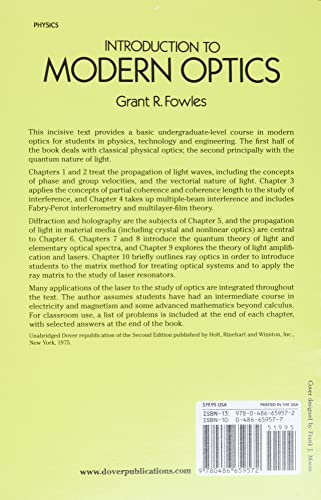
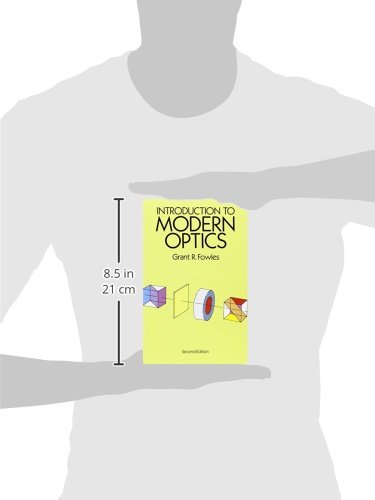
The crisp, matte texture of the Dover Publications paper immediately signals that this is a serious technical resource designed for study rather than casual browsing. Optics and Optical Instruments: An Introduction serves as a foundational text for anyone looking to master the physics of light and the mechanics of lenses. It offers an incredibly accessible entry point into a complex scientific field. The book avoids the density of modern, overpriced textbooks, opting instead for a clear, introductory approach that makes the fundamentals of optical science feel manageable. It is a reliable, no-frills companion for students or hobbyists who need a solid theoretical baseline without breaking the bank.

| SELLER | SELLER SCORE | AMAZON FULFILLED | PRIME | FREE SHIPPING |
|---|---|---|---|---|
| Amazon.com | 9.68 | Yes | Yes | Yes |
| SELLER | SELLER SCORE | AMAZON FULFILLED | PRIME | FREE SHIPPING |
|---|---|---|---|---|
| Amazon.com Services LLC | 0.00 | No | No | No |
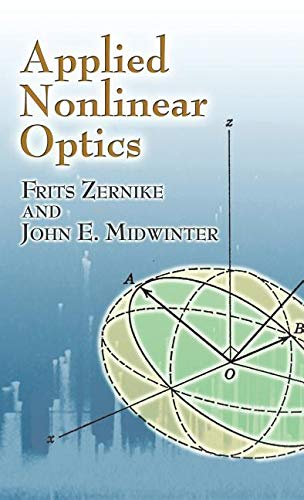
Applied Nonlinear Optics (Dover Books on Physics)
| SELLER | SELLER SCORE | AMAZON FULFILLED | PRIME | FREE SHIPPING |
|---|---|---|---|---|
| No | No | No |
Most advanced physics texts feel like they were written to be intimidating, but Applied Nonlinear Optics manages to bridge the gap between dense theory and practical application. This Dover Publications volume avoids the typical academic fluff, focusing instead on the core principles that drive nonlinear phenomena. It is the kind of resource you keep on your desk not just for reference, but for actual study. While the subject matter is inherently complex, the structure allows you to navigate through intricate optical concepts without feeling immediately lost in the math. It serves as a vital bridge for researchers and students who need to understand how light behaves when it pushes past the standard linear limits, making it a staple for any serious physics library.

| SELLER | SELLER SCORE | AMAZON FULFILLED | PRIME | FREE SHIPPING |
|---|---|---|---|---|
| Amazon.com | 9.68 | Yes | Yes | Yes |

| SELLER | SELLER SCORE | AMAZON FULFILLED | PRIME | FREE SHIPPING |
|---|---|---|---|---|
| Amazon.com | 9.68 | Yes | Yes | Yes |

The foundation of any optical setup is the substrate material. For general physics demonstrations, N-BK7 glass is the industry standard due to its high transmission and low cost. However, if your studies involve ultraviolet (UV) or infrared (IR) spectroscopy, N-BK7 will fail you. For UV applications, you must look for fused silica, which maintains transparency at much shorter wavelengths. Conversely, for IR studies, materials like Germanium or Calcium Fluoride are necessary. Additionally, always check the anti-reflective (AR) coating specifications. A single-layer coating might suffice for visible light, but multi-layer broadband coatings are essential if your experiments span a wide spectrum, as they prevent ghost images and parasitic reflections that can ruin sensitive measurements.
Physics students must distinguish between simple magnifying lenses and precision achromatic doublets. A basic plano-convex lens is excellent for basic refraction experiments, but it suffers from chromatic aberration—where different colors of light focus at different points. If your textbook problem involves color dispersion or precise imaging, you must invest in achromatic doublets. These are composed of two different glass types bonded together to bring two wavelengths (typically red and blue) into a common focus, significantly reducing color fringing. For high-precision ray tracing or laser experiments, consider aspheric lenses, which are designed to correct spherical aberration, ensuring that light rays from the edges of the lens converge at the same point as the central rays.
An optical component is only as good as its stability. In a physics laboratory environment, vibration and misalignment are the enemies of accuracy. When purchasing optics, look for compatible mounting hardware. Kinematic mounts are vital for experiments requiring fine angular adjustments, such as aligning a laser through a slit or a prism. If you are building a permanent setup, look for optical breadboards with standardized hole patterns to ensure that your lenses, mirrors, and light sources stay perfectly aligned over time. Avoid 'hobbyist' plastic mounts if you are performing quantitative measurements. Instead, opt for machined aluminum mounts that provide the thermal stability and rigidity required for reproducible results.
Your decision logic should be driven by your specific application. If you are a student following a curriculum focused on qualitative observations (e.g., observing diffraction patterns), prioritize a wide range of shapes—prisms, gratings, and lenses—over extreme precision. If you are conducting quantitative research where you must measure the exact angle of refraction or the intensity of a beam, prioritize surface quality (often measured in Scratch-Dig specifications) and the precision of your mounting hardware. Always weigh the cost of high-end coatings against your actual wavelength requirements. Paying for UV-grade fused silica when you only work in the visible spectrum is an unnecessary expense, but using standard glass in a UV setup will yield zero usable data.
Quick answers about Optics For Physics Books before you buy.
Share of top-ranked products by brand, from our editorial analysis.
We've carried out a comprehensive analysis of 645 reviews on Optics For Physics Books, using our selection criteria to identify the best options in the science & math. Our findings reveal that most customers typically select Optics For Physics Books priced around $36.05, with top brands including dover publications, sourcebooks explore, zishka publishing, yale university press, oxford university press, usa, princeton university press and university of chicago press and moxic.
Our team of expert editors reviewed these high-quality items and handpicked the top 9 Optics For Physics Books for your consideration. We've also done extensive research on numerous sellers, identifying the best ones in the science & math category — including amazon.com, woodville books and superbookdeals- and amazon.com services llc.
We are dedicated to assisting our users in finding the right physics Products based on their needs, saving them considerable time when choosing which Optics For Physics Books to buy. We take pride in the number of satisfied users we've helped through our thorough and insightful reviews.
Compare the top 9 picks at a glance — select a column to sort.