#TOP1

Navigating the vast landscape of optical physics literature can feel like peering through a distorted lens. Whether you are an undergraduate student attempting to master wave mechanics, a researcher diving into non-linear photonics, or a hobbyist curious about the behavior of light, the right book serves as your primary optical element—focusing complex mathematical theories into actionable understanding. This guide is designed to help you distinguish between superficial surveys and rigorous analytical texts, ensuring your investment aligns with your specific intellectual wavelength.
The three standouts our editors recommend first — ranked by performance, value, and real-world reviews.




| SELLER | SELLER SCORE | AMAZON FULFILLED | PRIME | FREE SHIPPING |
|---|---|---|---|---|
| Amazon.com | 9.68 | Yes | Yes | Yes |

| SELLER | SELLER SCORE | AMAZON FULFILLED | PRIME | FREE SHIPPING |
|---|---|---|---|---|
| Pearson Education,Inc. | 0.00 | No | No | No |



| SELLER | SELLER SCORE | AMAZON FULFILLED | PRIME | FREE SHIPPING |
|---|---|---|---|---|
| Amazon.com | 9.68 | Yes | Yes | Yes |
| SELLER | SELLER SCORE | AMAZON FULFILLED | PRIME | FREE SHIPPING |
|---|---|---|---|---|
| Amazon.com | 9.68 | Yes | Yes | Yes |


| SELLER | SELLER SCORE | AMAZON FULFILLED | PRIME | FREE SHIPPING |
|---|---|---|---|---|
| Woodville Books | 9.90 | No | No | No |


| SELLER | SELLER SCORE | AMAZON FULFILLED | PRIME | FREE SHIPPING |
|---|---|---|---|---|
| Amazon.com | 9.68 | Yes | Yes | Yes |

Optics and Optical Instruments: An Introduction
| SELLER | SELLER SCORE | AMAZON FULFILLED | PRIME | FREE SHIPPING |
|---|---|---|---|---|
| Amazon.com | 9.68 | Yes | Yes | Yes |
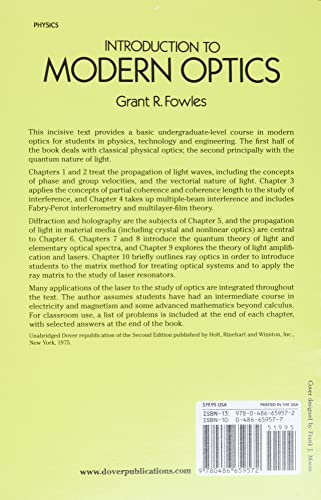
The crisp, matte texture of the Dover Publications paper immediately signals that this is a serious technical resource designed for study rather than casual browsing. Optics and Optical Instruments: An Introduction serves as a foundational text for anyone looking to master the physics of light and the mechanics of lenses. It offers an incredibly accessible entry point into a complex scientific field. The book avoids the density of modern, overpriced textbooks, opting instead for a clear, introductory approach that makes the fundamentals of optical science feel manageable. It is a reliable, no-frills companion for students or hobbyists who need a solid theoretical baseline without breaking the bank.

| SELLER | SELLER SCORE | AMAZON FULFILLED | PRIME | FREE SHIPPING |
|---|---|---|---|---|
| Amazon.com | 9.68 | Yes | Yes | Yes |


Rocks & Minerals (Quickstudy Reference Guides - Academic)
| SELLER | SELLER SCORE | AMAZON FULFILLED | PRIME | FREE SHIPPING |
|---|---|---|---|---|
| Amazon.com | 9.68 | Yes | Yes | Yes |
The crisp, laminated texture of this QuickStudy guide makes it feel much more durable than your standard paperback textbook. I found that having this much geological data condensed into a portable format is a total game-changer for anyone studying earth sciences or just exploring the outdoors. Since this is a used copy in good condition, it provides a highly cost-effective way to access professional-grade academic information without the premium price tag. It is essentially a cheat sheet for the natural world, stripping away the fluff to focus on the essential mineral properties and rock classifications you actually need to know. It arrives quickly and serves as a reliable, tactile companion for field research or classroom study sessions.

| SELLER | SELLER SCORE | AMAZON FULFILLED | PRIME | FREE SHIPPING |
|---|---|---|---|---|
| Amazon.com Services LLC | 0.00 | No | No | No |

| SELLER | SELLER SCORE | AMAZON FULFILLED | PRIME | FREE SHIPPING |
|---|---|---|---|---|
| Amazon.com | 9.68 | Yes | Yes | Yes |

| SELLER | SELLER SCORE | AMAZON FULFILLED | PRIME | FREE SHIPPING |
|---|---|---|---|---|
| Amazon.com | 9.68 | Yes | Yes | Yes |
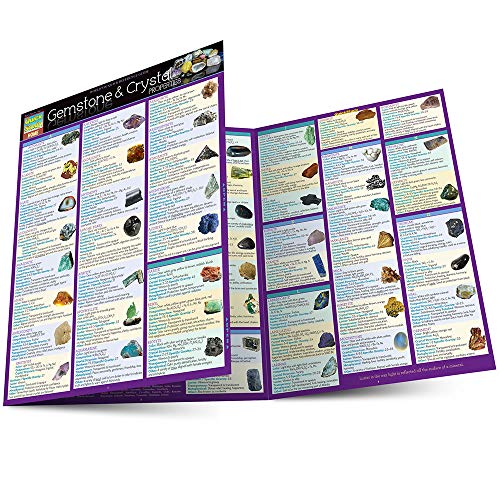


Gemstone & Crystal Properties (Quick Study Home)
| SELLER | SELLER SCORE | AMAZON FULFILLED | PRIME | FREE SHIPPING |
|---|---|---|---|---|
| Amazon.com | 9.68 | Yes | Yes | Yes |
Most collectors end up scrolling through endless, unorganized web forums just to identify a single stone, but this guide offers a much more streamlined alternative. I found that having a physical reference tool makes a massive difference when you are actually sitting with a new piece in your hand. Instead of digging through digital clutter, you can flip straight to the specific properties you need to know. It acts as a compact, reliable companion for anyone looking to deepen their understanding of mineral characteristics without the headache of a massive textbook. At its current price point, it is an incredibly accessible way to turn a casual interest into a more informed hobby through quick, digestible information.

The single most important factor in selecting an optics text is the level of mathematical rigor required. Optics is fundamentally a branch of applied physics that relies heavily on calculus, linear algebra, and complex analysis. If you are looking for a conceptual introduction, seek out books that focus on 'phenomenological optics'—those that describe how light behaves without overwhelming you with partial differential equations. However, if you are preparing for advanced research, you must look for texts that utilize Maxwell’s equations as their foundation. A book that skips the vector nature of electromagnetic waves will eventually leave you unable to understand polarization or diffraction patterns in advanced applications.
Optics is a dual-natured field. You must decide whether you need a theoretical treatise or a practical manual. Theoretical texts focus on the 'why'—the derivation of wave equations, the nuances of interference, and the mathematical proofs of Fourier optics. These are essential for deep conceptual mastery. Conversely, applied texts focus on the 'how'—the design of lens systems, the physics of fiber optics, laser engineering, and optical instrumentation. If your goal is to design a camera system or work with laser cavities, prioritize books that include ray-tracing diagrams, aberration analysis, and practical component specifications over pure mathematical derivations.
Not all optics books cover the same spectrum of light-matter interaction. When browsing, check the table of contents for specific sub-disciplines. Some books are strictly 'Geometric Optics,' focusing on ray tracing and lens design, which is perfect for classical imaging. Others delve into 'Physical Optics,' covering wave phenomena like diffraction, interference, and polarization. For those interested in modern technology, ensure the text covers 'Quantum Optics' or 'Photonics,' which deals with the particle-like behavior of light and its interaction with semiconductors. Selecting a book that is too narrow may leave significant gaps in your understanding of how light actually functions in a modern technological context.
In optics, a diagram is often worth a thousand equations. Because the subject is inherently visual, look for books with high-quality, clear illustrations of wave fronts, ray paths, and interference patterns. Poorly rendered diagrams can lead to fundamental misconceptions about phase shifts and wavefront propagation. Furthermore, for students, the quality of the end-of-chapter problems is a critical metric. A high-quality text will provide a progression of problems: starting with simple geometric calculations and moving toward complex, multi-step analytical challenges that require you to synthesize multiple physical principles.
Quick answers about Physics Of Optics before you buy.
Share of top-ranked products by brand, from our editorial analysis.
We've carried out a comprehensive analysis of 0 reviews on Physics Of Optics, using our selection criteria to identify the best options in the categories. Our findings reveal that most customers typically select Physics Of Optics priced around $6.95.
Our team of expert editors reviewed these high-quality items and handpicked the top 13 Physics Of Optics for your consideration..
We are dedicated to assisting our users in finding the right books Products based on their needs, saving them considerable time when choosing which Physics Of Optics to buy. We take pride in the number of satisfied users we've helped through our thorough and insightful reviews.
Compare the top 13 picks at a glance — select a column to sort.


