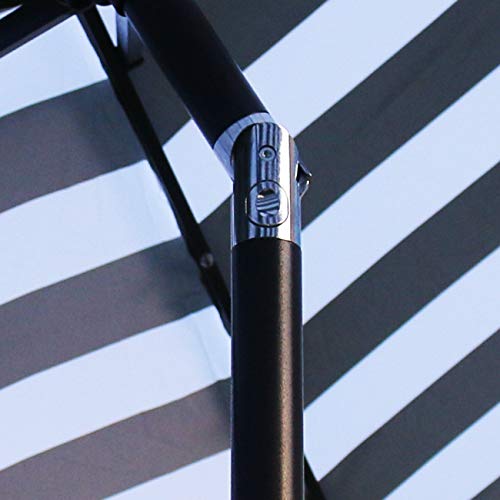
Determine Your Mounting Style: Center Pole vs. Cantilever
The most critical decision in your selection process is how the umbrella will physically occupy your space. Sunnyglade offers two primary configurations: traditional center-pole umbrellas and modern cantilever models. Center-pole umbrellas are the classic choice, designed to sit directly in the middle of a table through a pre-drilled hole. These are generally more stable in moderate breezes and are more cost-effective. However, they can obstruct the view or movement around a dining table. Cantilever umbrellas, on the other hand, feature an offset design where the pole is positioned to the side. This is the superior choice for large lounge areas or poolside decks where you want unobstructed shade and a more contemporary, high-end look. Keep in mind that cantilever models require a much heavier base to prevent tipping due to their asymmetrical weight distribution.
Fabric Quality and UV Protection
Since the primary purpose of these umbrellas is sun protection, the canopy material is paramount. Look for high-density polyester fabrics that have been treated specifically for UV resistance. A high-quality canopy should not only block the heat but also resist fading caused by prolonged exposure to direct sunlight. When reviewing options, consider the weave of the fabric. A tighter weave typically offers better water resistance and more consistent shade coverage. If you live in a coastal area or a region with high humidity, prioritize fabrics that are treated to resist mold and mildew to ensure your umbrella remains visually appealing season after season.
Frame Construction and Wind Resilience
An umbrella is only as good as the skeleton that supports it. Sunnyglade products typically utilize aluminum or powder-coated steel frames. Aluminum is highly recommended for those in humid or coastal environments because it is naturally resistant to rust and corrosion, making it much more durable over long-term outdoor exposure. Steel offers incredible strength and weight, which can be beneficial for stability, but it requires a high-quality powder coating to prevent oxidation. Additionally, pay attention to the rib structure. A higher number of ribs generally translates to a more stable canopy that can better withstand light gusts without warping or flipping.
Sizing and Spatial Integration
Before finalizing your purchase, you must perform a spatial audit of your patio. A common mistake is purchasing an umbrella that is too large for the table it is meant to shade, or too small to cover the seating area. For a standard four-person dining set, a medium-sized canopy is usually sufficient. For large outdoor sectional sofas, you will likely need a much wider diameter to ensure all guests remain in the shade. Always measure your clearance height as well. You want to ensure that when the umbrella is fully extended, there is enough vertical space for people to walk underneath comfortably without feeling cramped.
The Importance of the Base
Never overlook the base. An umbrella is essentially a sail. Once the wind catches it, the base is the only thing preventing it from becoming a projectile. For center-pole models, ensure the base is heavy enough for the diameter of the canopy. For cantilever models, the base requirements are much more stringent—often requiring sand-filled or water-filled weights to maintain a low center of gravity. A sturdy, weighted base is the difference between a relaxing afternoon and a damaged patio setup.