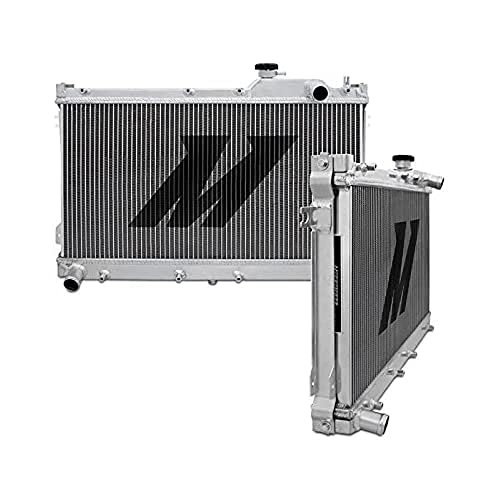
Core Construction: Aluminum vs. Multi-Core Designs
The primary advantage of a performance radiator like those from Mishimoto is the shift from heavy, copper-brass factory units to lightweight, high-efficiency aluminum construction. Aluminum offers superior thermal conductivity, allowing heat to transfer from the coolant to the cooling fins more rapidly. When shopping, look for full-welded aluminum tanks. Unlike plastic-tank radiators that are prone to cracking under the stress of heat cycles and vibration, all-aluminum units provide a much more robust seal and a higher resistance to pressure changes. This structural integrity is critical if you plan on running high-pressure radiator caps to raise the boiling point of your coolant.
Core Thickness and Fin Density
One of the most significant decision factors is the thickness of the radiator core. A thicker core provides a larger volume of coolant and more surface area for heat dissipation, which is essential for high-horsepower builds. However, thickness must be balanced with airflow. If a core is too thick for your vehicle's front fascia, it may create excessive air resistance. Look for radiators that feature high-density fin patterns. These closely packed fins increase the surface area exposed to incoming air, ensuring that every breeze passing through the radiator is utilized to pull heat away from the fluid. For street-driven cars, a moderate increase in thickness is sufficient, but for dedicated track vehicles, you should prioritize maximum core depth.
Fitment and Integrated Features
Performance radiators are rarely 'one size fits all' in terms of plumbing. You must consider the inlet and outlet configurations. Some performance units come with integrated shroud designs that optimize airflow across the entire face of the core, preventing 'dead spots' where air bypasses the fins. Additionally, check if the radiator includes mounting brackets designed for your specific chassis to avoid the need for custom fabrication. If you are running a forced induction setup, look for radiators that can accommodate oil cooler lines or have dedicated ports for auxiliary cooling components, as these additions will increase the overall thermal load on your system.
Application-Specific Logic: Street vs. Track
Your driving environment should dictate your choice. For a daily driver that experiences occasional spirited driving, a high-quality aluminum upgrade provides a significant safety margin over stock without requiring massive modifications. However, if your vehicle is subjected to sustained high-load scenarios—such as time attack, drifting, or heavy-duty towing—you should opt for the most aggressive cooling configuration available. In these cases, the ability to recover temperature quickly after a high-stress run is more important than simply maintaining a steady state. Always prioritize a radiator that offers a higher cooling capacity than your current setup to provide a buffer for extreme ambient temperatures.