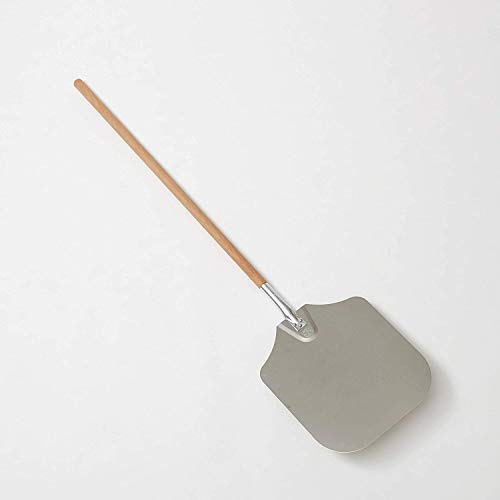
Material Composition: Aluminum vs. Stainless Steel
The primary decision factor when choosing an American Metalcraft peel is the material of the blade. Aluminum peels are the industry standard for high-speed service. They are lightweight, which reduces wrist fatigue during long shifts, and they possess excellent thermal conductivity, allowing them to adjust to the oven's temperature quickly. However, aluminum can sometimes be prone to slight warping if subjected to extreme temperature shocks. Stainless steel peels, on the other hand, offer superior rigidity and a more hygienic, non-reactive surface. Stainless steel is often preferred for heavy-duty applications where the peel might encounter more aggressive cleaning or contact with acidic ingredients, though the added weight requires more physical effort from the operator.
Blade Shape and Edge Geometry
Not all pizzas are created equal, and neither are the peels used to move them. You must match the blade geometry to your specific oven and dough style. Round blades are ideal for traditional Neapolitan or New York-style pizzas, providing a wide surface area that supports the center of the dough to prevent tearing. If you are working in a space-constrained kitchen or using smaller deck ovens, a tapered or rectangular blade might offer better maneuverability. Pay close attention to the 'lip' or the edge of the peel. A thin, tapered edge is essential for sliding under dough without catching, whereas a thicker edge might be better suited for lifting heavier, more loaded specialty pies.
Handle Ergonomics and Length
The handle is where the physics of the peel meets the comfort of the chef. American Metalcraft designs various handle lengths to accommodate different oven depths. If you are using a large, floor-model deck oven, a long handle is non-negotiable to prevent burns and allow you to reach the center of the hearth. Conversely, for countertop stone ovens, a shorter, more controlled handle provides better precision. Look for handles that feature a secure attachment to the blade—typically reinforced rivets or seamless construction—to ensure that the head doesn't wobble under the weight of a heavy pizza. An ergonomic grip, whether it is a contoured metal handle or a heat-resistant coating, will significantly impact your ability to perform repetitive motions throughout a service.
Surface Texture and Release Properties
A common mistake is assuming any flat surface will work. The effectiveness of a peel is determined by its ability to facilitate a 'clean launch.' While many professional cooks rely on semolina or cornmeal to assist with the slide, the smoothness of the metal surface plays a vital role. A highly polished aluminum surface typically offers the most consistent release, whereas a brushed finish might provide more 'grip' for certain types of wet doughs. When choosing, consider your flour preference. If you use a very fine flour, a smoother blade will prevent the dough from sticking to the microscopic pores of the metal.
Recommendation Logic
To make your final selection, follow this logic: If your priority is speed and reducing fatigue in a high-volume pizzeria, prioritize lightweight aluminum with a long, ergonomic handle. If you are looking for a lifetime tool for a heavy-duty commercial kitchen that requires frequent, vigorous cleaning, opt for stainless steel. For precision work in small-scale artisanal settings, choose a smaller, round-bladed peel with a tapered edge to ensure maximum control during the launch phase.