#TOP1

In the specialized intersection of polymer chemistry and textile engineering, selecting materials requires much more than evaluating color or hand-feel. For researchers, industrial manufacturers, and advanced material scientists, textiles are viewed as complex macromolecular structures. Whether you are sourcing synthetic filaments for high-performance composites or specialized non-woven membranes for filtration, the efficacy of your application depends entirely on the chemical architecture of the polymer chains. This guide provides the technical framework necessary to evaluate textiles through the lens of polymer science, ensuring your selection meets rigorous mechanical and chemical specifications.
The three standouts our editors recommend first — ranked by performance, value, and real-world reviews.
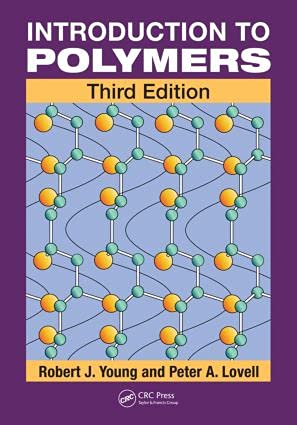
Introduction to Polymers
| SELLER | SELLER SCORE | AMAZON FULFILLED | PRIME | FREE SHIPPING |
|---|---|---|---|---|
| Amazon.com | 9.68 | Yes | Yes | Yes |
Serious material science students and researchers require this CRC Press foundational text to bridge the gap between theoretical chemistry and practical application. This specific copy is a used book in good condition, making it a smart, cost-effective choice for anyone diving into the complex world of macromolecular structures. While new textbooks can often feel prohibitively expensive, securing this version allows you to access high-level academic content without the massive price tag usually associated with specialized scientific literature. It serves as a reliable, well-maintained resource for mastering polymer properties and behaviors, ensuring you have a solid reference on your desk during long study sessions or lab research.


| SELLER | SELLER SCORE | AMAZON FULFILLED | PRIME | FREE SHIPPING |
|---|---|---|---|---|
| Kaplan North America | 7.24 | Yes | Yes | Yes |



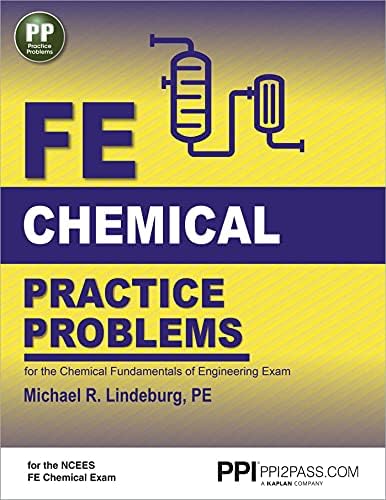
PPI FE Chemical Practice Problems – Comprehensive Practice for the NCEES FE Chemical Exam
| SELLER | SELLER SCORE | AMAZON FULFILLED | PRIME | FREE SHIPPING |
|---|---|---|---|---|
| Kaplan North America | 6.49 | Yes | Yes | Yes |
The sheer density of technical problems within these pages is the first thing you'll notice when you crack it open for a study session. This isn't a casual read. It is a rigorous, targeted tool designed specifically for the NCEES FE Chemical exam. PPI A Kaplan Company has built a resource that mirrors the intensity of the actual testing environment, forcing you to apply chemical engineering principles under pressure. Instead of wading through endless theory, you get straight to the application, which is exactly what you need when the exam date is looming. At a price point, it serves as a serious investment in your professional licensure journey, providing the comprehensive practice necessary to build actual exam stamina.

| SELLER | SELLER SCORE | AMAZON FULFILLED | PRIME | FREE SHIPPING |
|---|---|---|---|---|
| Amazon.com | 9.68 | Yes | Yes | Yes |


| SELLER | SELLER SCORE | AMAZON FULFILLED | PRIME | FREE SHIPPING |
|---|---|---|---|---|
| itemspopularsonlineaindemand | 9.84 | Yes | Yes | Yes |


| SELLER | SELLER SCORE | AMAZON FULFILLED | PRIME | FREE SHIPPING |
|---|---|---|---|---|
| Amazon Global Store UK | 0.00 | No | No | No |


Polymers (Oxford Chemistry Primers)
| SELLER | SELLER SCORE | AMAZON FULFILLED | PRIME | FREE SHIPPING |
|---|---|---|---|---|
| Amazon.com | 9.68 | Yes | Yes | Yes |
Staring at a complex macromolecular structure during a late-night study session becomes significantly less daunting when you have this primer on your desk. This volume from Oxford University Press serves as a focused bridge for students trying to navigate the intricate world of polymer science without getting lost in unnecessary fluff. It distills dense chemical concepts into a digestible format that feels specifically designed for academic progression. While it is a specialized text, its clarity makes it a reliable companion for anyone tackling undergraduate chemistry or preparing for advanced examinations. At a price point, it offers a professional level of academic rigor that is easy to integrate into a serious study routine.

| SELLER | SELLER SCORE | AMAZON FULFILLED | PRIME | FREE SHIPPING |
|---|---|---|---|---|
| Amazon.com | 9.68 | Yes | Yes | Yes |

| SELLER | SELLER SCORE | AMAZON FULFILLED | PRIME | FREE SHIPPING |
|---|---|---|---|---|
| JOHN WILEY AND SONS INC | 0.00 | No | No | No |


| SELLER | SELLER SCORE | AMAZON FULFILLED | PRIME | FREE SHIPPING |
|---|---|---|---|---|
| Amazon.com | 9.68 | Yes | Yes | Yes |

| SELLER | SELLER SCORE | AMAZON FULFILLED | PRIME | FREE SHIPPING |
|---|---|---|---|---|
| Amazon.com | 9.68 | Yes | Yes | Yes |


The Elements of Polymer Science and Engineering: An Introductory Text and Reference for Engineers and Chemists
| SELLER | SELLER SCORE | AMAZON FULFILLED | PRIME | FREE SHIPPING |
|---|---|---|---|---|
| Amazon.com | 9.68 | Yes | Yes | Yes |
Serious chemical engineers and materials scientists require this specific volume to bridge the gap between theoretical polymer chemistry and practical industrial application. Academic Press has delivered a comprehensive resource that functions as both a foundational classroom text and a reliable desk reference for professional research. While this particular copy is a used book, it remains in good condition, making it a much more sensible investment for students or professionals than buying a brand-new edition at full retail price. It covers the essential elements of polymer science with the precision required for high-level engineering work. If you are looking for a deep dive into the mechanics of polymers, this text provides the technical rigor necessary for mastering the field.

| SELLER | SELLER SCORE | AMAZON FULFILLED | PRIME | FREE SHIPPING |
|---|---|---|---|---|
| Amazon.com Services LLC | 0.00 | No | No | No |


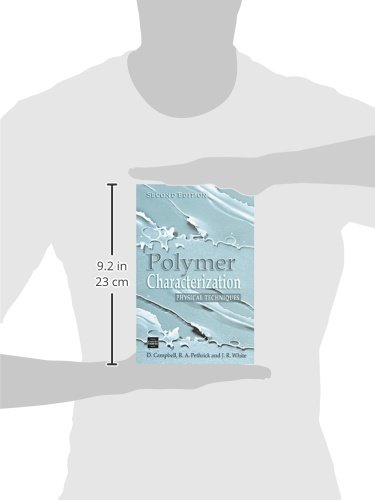
Polymer Characterization: Physical Techniques, 2nd Edition
| SELLER | SELLER SCORE | AMAZON FULFILLED | PRIME | FREE SHIPPING |
|---|---|---|---|---|
| Amazon.com | 9.68 | Yes | Yes | Yes |
Polymer Characterization: Physical Techniques, 2nd Edition is an essential technical cornerstone for anyone serious about material science. This CRC Press publication provides a deep dive into the methodologies required to understand polymer properties at a professional level. Since this is a used copy in good condition, you are getting a high-level academic resource without the typical premium price tag of a brand-new textbook. It serves as a reliable reference for laboratory work and theoretical study alike. Whether you are navigating complex physical measurements or refining your analytical skills, this edition delivers the technical depth needed for accurate characterization in a research or industrial setting.

| SELLER | SELLER SCORE | AMAZON FULFILLED | PRIME | FREE SHIPPING |
|---|---|---|---|---|
| Amazon.com | 9.68 | Yes | Yes | Yes |

| SELLER | SELLER SCORE | AMAZON FULFILLED | PRIME | FREE SHIPPING |
|---|---|---|---|---|
| allnewbooks | 9.66 | No | No | No |


| SELLER | SELLER SCORE | AMAZON FULFILLED | PRIME | FREE SHIPPING |
|---|---|---|---|---|
| GrandEagleRetail | 9.40 | No | No | No |


| SELLER | SELLER SCORE | AMAZON FULFILLED | PRIME | FREE SHIPPING |
|---|---|---|---|---|
| Amazon.com | 9.68 | Yes | Yes | Yes |


| SELLER | SELLER SCORE | AMAZON FULFILLED | PRIME | FREE SHIPPING |
|---|---|---|---|---|
| Feeling The Way | 7.56 | Yes | Yes | Yes |


| SELLER | SELLER SCORE | AMAZON FULFILLED | PRIME | FREE SHIPPING |
|---|---|---|---|---|
| Kaplan North America | 7.29 | Yes | Yes | Yes |


| SELLER | SELLER SCORE | AMAZON FULFILLED | PRIME | FREE SHIPPING |
|---|---|---|---|---|
| Amazon.com | 9.68 | Yes | Yes | Yes |

| SELLER | SELLER SCORE | AMAZON FULFILLED | PRIME | FREE SHIPPING |
|---|---|---|---|---|
| Amazon.com | 9.68 | Yes | Yes | Yes |

| SELLER | SELLER SCORE | AMAZON FULFILLED | PRIME | FREE SHIPPING |
|---|---|---|---|---|
| Amazon.com | 9.68 | Yes | Yes | Yes |

| SELLER | SELLER SCORE | AMAZON FULFILLED | PRIME | FREE SHIPPING |
|---|---|---|---|---|
| Amazon.com | 9.68 | Yes | Yes | Yes |

| SELLER | SELLER SCORE | AMAZON FULFILLED | PRIME | FREE SHIPPING |
|---|---|---|---|---|
| Amazon.com | 9.68 | Yes | Yes | Yes |
| SELLER | SELLER SCORE | AMAZON FULFILLED | PRIME | FREE SHIPPING |
|---|---|---|---|---|
| Amazon.com | 9.68 | Yes | Yes | Yes |


| SELLER | SELLER SCORE | AMAZON FULFILLED | PRIME | FREE SHIPPING |
|---|---|---|---|---|
| Amazon.com | 9.68 | Yes | Yes | Yes |

| SELLER | SELLER SCORE | AMAZON FULFILLED | PRIME | FREE SHIPPING |
|---|---|---|---|---|
| Amazon.com | 9.68 | Yes | Yes | Yes |


| SELLER | SELLER SCORE | AMAZON FULFILLED | PRIME | FREE SHIPPING |
|---|---|---|---|---|
| Amazon.com | 9.68 | Yes | Yes | Yes |

The performance of a textile is fundamentally dictated by the arrangement of its polymer chains. When sourcing, you must distinguish between amorphous and semi-crystalline structures. Semi-crystalline polymers, such as certain grades of high-density polyethylene or specialized polyesters, offer superior tensile strength and thermal stability due to their ordered molecular regions. If your application requires high dimensional stability under heat, look for textiles with high crystallinity indices. Conversely, if your engineering goal involves high dye uptake or specific solvent permeability, amorphous polymers may be more appropriate. Always request data regarding the degree of crystallinity if the textile is intended for structural or chemical-resistant applications.
In polymer engineering, textiles are rarely static. They are subject to varying stress and strain environments. You must evaluate materials based on their viscoelastic profile. Key metrics include Young’s modulus (stiffness), elongation at break, and creep resistance. For textiles used in load-bearing reinforcement, such as aramid or ultra-high-molecular-weight polyethylene fibers, minimizing creep—the tendency of the polymer to deform permanently under constant stress—is critical. Understanding the glass transition temperature (Tg) is also vital. A textile that undergoes a phase transition from a glassy to a rubbery state at your operating temperature will experience a catastrophic loss of mechanical integrity.
A primary driver in textile selection for chemical engineering is the polymer's resistance to degradation. You must assess how the material reacts to specific pH levels, organic solvents, and oxidative environments. For instance, fluoropolymer-based textiles offer exceptional inertness but may present challenges in adhesion for composite manufacturing. Furthermore, consider the surface energy of the fibers. If your process requires specific wetting characteristics, antimicrobial properties, or enhanced interfacial bonding in a resin matrix, look for textiles that have undergone plasma treatment or chemical grafting to alter their surface chemistry without compromising the bulk polymer properties.
Thermal management is a cornerstone of polymer science. When selecting textiles, do not rely solely on a single melting point. Instead, examine the thermal degradation temperature (Td) and the thermal conductivity of the fabric structure. For high-temperature filtration or protective shielding, the material must maintain its molecular weight and structural integrity throughout repeated thermal cycles. Investigate the presence of additives, such as antioxidants or UV stabilizers, which can influence the long-term oxidative induction time (OIT) of the polymer, preventing premature embrittlement in harsh environments.
Quick answers about Polymer Chemistry Engineering before you buy.
Share of top-ranked products by brand, from our editorial analysis.
We've carried out a comprehensive analysis of 105 reviews on Polymer Chemistry Engineering, using our selection criteria to identify the best options in the categories. Our findings reveal that most customers typically select Polymer Chemistry Engineering priced around $69.95.
Our team of expert editors reviewed these high-quality items and handpicked the top 29 Polymer Chemistry Engineering for your consideration..
We are dedicated to assisting our users in finding the right textiles Products based on their needs, saving them considerable time when choosing which Polymer Chemistry Engineering to buy. We take pride in the number of satisfied users we've helped through our thorough and insightful reviews.
Compare the top 29 picks at a glance — select a column to sort.