#TOP1

Navigating the world of polymer textiles for weaving requires a departure from traditional natural fiber logic. When you move into the realm of synthetics—such as polyester, nylon, polypropylene, and high-performance aramid fibers—you are no longer just choosing a texture. You are selecting a specific set of chemical and mechanical properties. Whether you are weaving technical textiles for industrial use, high-durability upholstery, or specialized outdoor gear, the polymer choice dictates the tensile strength, UV resistance, and moisture management of the final fabric. This guide is designed to help weavers and textile engineers move past aesthetic considerations and focus on the molecular performance required for their specific applications.
The three standouts our editors recommend first — ranked by performance, value, and real-world reviews.


The Polymer Clay Cookbook: Tiny Food Jewelry to Whip Up and Wear
| SELLER | SELLER SCORE | AMAZON FULFILLED | PRIME | FREE SHIPPING |
|---|---|---|---|---|
| Amazon.com | 9.68 | Yes | Yes | Yes |
Most people assume a cookbook is strictly for the kitchen, but this Watson-Guptill guide turns your oven into a miniature jewelry studio. Instead of edible meals, you are mastering the art of sculpting tiny, hyper-realistic food items meant to be worn as accessories. This particular copy arrived in good condition, making it a solid find for crafters looking to dive into the niche world of polymer clay miniature work. It bridges the gap between culinary aesthetics and wearable art, providing a structured way to learn how to mimic textures like crusty bread or glistening fruit. It is a specialized resource that transforms a simple hobby into a sophisticated craft of tiny, edible-looking treasures.

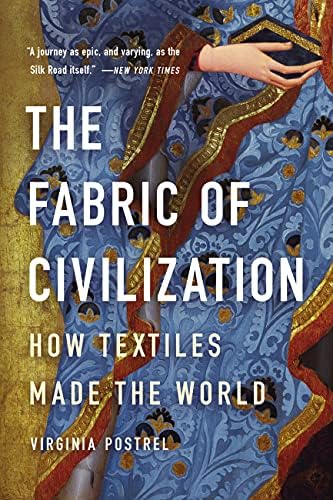
The Fabric of Civilization: How Textiles Made the World
| SELLER | SELLER SCORE | AMAZON FULFILLED | PRIME | FREE SHIPPING |
|---|---|---|---|---|
| Hachette Book Group | 0.00 | No | No | No |
The sheer weight of human history is woven into every page of this digital ebook. Rather than focusing on dry dates and dusty maps, this work explores how the simple act of spinning thread and weaving cloth fundamentally reshaped our global landscape. It is a fascinating deep dive into how textiles served as the backbone of trade, culture, and technological advancement throughout time. Since this is a digital download, you can start exploring these intricate connections immediately on your preferred reading device. For anyone interested in the intersection of material culture and human progress, this text offers a compelling perspective on how what we wear has actually defined who we are as a species.

Textiles
| SELLER | SELLER SCORE | AMAZON FULFILLED | PRIME | FREE SHIPPING |
|---|---|---|---|---|
| Pearson Education,Inc. | 0.00 | No | No | No |
True mastery of fabric science requires more than just skimming surface-level articles or settling for fragmented online tutorials. This Textiles digital ebook serves as a comprehensive deep dive for anyone serious about understanding the complexities of material composition and structure. While many resources offer only superficial overviews, this download provides a concentrated repository of knowledge that you can access instantly on your preferred device. It positions itself as a professional-grade educational investment rather than a casual read. Because it is available for immediate download, you can bypass shipping delays and begin your technical study of textile properties the moment you commit to the purchase.

Pattern Cutting for Lingerie, Beachwear and Leisurewear
| SELLER | SELLER SCORE | AMAZON FULFILLED | PRIME | FREE SHIPPING |
|---|---|---|---|---|
| Amazon.com | 9.68 | Yes | Yes | Yes |
Aspiring fashion designers and specialized pattern makers require this technical guide to master the intricate geometry of intimate apparel. Pattern Cutting for Lingerie, Beachwear and Leisurewear by Wiley-Interscience serves as a vital instructional resource for anyone moving beyond standard garment construction into the nuanced world of stretch fabrics and delicate silhouettes. While many sewing books focus on general shapes, this volume targets the specific technical demands of beachwear and leisurewear, providing the foundational knowledge necessary for professional-grade results. It is a substantial investment for a serious studio, but the depth of specialized instruction makes it an essential cornerstone for a professional pattern-making library. Whether you are perfecting a bikini fit or drafting complex lingerie, this text offers the precision required for specialized garment design.


Polymers (Oxford Chemistry Primers)
| SELLER | SELLER SCORE | AMAZON FULFILLED | PRIME | FREE SHIPPING |
|---|---|---|---|---|
| Amazon.com | 9.68 | Yes | Yes | Yes |
Staring at a complex macromolecular structure during a late-night study session becomes significantly less daunting when you have this primer on your desk. This volume from Oxford University Press serves as a focused bridge for students trying to navigate the intricate world of polymer science without getting lost in unnecessary fluff. It distills dense chemical concepts into a digestible format that feels specifically designed for academic progression. While it is a specialized text, its clarity makes it a reliable companion for anyone tackling undergraduate chemistry or preparing for advanced examinations. At a price point, it offers a professional level of academic rigor that is easy to integrate into a serious study routine.

First Textiles: The Beginnings of Textile Manufacture in Europe and the Mediterranean (Ancient Textiles)
| SELLER | SELLER SCORE | AMAZON FULFILLED | PRIME | FREE SHIPPING |
|---|---|---|---|---|
| Amazon.com | 9.68 | Yes | Yes | Yes |
Most people assume the history of civilization is written in stone and bronze, but the real story of human progress is actually woven into fabric. First Textiles offers a deep dive into how early societies in Europe and the Mediterranean transformed raw materials into complex manufactured goods. It moves beyond simple archaeological descriptions to explain how textile production shaped early economies and social structures. While it is clearly a specialized academic text rather than a light beach read, the depth of insight provides a necessary perspective on how ancient craftsmanship laid the groundwork for modern industry. If you want to understand the tangible connections between ancient people and their daily survival, this volume is an essential addition to your library.

Treasures from the Sea: Sea Silk & Shellfish Purple Dye in Antiquity (Ancient Textiles)
| SELLER | SELLER SCORE | AMAZON FULFILLED | PRIME | FREE SHIPPING |
|---|---|---|---|---|
| GrandEagleRetail | 9.40 | No | No | No |
Archaeologists and textile historians often struggle to find cohesive research that bridges the gap between marine biology and ancient craftsmanship. Oxbow Books addresses this specific niche with Treasures from the Sea, a deep dive into the lost art of sea silk and the production of purple dyes in antiquity. Rather than just scratching the surface, this volume explores the intricate relationship between ancient civilizations and their maritime resources. It is a fascinating look at how organic materials from the ocean were transformed into high-status luxury goods. If you are looking to understand the material culture of ancient textiles through a specialized lens, this book provides the scholarly depth required to truly grasp how these precious colors and fibers shaped historical aesthetics.

Polymer Science and Technology
| SELLER | SELLER SCORE | AMAZON FULFILLED | PRIME | FREE SHIPPING |
|---|---|---|---|---|
| Apex_media🍏 | 9.87 | Yes | Yes | Yes |
Polymer Science and Technology stands as a definitive cornerstone for anyone serious about mastering macromolecular chemistry. This Prentice Hall publication delivers a rigorous deep dive into the fundamental principles and practical applications that drive modern material science. While the price point reflects its specialized academic nature, the depth of information provided makes it an essential asset for students and researchers alike. I found that the text avoids the fluff often found in introductory guides, opting instead for a precise, technical approach that respects the complexity of the subject matter. It is a robust, reliable resource that remains in stock for those needing to strengthen their foundational knowledge in polymer engineering.
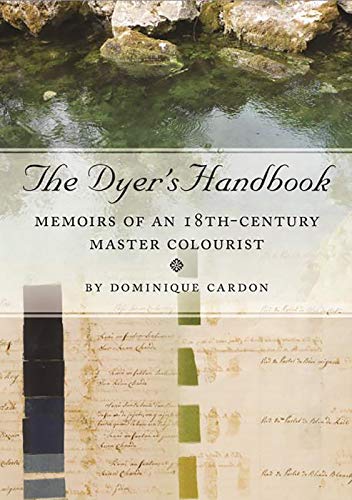
The Dyer's Handbook: Memoirs of an 18th-Century Master Colourist (Ancient Textiles)
| SELLER | SELLER SCORE | AMAZON FULFILLED | PRIME | FREE SHIPPING |
|---|---|---|---|---|
| GrandEagleRetail | 9.40 | No | No | No |
After hours spent poring over historical textile techniques, I finally realized how much this volume changes your perspective on color. The Dyer's Handbook: Memoirs of an 18th-Century Master Colourist offers a rare, intimate window into the ancient world of textile dyeing. Rather than reading a dry academic textbook, you feel as though you are stepping into the workshop of a true master. Oxbow Books has curated a piece that serves as both a historical memoir and a technical deep dive into the chemistry and artistry of the 1700s. It is an essential addition to any researcher's library or any artisan's bookshelf, providing a tangible connection to the heritage of color science that is often lost in modern manufacturing.


Handbook of Nonwovens (The Textile Institute Book Series)
| SELLER | SELLER SCORE | AMAZON FULFILLED | PRIME | FREE SHIPPING |
|---|---|---|---|---|
| Amazon.com | 9.68 | Yes | Yes | Yes |
Textile engineers and material science researchers require this comprehensive volume to truly master the complexities of modern fabric production. The Handbook of Nonwovens, part of the prestigious Textile Institute Book Series, serves as a definitive technical cornerstone for anyone working in specialized fiber manufacturing. While the price point reflects its status as a high-level academic and professional resource, the depth of knowledge provided by Woodhead Publishing makes it an essential investment for institutional libraries and R&D departments. It moves beyond surface-level descriptions to offer the rigorous technical detail necessary for advancing industrial applications. If you are navigating the intricate world of nonwoven technologies, this text provides the authoritative guidance needed to stay ahead in the field.

North European Symposium for Archaeological Textiles X (Ancient Textiles)
| SELLER | SELLER SCORE | AMAZON FULFILLED | PRIME | FREE SHIPPING |
|---|---|---|---|---|
| Book Bunker USA | 9.87 | No | No | No |
The North European Symposium for Archaeological Textiles X is a definitive scholarly deep dive into the complexities of ancient fabric history. Published by Oxbow Books, this volume serves as a vital resource for researchers and enthusiasts who need rigorous, academic insights into textile preservation and discovery. While the specialized nature of the content means it is geared toward a niche audience, the depth of information provided is exactly what one expects from a high-level symposium collection. It is the kind of heavy-hitting academic text that anchors a serious research library. Just keep in mind that you will likely be waiting about two weeks for it to arrive, as it typically requires a 13 to 14-day shipping window.
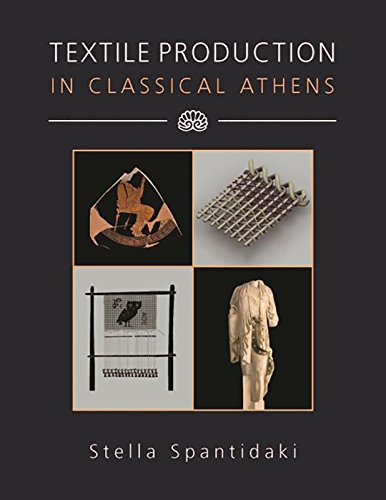
Textile Production in Classical Athens (Ancient Textiles)
| SELLER | SELLER SCORE | AMAZON FULFILLED | PRIME | FREE SHIPPING |
|---|---|---|---|---|
| Amazon Global Store UK | 0.00 | No | No | No |
How much of our understanding of ancient daily life is woven into the very fabric of the garments we study? This deep dive from Oxbow Books moves beyond simple aesthetics to explore the complex, industrial reality of textile manufacturing in classical Athens. Instead of just looking at finished draped garments, this work examines the labor, tools, and economic structures that drove the production of ancient cloth. It is a vital resource for anyone who finds themselves fascinated by the intersection of archaeology and domestic history. While the subject matter is academic and dense, the level of detail provided offers a tangible connection to the artisans of the past that most general histories simply overlook.

Crafting Minoanisation: Textiles, Crafts Production & Social Dynamics in the Bronze Age Southern Aegean (Ancient Textiles)
| SELLER | SELLER SCORE | AMAZON FULFILLED | PRIME | FREE SHIPPING |
|---|---|---|---|---|
| Amazon.com | 9.68 | Yes | Yes | Yes |
Imagine sitting in a quiet university library, surrounded by archaeological reports, trying to piece together how a single thread once connected the social hierarchies of the Bronze Age Aegean. This volume by Oxbow Books acts as your essential guide through that complex web, moving far beyond simple descriptions of fabric to explore the deep intersection of craft production and social dynamics. It is a dense, scholarly deep dive that treats textile production not just as a domestic chore, but as a cornerstone of Minoan civilization. Whether you are a student of ancient history or a specialist in Aegean archaeology, the way this text connects physical artifacts to broader cultural structures makes it an indispensable resource for understanding how craftsmanship shaped the ancient world.

The first decision factor is the chemical identity of the polymer. Not all synthetics are created equal. Polyester is the industry standard for dimensional stability and wrinkle resistance, making it ideal for structural weaves that must hold their shape. Nylon (polyamide) offers superior abrasion resistance and elasticity, which is critical for high-friction applications, though it is more sensitive to UV degradation. Polypropylene is prized for its low density and hydrophobic nature, making it the go-to for aquatic or heavy-moisture environments, though it lacks the strength of nylon. If your weaving project requires extreme thermal resistance or ballistic strength, you must look toward specialty polymers like aramids or UHMWPE (Ultra-High-Molecular-Weight Polyethylene).
In polymer weaving, the physical dimensions of the yarn are as important as the material itself. Denier, a unit of measure for linear mass density, dictates the weight and drape of the woven textile. A low denier results in a fine, lightweight fabric, while a high denier produces heavy-duty, rugged cloth. However, you must also consider the filament structure. Multifilament yarns, composed of many tiny fibers twisted together, offer a softer hand and better dye uptake, whereas monofilament yarns provide high stiffness and clarity, often used in mesh or industrial filtration textiles. For structural weaving, a continuous filament yarn is generally preferred over staple fiber yarns to ensure maximum strength and minimal fraying.
When selecting a polymer textile, you must analyze the stress-strain curve of the material. Some polymers are 'high-modulus,' meaning they resist stretching almost entirely. These are essential for tensioned structures like architectural membranes or technical composites. Others have high elongation properties, allowing the fabric to absorb impact or conform to complex curves without snapping. If you are weaving a textile that will be subjected to constant mechanical load, prioritize materials with high tenacity. If the textile needs to act as a shock absorber, look for polymers with a balanced elongation-to-break ratio.
The longevity of a woven polymer textile is often determined by its interaction with its environment. UV stability is a critical metric for any textile intended for outdoor use. Many polymers will become brittle and lose structural integrity when exposed to sunlight unless they are treated with UV stabilizers during the extrusion process. Additionally, consider chemical compatibility. If the textile will be used in an industrial setting, ensure the polymer is resistant to the specific oils, acids, or solvents it will encounter. Hydrophobicity (water repellency) is another key factor. While polyester is naturally somewhat hydrophobic, polypropylene is almost entirely water-resistant, which prevents the fabric from gaining weight or losing shape when wet.
To make the final selection, follow this hierarchy: First, define the primary mechanical stress (tension, abrasion, or impact). Second, determine the environmental exposure (UV, moisture, or chemicals). Third, match the denier to the desired weight. For industrial strength, prioritize high-tenacity polyester or nylon. For lightweight, water-resistant applications, opt for fine-denier polypropylene. For high-performance technical weaves, always verify the UV stabilization and modulus specifications before committing to a bulk purchase.
Quick answers about Polymers Textiles before you buy.
Share of top-ranked products by brand, from our editorial analysis.
We've carried out a comprehensive analysis of 1,389 reviews on Polymers Textiles, using our selection criteria to identify the best options in the crafts, hobbies & home. Our findings reveal that most customers typically select Polymers Textiles priced around $68.03, with top brands including woodhead publishing, oxbow books, wiley-interscience, oxford university press, usa and prentice hall and watson-guptill.
Our team of expert editors reviewed these high-quality items and handpicked the top 13 Polymers Textiles for your consideration. We've also done extensive research on numerous sellers, identifying the best ones in the crafts, hobbies & home category — including amazon.com, grandeagleretail, book bunker usa, amazon global store uk, hachette book group and apex_media🍏 and pearson education,inc..
We are dedicated to assisting our users in finding the right weaving Products based on their needs, saving them considerable time when choosing which Polymers Textiles to buy. We take pride in the number of satisfied users we've helped through our thorough and insightful reviews.
Compare the top 13 picks at a glance — select a column to sort.


