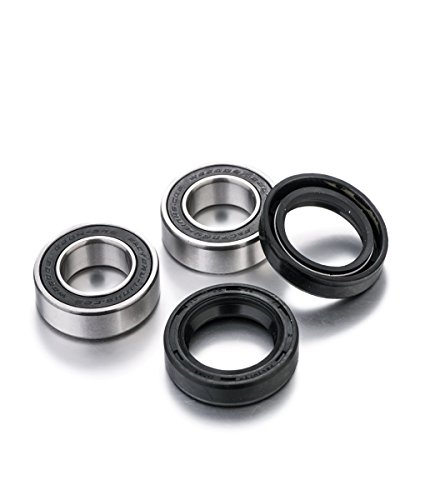
Understanding Load Ratings and Duty Cycles
The first step in selecting the correct bearing is understanding the specific load it will carry. In powersports applications, loads are rarely static. A wheel bearing handles radial loads (the weight of the vehicle) and axial loads (the side-loading forces generated during cornering). If you are selecting bearings for a heavy UTV used for utility work, you should prioritize high static load ratings. If you are prepping a motocross bike for racing, you need a bearing that can handle high-frequency vibrations and rapid RPM changes without overheating. Always match the bearing's capacity to the intended use of the vehicle. An undersized bearing will experience premature fatigue, leading to play in the hub or even axle seizure.
Seal Integrity and Environmental Protection
In the world of off-road riding, the environment is your greatest enemy. A bearing is only as good as its ability to keep contaminants out. When evaluating options, pay close attention to the seal type. Contact seals (RS or 2RS) provide a physical barrier that is excellent for preventing fine dust and silt from entering the raceway, which is critical for desert riding or sandy environments. However, these seals create a small amount of additional friction. If your application involves frequent water crossings or deep mud, look for premium multi-lip seals that offer superior protection against moisture ingress. A bearing that loses its lubrication due to water contamination will fail almost immediately, regardless of its build quality.
Material Composition and Heat Dissipation
The metallurgy of the bearing determines its longevity. High-quality powersports bearings utilize hardened steel races and precision-ground balls to ensure a smooth rolling element. For high-performance applications, look for bearings that utilize specialized cage designs—such as brass or reinforced polymer cages—which help maintain stability at high speeds and assist in heat dissipation. Heat is a silent killer in powersports. As a bearing works, it generates thermal energy. If the bearing cannot shed this heat efficiently, the lubricant will break down, leading to metal-on-metal contact. Premium options often feature high-temperature synthetic grease that maintains its viscosity even when the assembly gets hot during long rides.
Precision and Fitment Tolerance
A bearing that is 'close enough' is a bearing that will fail. In powersports, even a fraction of a millimeter of play can lead to wobbling, uneven tire wear, or damage to the spindle and hub. When selecting replacement bearings, ensure they meet or exceed the original equipment manufacturer (OEM) tolerances for inner and outer diameters. Precision is especially vital in steering head bearings and swingarm pivot bearings, where any looseness is immediately felt by the rider as instability or 'twitchiness' in the handling. Investing in precision-engineered components ensures that your machine's geometry remains intact, providing the predictable handling required for technical terrain.