Understanding Your Engine's Requirements
The most critical factor in selecting a replacement carburetor is ensuring a perfect fit for your specific engine displacement and intake manifold. Carburetors are not universal. They are precision instruments designed around specific venturi diameters and mounting configurations. Before purchasing, you must verify the throat diameter (the size of the opening) and the mounting style—whether it is a flange-mount or a rubber boot-style intake. A carburetor that is too large will result in sluggish low-end torque and poor throttle response, while one that is too small will choke the engine at high RPMs, preventing you from reaching your top speed.
Jetting and Tuning Capability
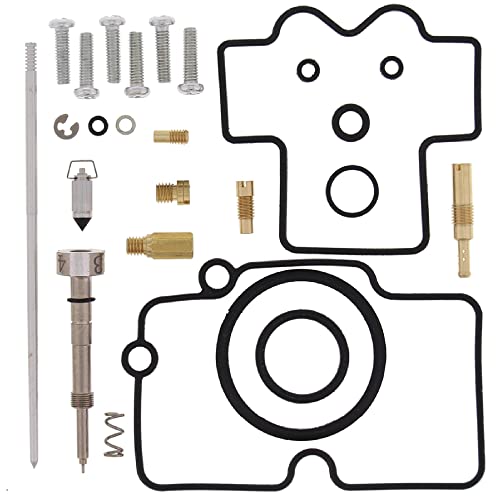
A true racing-grade carburetor should offer significant adjustability. Look for units that feature replaceable pilot jets, main jets, and needle assemblies. This ability to 're-jet' is what allows you to tune the engine to your specific altitude, ambient temperature, and fuel quality. If you live in a high-altitude region, you will need to run a leaner mixture, whereas sea-level riders often require a richer setup. A carburetor that comes with a wide array of pre-installed jet sizes is a major advantage, as it reduces the trial-and-error period during the installation and tuning process.
Material Durability and Construction
Powersports environments are harsh. Carburetors are subjected to intense heat from the engine block and constant vibration from the chassis. Premium racing models typically utilize high-grade aluminum alloys that offer excellent thermal conductivity and resistance to warping. Pay close attention to the quality of the internal components, such as the slide, the needle, and the float mechanism. A smooth-sliding throttle slide is essential for preventing 'stiction,' which can cause jerky throttle response. Furthermore, ensure the unit utilizes high-quality seals and gaskets to prevent vacuum leaks, which can cause erratic idling and engine overheating.
Depending on your riding style, you may need to choose between different mechanical designs. Slide carburetors (often found on dirt bikes and older models) provide direct, mechanical throttle control, which is excellent for aggressive, snappy acceleration. Constant Velocity (CV) carburetors, common in many street-oriented powersports vehicles, use vacuum pressure to lift the diaphragm. CV carburetors are generally smoother and more predictable, making them ideal for riders who prioritize consistent power delivery and ease of tuning across varying engine loads.
Final Recommendation Logic
When making your final decision, prioritize compatibility and adjustability over the lowest price. A budget carburetor that fits perfectly but lacks adjustable jets will ultimately cost you more in frustration and wasted time. For recreational riders looking to restore factory performance, a direct-replacement unit with standard jetting is sufficient. However, for competitive racers, investing in a model with a larger venturi and a comprehensive jetting kit is the smarter move to ensure your machine stays ahead of the pack.