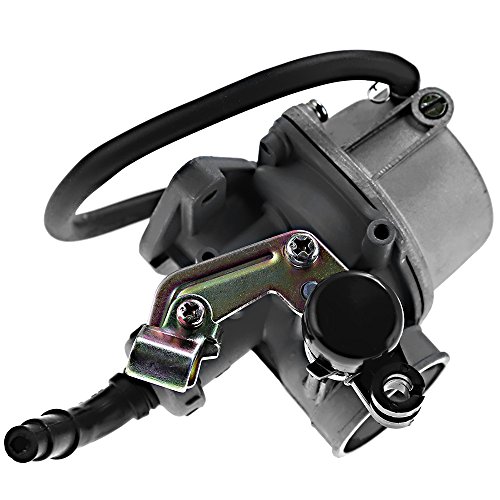
Understanding Venturi Size and Airflow Dynamics
The most critical specification when selecting a carburetor is the venturi diameter (often expressed in millimeters). The venturi is the narrowest part of the carburetor throat, and its size dictates how much air can flow into your engine. If you select a carburetor with a venturi that is too large for your engine's displacement, you will struggle with poor low-end torque and difficulty maintaining a steady idle. Conversely, a venturi that is too small will act as a bottleneck, preventing your engine from reaching its maximum horsepower potential at high RPMs. For small-displacement pit bikes, smaller diameters are standard, whereas larger ATVs and motocross bikes require higher airflow to sustain power. Always match the diameter to your engine's displacement and your intended riding style.
Jetting Kits and Tunability
A carburetor is only as good as its ability to be tuned. When evaluating your options, look for units that come with a comprehensive jetting kit. This kit should include a variety of pilot jets, main jets, and needle clips. Because every engine environment is different—varying by altitude, ambient temperature, and air filter cleanliness—the ability to fine-tune the fuel-to-air ratio is non-negotiable. A carburetor that offers adjustable needle positions allows you to fix 'flat spots' in your acceleration curve. If a carburetor arrives with a fixed jetting configuration that doesn't suit your local elevation, you will face a frustrating cycle of engine overheating or fouled spark plugs.
Throttle Response and Slide Mechanism
The mechanical action of the throttle slide is what determines how 'snappy' your machine feels. High-performance powersports carburetors typically utilize a round-slide design, which provides more consistent vacuum signal than older flat-slide designs in many small-engine applications. When inspecting a potential purchase, consider the build quality of the slide and the throttle linkage. A smooth, friction-free slide ensures that when you twist the grip, the engine responds instantly. Any hesitation in the mechanical movement of the slide will translate to a lag in engine performance, which can be dangerous during technical off-road maneuvers.
Material Integrity and Seal Quality
Powersports environments are harsh. They involve constant vibration, extreme temperature fluctuations, and exposure to various fuels. Look for carburetors constructed from high-grade aluminum alloys that resist corrosion. Furthermore, pay close attention to the gaskets and O-rings included with the unit. Air leaks at the manifold or around the float bowl are the primary cause of tuning headaches. A carburetor that utilizes high-quality rubber seals and a robust float mechanism will maintain a consistent fuel level in the bowl, preventing the engine from flooding or running lean during aggressive cornering or jumps.
When making your final selection, decide whether you are prioritizing 'plug-and-play' ease or 'maximum performance' tuning. If you want a reliable replacement for a utility ATV, prioritize a model known for stable idling and ease of installation. If you are building a racing machine, prioritize a model with the widest range of available jetting options and the largest possible venturi size allowed by your engine's displacement. Always weigh the necessity of aftermarket tuning against the convenience of a factory-spec replacement.