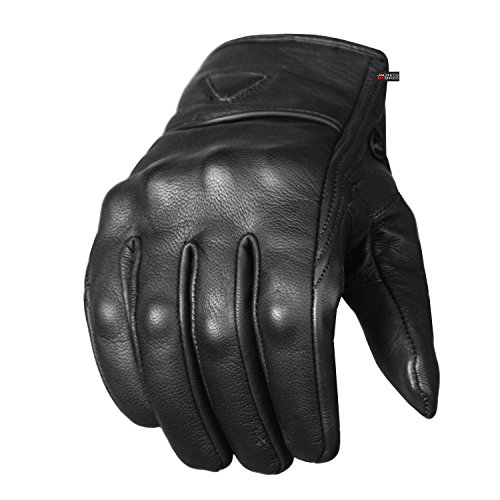
Material Composition and Abrasion Resistance
The first decision you must make is the primary material of the glove. For street riders and sportbike enthusiasts, leather remains the gold standard. High-quality cowhide or goatskin offers superior resistance to tearing and sliding across pavement. Goatskin is often preferred for its thinner profile and natural dexterity, while cowhide provides maximum durability for long-distance touring. If you are focused on off-road, motocross, or enduro riding, you will likely lean toward synthetic textiles and high-denier nylon. These materials offer better breathability and flexibility for the constant gripping and releasing required in technical terrain, though they lack the sliding protection of leather. Always look for reinforced palm sliders or double-layered leather in high-wear areas to ensure the glove doesn't disintegrate during an impact.
Impact Protection and Armor Placement
Safety isn't just about preventing scrapes. It’s about absorbing energy. When inspecting gloves, look specifically at the knuckle protection. Hard-shell armor made of carbon fiber, TPU, or titanium-infused plastics is essential for protecting the metacarpal bones from blunt force impacts. However, don't overlook the finger joints and the palm. High-end gloves often feature internal padding or gel inserts in the palm to dampen vibrations from the handlebars and protect against crushing forces. For technical off-road riding, you might prefer more flexible, foam-based padding that allows for movement, whereas street-focused gloves should prioritize rigid, external armor that can deflect an impact before it reaches the bone.
Climate Control and Seasonal Versatility
Your riding environment dictates the internal construction of your gloves. If you ride in temperate or warm climates, prioritize ventilation. Look for perforated leather or mesh panels on the back of the hand and between the fingers to allow airflow. For riders in colder regions, thermal liners and windproof membranes are non-negotiable. Some premium gloves offer a modular approach, featuring a waterproof, insulated inner glove that can be removed. When choosing, consider whether you need a single pair of 'all-season' gloves or if your budget allows for a dedicated summer mesh pair and a heavy-duty winter pair. Remember: a glove that is too thick will ruin your throttle control, while one that is too thin will leave your hands numb from the wind chill.
Tactile Feedback and Ergonomics
The most protective glove in the world is useless if you cannot feel the controls. This is where 'feel' comes into play. Examine the thickness of the palm material. A thinner palm provides better feedback for riders who rely on fine motor skills, such as those using hydraulic clutches. Additionally, look for pre-curved finger construction. Gloves that are cut to sit in a natural, gripping position will reduce hand fatigue during long rides. Avoid gloves that feel stiff or 'boxy' out of the box, as they will likely cause cramping after an hour in the saddle. The goal is a seamless transition between your hand and the grip, ensuring that every micro-adjustment is felt instantly.