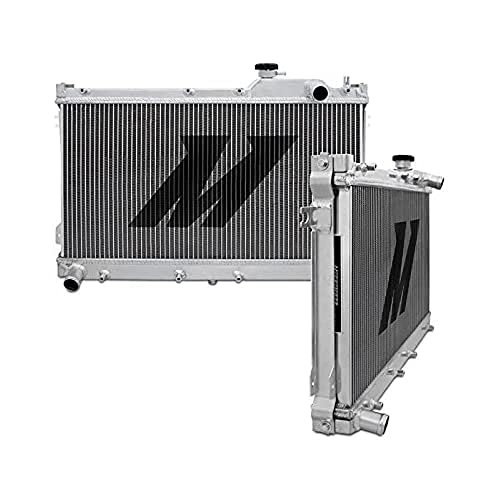
Core Construction: All-Aluminum vs. Hybrid Designs
The primary reason enthusiasts upgrade to Mishimoto is the move away from factory plastic end tanks. Standard OEM radiators often use plastic reservoirs crimped to aluminum cores. Over time, heat cycles cause these plastic components to crack or warp, leading to catastrophic coolant loss. Most high-performance Mishimoto radiators utilize an all-aluminum construction. This design provides superior structural integrity and allows for better thermal conductivity across the entire unit. When deciding, prioritize all-aluminum models if you plan on increasing boost or engine load, as the increased pressure within the cooling system puts significantly more stress on the radiator tanks.
Core Thickness and Fin Density
Not all radiators are created equal in terms of surface area. One of the most critical decision factors is the core thickness. A thicker core provides more volume for coolant and more surface area for heat exchange, which is essential for turbocharged applications where heat soak is a constant threat. However, thicker cores can sometimes be heavier and may require more airflow to be effective. Look for radiators that feature high-density fin patterns. These micro-fins increase the surface area available for air to pass through, ensuring that even at lower speeds, the heat is being stripped away from the coolant efficiently. If your vehicle is used primarily for street driving, a standard performance core is sufficient. For track-only builds, look for the 'extreme performance' variants with increased core depth.
Flow Dynamics and Inlet/Outlet Configurations
The efficiency of a radiator is heavily dependent on how quickly coolant can enter and exit the unit. Mishimoto often optimizes their designs by using larger diameter inlet and outlet ports compared to stock. This reduces fluid turbulence and allows for a higher flow rate, which is vital for maintaining stable coolant temperatures during rapid thermal spikes. Pay close attention to the placement of these ports. Some performance radiators are designed to facilitate a more direct path to the water pump, reducing the work the engine has to do to circulate fluid. If you are planning to upgrade your thermostat or water pump, ensure the radiator's flow capacity can keep up with the increased movement.
Compatibility and Mounting Considerations
While Mishimoto designs many units to be direct bolt-on replacements, high-performance modifications can sometimes create clearance issues. Always verify if the radiator design accounts for aftermarket intercoolers, electric fans, or custom shroud setups. A radiator is only as good as the airflow being forced through it. Therefore, we highly recommend pairing your new radiator with a high-flow electric fan kit. A radiator with a massive core is useless if there isn't enough CFM (Cubic Feet per Minute) of air moving through the fins. When selecting your unit, consider the total 'cooling package'—including the shroud and fans—to ensure you aren't creating a bottleneck in your thermal management system.