Determine the Scientific Discipline
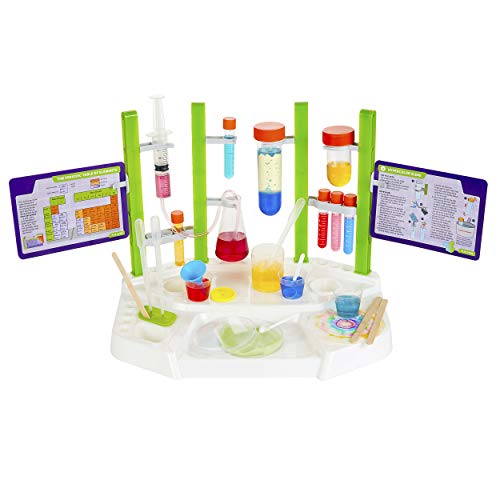
The first step in navigating this category is identifying the specific branch of science that captures the learner's imagination. Thames & Kosmos organizes their kits into distinct silos: Chemistry, Physics, Biology, Astronomy, and Earth Science. If a child is fascinated by explosions and color changes, a chemistry set is the obvious route, but ensure it offers a progression from basic acid-base reactions to more complex molecular structures. For those interested in the mechanics of the universe, physics kits involving electricity, magnetism, or optics provide a more tactile, engineering-focused experience. Biology kits often lean toward microscopy and cellular observation, while astronomy kits focus on celestial mechanics and stargazing tools. Matching the kit to a specific interest prevents the 'shelf-life' problem, where a kit is opened once and never touched again.
Assess the Complexity and Age Appropriateness
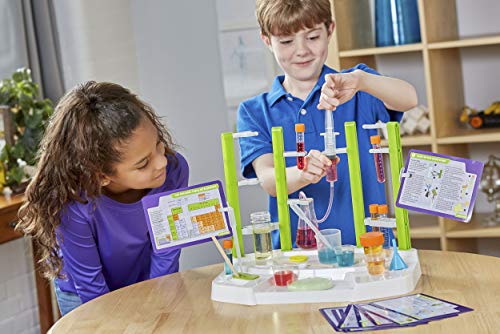
One of the most common mistakes is purchasing a kit that is either too rudimentary, leading to boredom, or too advanced, leading to frustration. Thames & Kosmos generally scales their difficulty levels quite effectively, but you must look at the intended age range carefully. A kit designed for an eight-year-old will likely feature pre-measured reagents and simplified instructions, whereas a kit for a teenager will require precise measurements, more sophisticated equipment, and a deeper understanding of mathematical formulas. Look for kits that offer 'tiered' learning—those that start with foundational concepts and gradually introduce more challenging variables as the user progresses through the manual.
Evaluate the Quality of Hardware and Reagents
A science kit is only as good as its tools. When reviewing a kit, look at the durability of the included equipment. Does the kit include high-quality glass test tubes, or is everything made of thin, breakable plastic? Does the microscope have decent magnification and decent lighting, or is it a mere novelty? Furthermore, consider the 'consumables'—the chemicals, powders, or specimens included. A high-quality kit provides enough reagents to complete all the experiments listed in the manual without requiring the user to immediately run to a specialty store for refills. Kits that include reusable components, such as circuit boards or sturdy mechanical parts, offer much better long-term value than those that are purely consumable.
Review the Instructional Manual and Educational Depth
The true value of a premium science kit lies in the manual. A mediocre kit tells you 'mix A with B to see C happen.' A superior kit explains *why* the reaction occurred, provides the chemical equations, and encourages the user to form a hypothesis. Look for kits that include comprehensive guidebooks that serve as a textbook. The best kits don't just provide a series of activities. They provide a curriculum. If the manual is thin or lacks scientific context, the kit is essentially just a collection of toys rather than a true educational tool.
Consider Space and Safety Requirements
Finally, be mindful of the practicalities of home experimentation. Chemistry kits often require a well-ventilated area and a stable, flat surface, while biology kits might require a dedicated space for a microscope. Always check the safety requirements—some kits may require adult supervision for specific steps, while others are designed for independent exploration. Choosing a kit that fits your household's ability to facilitate the experiments is key to a successful scientific journey.