Understanding Material Strength and Grades
The most critical factor when selecting Class 10 socket head screws is the material composition. In most industrial contexts, 'Class 10' refers to a specific strength rating, often associated with high-tensile alloy steels. You must distinguish between standard carbon steel and alloy steel. For heavy-duty applications, look for screws made from chromium-molybdenum alloys, which provide the necessary toughness to withstand cyclic loading without fracturing. If your environment is prone to moisture or chemical exposure, the strength of the steel must be balanced against corrosion resistance. While stainless steel is excellent for rust prevention, it often lacks the extreme tensile strength found in specialized alloy steel socket heads. Always verify the property class to ensure the screw meets the specific Newton-meter requirements of your assembly.
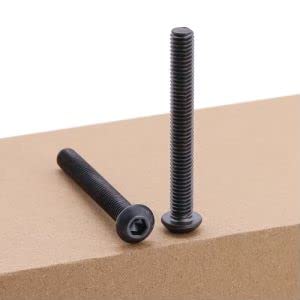
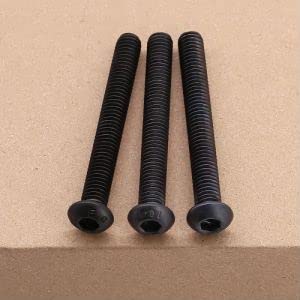
Socket head screws are defined by their internal drive, typically hex (Allen) or Torx. While hex drives are the industry standard for Class 10 fasteners, the precision of the drive is paramount. A poorly manufactured internal drive will lead to 'cam-out,' where the tool slips and rounds the internal corners of the screw head. This is particularly dangerous with high-strength screws, as you are likely applying significant torque. Look for screws with clean, sharp-edged internal geometries. If you are working in high-vibration environments, consider whether you need a drive style that accommodates thread-locking compounds or if the head design allows for easy access with impact-rated hex drivers.
Thread Pitch and Fitment Precision
Class 10 screws are frequently used in precision engineering, meaning the thread pitch must be exact. You will generally choose between coarse threads for general structural use and fine threads for applications requiring higher tension and better resistance to loosening. Fine threads offer a larger minor diameter, which can increase the strength of the fastener in certain shear scenarios, but they are more sensitive to debris in the threads. When selecting, ensure the thread profile matches your tapped holes perfectly. Even a minor deviation in pitch can lead to cross-threading, which ruins both the screw and the expensive component it is meant to secure.
Head Geometry and Clearance Requirements
The 'socket head' design is chosen specifically because the head sits lower than a standard pan or round head, allowing for flush or near-flush mounting. However, you must account for the 'socket depth.' If the screw is driven into a blind hole, the depth of the hole must accommodate both the length of the screw and the depth of the hex drive. Furthermore, consider the shoulder diameter. In many Class 10 applications, the screw acts as a pivot or a locating pin. In these cases, the precision of the shoulder diameter is just as important as the thread quality. Ensure the head diameter provides enough surface area to distribute the clamping load without marring the mating surface.
Corrosion Protection vs. Structural Integrity
Since high-strength alloy steels are susceptible to oxidation, the finishing process is a key decision factor. Common finishes include black oxide, zinc plating, and phosphate coatings. Black oxide provides a sleek look and moderate corrosion resistance but offers minimal protection in salt-spray environments. Zinc plating offers better sacrificial protection but can sometimes lead to hydrogen embrittlement in very high-strength fasteners if not properly baked after plating. If your application is outdoors or in a marine environment, prioritize fasteners that have undergone specialized coating processes designed to maintain high tensile strength while preventing rust.