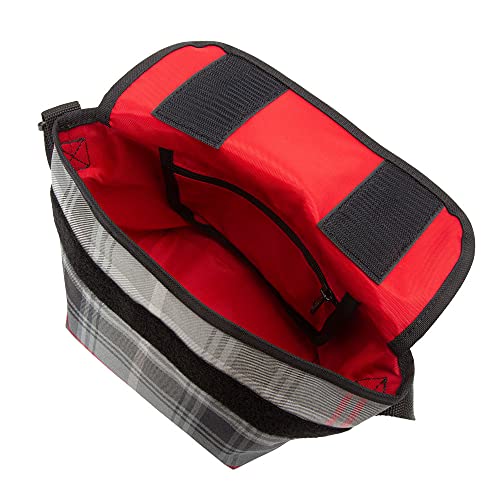
Material Durability and Weather Resistance
The hallmark of a high-quality Manhattan Portage bag is the fabric. For sports messenger bags, you must prioritize materials that can withstand more than just light abrasion. Look for high-denier ballistic nylon. This provides a rugged exterior that resists tearing when stuffed with gym shoes or heavy equipment. Because sports bags often encounter moisture—whether from a sudden downpour or a damp towel inside the main compartment—water resistance is non-negotiable. While few messenger bags are fully waterproof, a high-quality coating on the fabric and heavy-duty zippers will keep your electronics and clean clothes safe from the elements. Avoid lightweight synthetics that feel flimsy. If you are using this for sports, the bag needs to maintain its shape even when it is half-empty.
Compartmentalization and Specialized Storage
A generic messenger bag will fail you in a sports context because it lacks the specific zones required for athletic gear. The best options feature distinct separation between 'clean' and 'dirty' zones. Look for bags that include an isolated compartment for footwear or sweaty apparel to prevent odors and moisture from leaching into your laptop sleeve or documents. Additionally, check for external quick-access pockets. If you are on the move, you need a dedicated spot for hydration bottles, keys, or gym passes that doesn't require you to dig through the main cavern of the bag. A well-designed sports messenger should feel organized even when it is packed to capacity.
Ergonomics and Weight Distribution
Messenger bags are inherently asymmetrical, which can lead to shoulder strain during long commutes or heavy training days. When evaluating a bag for athletic use, examine the strap system closely. A wide, padded shoulder strap is essential to distribute the weight of heavy gear across your trapezius muscle. Furthermore, look for features like a stabilizing cross-body strap or a compression system that allows you to tighten the bag against your torso. This prevents the 'swinging' effect that occurs when you are walking quickly or cycling, which can cause discomfort and disrupt your center of gravity. If the bag includes a removable or adjustable strap, it offers more versatility for different carrying styles.
Capacity vs. Profile
The final decision factor is the balance between volume and silhouette. A bag that is too large will feel cumbersome in a crowded gym or on public transit, while one that is too small won't accommodate your change of clothes. Determine your primary use case: are you carrying just a change of clothes and a water bottle, or do you need space for a full kit including shoes and a towel? Aim for a medium-capacity build that offers a streamlined profile. The goal is to find a bag that looks intentional and sharp when worn over a jacket, rather than looking like you are carrying a bulky hiking pack through a professional setting.