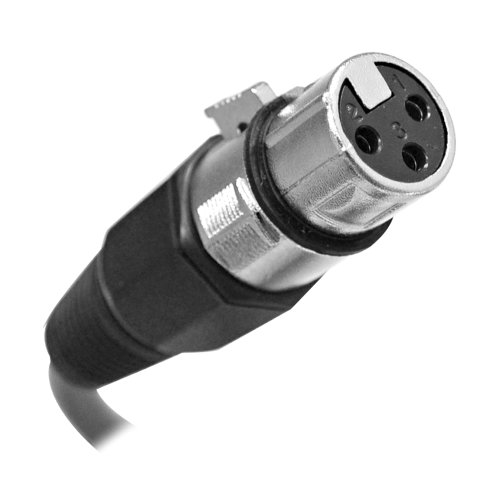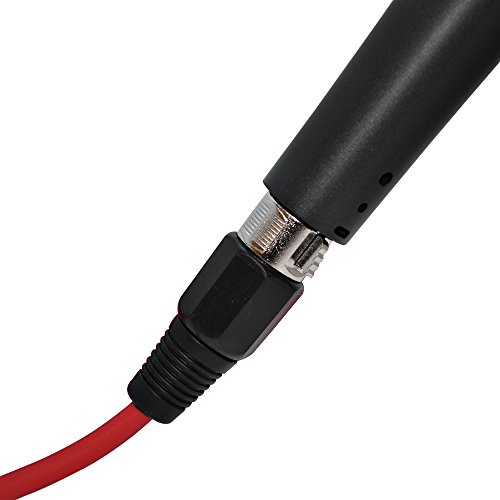
PickSmartly Review

Best Seismic Audio Stage Patch Cables in 2026

9.6 PM Score
Products Evaluated
48
Reviews Analyzed
2,088
Brands Ranked
1
We independently evaluate all recommended products and services. If you click on links we provide, we may receive compensation.

In the high-stakes environment of live sound reinforcement, the integrity of your signal chain is only as strong as its weakest link. For touring musicians, front-of-house engineers, and stage technicians, seismic audio stage patch cables serve as the critical nervous system connecting microphones, DI boxes, mixers, and powered speakers. A subpar cable doesn't just result in a hiss or a hum. It can lead to catastrophic signal dropouts in the middle of a performance. When selecting patch cables designed for the rigors of the stage, you aren't just buying copper and plastic. You are investing in signal reliability and physical durability.

#1

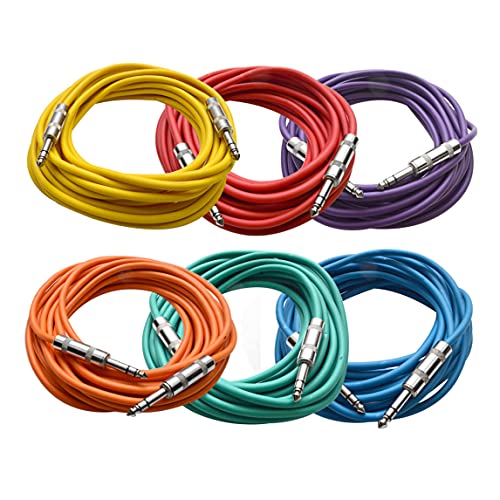
Seismic Audio Speakers ¼” to ¼” TRS Patch Cables, 25 Foot Patch Cables, Pack of 6, Multi Color

Seismic Audio Balanced TRS Patch Cable 6-Pack

4.6 (328 ratings)
SEISMIC AUDIO SATRX-25BGORYP

Reviews for SEISMIC AUDIO (PM Score)

9.6 PM Score
Buy on Amazon
  • TRS Cables: The Seismic Audio Speakers TRS patch cables are balanced TRS studio patch cords and come with a heavy duty flexible rubber jacket.
  • ¼” Patch Cables: The TRS cables are made of metal 1/4" TRS with high grade fiberglass insulators on both ends.
  • Patch Cables: Balanced 1/4" heavy duty cables are typically used to connect mixers to equalizers, crossovers, compressors, effects units or amplifiers anywhere that requires a balanced 1/4" connection.
  • 25 Foot Cables: The package comes with six patch cables and each cable is 25 feet long. The cables come in multiple colors, so that it becomes easy to identify where each flexible rubber jacket cable is connected.
  • 6 Pack Patch Cables: The TRS patch cables can be used anywhere a balanced ¼” connection is required. These cables contain 22g Oxygen-Free Copper (OFC) conductors for enhanced signal clarity and superior RF rejection.
SELLER SELLER SCORE AMAZON FULFILLED PRIME FREE SHIPPING
Seismic Audio Speakers Inc 9.84 No No No

Tangled nests of black wires can turn a professional studio setup into a chaotic nightmare during a live session. These Seismic Audio TRS patch cables solve that headache immediately by providing a multi-colored identification system that makes tracing your signal path a breeze. At 25 feet long, they offer plenty of reach for connecting mixers to equalizers, compressors, or amplifiers without feeling stretched thin. I was particularly impressed by the build quality. The heavy-duty flexible rubber jacket feels substantial, while the 22g oxygen-free copper conductors ensure your signal stays clear and free from RF interference. Whether you are running a complex rack of effects units or simply need reliable balanced connections, this six-pack provides a professional-grade foundation for any audio environment.
What We Like
Oxygen-free copper conductors
Multi-color identification
Heavy-duty rubber jacket
Balanced TRS connection
Fiberglass insulators

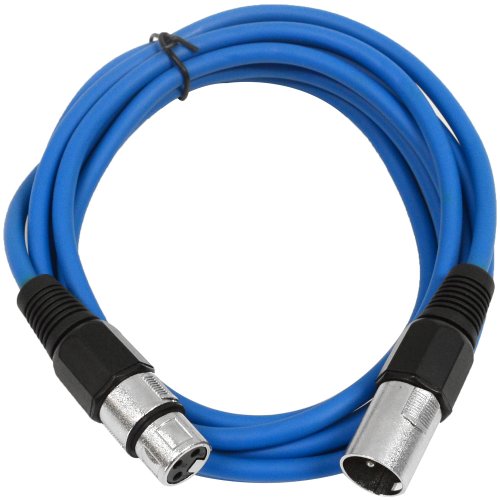
SEISMIC AUDIO - SAXLX-10 - 10' Blue XLR Male to XLR Female Patch Cable - Balanced - 10 Foot Patch Cord

Seismic Audio Blue Balanced XLR Patch Cable

4.6 (110 ratings)
SEISMIC AUDIO SAXLX-10BLUE 8.00 X 6.00 X 2.00 Inches 0.36 Pounds

Reviews for SEISMIC AUDIO (PM Score)

9.6 PM Score
Buy on Amazon
  • XLR Cables: Seismic Audio Speakers’ XLR Patch cables are balanced cables and are ideal for connecting mixers, equalizers, crossovers or amplifiers.
  • Balanced Patch Cables: The cables have a metal 3 pin XLR on each end, one is male and the other is female.
  • Heavy Duty Cables: These 10 Foot cables can be used for anything that requires a balanced 3 pin XLR connection, even as  microphone cables or for connecting DMX lighting fixtures.
  • Flexible Rubber Jacket Cables: The cables are made of 22g Oxygen-Free Copper conductors for enhanced signal clarity and superior RF rejection. Each cable has a heavy duty flexible rubber jacket to safeguard from damage.
  • Patch Cables: Each pack of this XLR cable contains one blue colored cable, measuring 10 feet each. 
SELLER SELLER SCORE AMAZON FULFILLED PRIME FREE SHIPPING
Seismic Audio Speakers Inc 9.84 Yes Yes Yes

Setting up a live sound rig in a crowded venue requires cables that won't flake out when the interference kicks in. This 10-foot Seismic Audio patch cord is built specifically for those high-stakes connections between mixers, crossovers, and amplifiers. I found the 22g oxygen-free copper conductors to be a standout feature, providing much-needed signal clarity and solid RF rejection. The heavy-duty flexible rubber jacket feels rugged enough to survive being stepped on or coiled tightly in a gear bag. Whether you are running a microphone signal or patching DMX lighting fixtures, the balanced 3-pin male-to-female design ensures a professional connection. It is a reliable, no-nonsense blue cable that handles the heavy lifting of a standard musical instrument setup without breaking the bank.

What We Like
Oxygen-free copper
Balanced 3-pin XLR
Flexible rubber jacket
Enhanced RF rejection
Heavy duty construction
Buying Guide

A Guide to Selecting the Best Seismic Audio Stage Patch Cables

A Guide to Selecting the Best Seismic Audio Stage Patch Cables

Understanding Connector Integrity and Solder Quality

The most common point of failure in any stage cable is the junction where the wire meets the connector. When evaluating seismic audio patch cables, pay close attention to the construction of the XLR or TRS jacks. High-quality stage cables utilize heavy-duty metal housings that can withstand being stepped on, rolled over by equipment trunks, or repeatedly plugged and unplugged under low-light conditions. Look for connectors that feature robust strain relief—the flexible sleeve where the cable enters the plug. This component prevents the internal copper strands from fraying due to constant bending, which is the primary cause of intermittent signal loss.

Shielding and Interference Rejection

Stages are electrically noisy environments. Between wireless microphone transmitters, LED lighting dimmers, and massive power distribution units, electromagnetic interference (EMI) and radio frequency interference (RFI) are constant threats. A professional-grade patch cable must feature high-density shielding. Whether it is a braided copper shield or a foil wrap, the goal is to create a continuous conductive barrier that keeps noise out of your audio path. When choosing between different cable types, prioritize those with thick, multi-layered shielding to ensure that your high-gain signals remain clean and free of the dreaded '60-cycle hum' that plagues poorly shielded setups.

Cable Jacket Durability and Flexibility

A stage cable must be two things simultaneously: incredibly tough and remarkably flexible. A cable that is too stiff is a nightmare to route through tight stage setups or around drum kits, and it can actually put undue stress on your gear's input jacks. Conversely, a cable that is too soft will tangle easily and fail to stay in place. Look for cables featuring high-quality PVC or polyurethane jackets. These materials are designed to resist abrasion, resist kinking, and remain flexible even in temperature-variable environments like outdoor festivals or air-conditioned venues. The 'tangle-free' nature of a cable is not just a convenience. It significantly reduces the time required for stage resets and load-ins.

Length and Impedance Considerations

While it is tempting to buy the longest cable possible to avoid running out of reach, excessive length can introduce signal degradation and increased capacitance, particularly with high-impedance signals. For patch applications—connecting a mixer to a stage box or a pedalboard to an amp—shorter, more direct runs are preferable. However, for long runs from the stage to the mixing console, ensure the cable is specifically rated for balanced transmission to maintain signal strength over distance. Always choose a length that provides enough slack for clean routing without creating unnecessary coils that can act as accidental inductors.

Recommendation Logic: How to Choose

When making your final decision, categorize your needs into 'Permanent Rig' vs. 'Touring/Mobile.' For a permanent studio or house installation, you can prioritize slightly thinner, more discreet cables. However, for stage patch applications, always opt for the heaviest-duty construction available. If you are frequently moving gear, prioritize cables with reinforced connectors and high-flex jackets. Always verify that the connector type (XLR, 1/4 inch TRS, or TS) matches your specific signal path requirements to ensure a seamless, noise-free connection.

Ready to choose?

Jump back to our ranked picks or compare the shortlist side by side.

Frequently Asked Questions

Quick answers about Seismic Audio Stage Patch Cables before you buy.

Seismic-grade cables are engineered with heavy-duty shielding and reinforced jack housings to withstand intense low-frequency vibrations and physical movement common in live stage environments.

While thickness often indicates better shielding and durability, the real quality comes from the gauge of the conductor and the quality of the dielectric material, which prevent signal loss and interference.

For stage patching, always prioritize balanced cables (like XLR or TRS). They are designed to reject electromagnetic interference and hum, which is critical when running long distances across a stage.

Use cables with high-density braided shielding and ensure all connections are seated firmly. Avoid running audio cables parallel to power cables to minimize inductive interference.

Gold plating is highly recommended for stage cables because it resists oxidation and corrosion, ensuring a clean, low-resistance connection even after repeated plugging and unplugging.

Look for cables with a high-flexibility jacket (such as TPU or specialized PVC) and strain relief boots at the connectors to prevent the wire from fraying at the stress points.

High-quality, low-capacitance cables are essential for maintaining high-frequency clarity. Cheap cables with high capacitance can act as a low-pass filter, making your audio sound muddy.

Always coil cables using the 'over-under' technique to prevent internal twisting and kinks, which can damage the shielding and lead to intermittent signal failure.
Research & Insights

Our Analysis of Seismic Audio Stage Patch Cables

2,088 Reviews Analyzed
48 Products Evaluated
5.7 Avg PM Score
1 Brands Ranked

Top 10 Seismic Audio Stage Patch Cables Brands on Amazon

Share of top-ranked products by brand, from our editorial analysis.

  1. 01 Seismic Audio 48 (100%)

What Our Analysis Found

We've carried out a comprehensive analysis of 2,088 reviews on Seismic Audio Stage Patch Cables, using our selection criteria to identify the best options in the electronics accessories & supplies. Our findings reveal that most customers typically select Seismic Audio Stage Patch Cables priced around $25.53.

Our team of expert editors reviewed these high-quality items and handpicked the top 2 Seismic Audio Stage Patch Cables for your consideration..

We are dedicated to assisting our users in finding the right cables Products based on their needs, saving them considerable time when choosing which Seismic Audio Stage Patch Cables to buy. We take pride in the number of satisfied users we've helped through our thorough and insightful reviews.

Side by Side

Comparison Table

Compare the top 2 picks at a glance — select a column to sort.