Understanding Scanner Technology
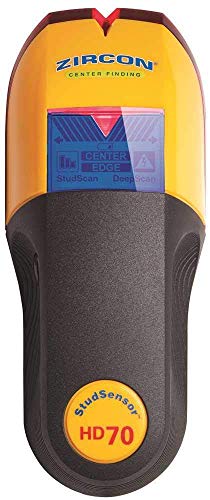
Not all stud finders operate on the same principle. When shopping for a scanner, you will primarily encounter two types: contact-based sensors and non-contact scanning systems. Contact-based models require you to slide the device physically across the wall surface, using capacitive sensing to detect changes in the material density. These are generally more affordable and excellent for standard wood or metal studs. However, more advanced scanners utilize multi-sensor technology to map out what is happening behind the surface without needing as much physical pressure. If you are working with modern construction materials like plasterboard, masonry, or even thick beadboard, look for a scanner that explicitly mentions 'multi-mode' capabilities to ensure it can calibrate to different wall densities.
Key Decision Factor: Detection Accuracy and Depth
The most significant frustration with low-end scanners is the 'false positive'—the device beeping when it hits a knot in the wood, a piece of metal trim, or even a change in moisture levels. To avoid this, prioritize scanners that offer high sensitivity adjustments. A high-quality scanner should be able to distinguish between a structural stud and a superficial interference. Furthermore, pay attention to the detection depth. Most standard scanners can penetrate about 1.5 inches of drywall, which is sufficient for most residential projects. However, if you are working with thicker walls or need to locate deep-set pipes, you may need a scanner with enhanced penetration depth. Always check if the device provides a visual indicator (like an LED bar) alongside an audible beep, as this dual-feedback system significantly reduces user error.
Safety Features: Live Wire and Pipe Detection
A truly effective scanner does more than just find wood. One of the most vital features for any homeowner is the ability to detect AC electrical wires and metal pipes. Drilling into a live wire is a dangerous mistake that can lead to electrical shocks or fires. Look for scanners that feature 'Live Wire Detection' or 'AC Detection.' These tools use electromagnetic sensors to alert you to the presence of voltage behind the wall. Similarly, metal detection is crucial if you are working in kitchens or bathrooms where copper or steel plumbing is common. A scanner that combines stud, metal, and wire detection into a single unit is worth the extra investment for the peace of mind it provides.
Calibration and Ease of Use
The reliability of a scanner is heavily dependent on how it is calibrated. Some devices require you to hold a button while moving the scanner in a specific pattern to 'zero out' the sensor against the wall. This is a standard procedure, but look for models that make this process intuitive. An overly complex calibration routine can lead to inaccurate readings if performed incorrectly. Additionally, consider the ergonomics of the device. A scanner that is too small can be difficult to hold steady, leading to erratic readings, while a device that is too bulky might be cumbersome in tight corners. A slim, ergonomic design with a clear, backlit display is the ideal middle ground for most users.