Determine Your Primary Lighting Objective
Before browsing specific styles, you must decide whether your priority is task lighting or accent lighting. Task lighting requires high lumen output and a focused beam to illuminate work surfaces effectively, preventing shadows cast by your body while prepping food. If this is your goal, look for fixtures with higher wattage and a more direct distribution pattern. Conversely, if you want accent lighting—meant to wash a stone backsplash in a soft glow or provide a moody ambiance for a home bar—you should prioritize fixtures with diffused lenses and lower intensity. The most successful kitchen designs often use a hybrid approach, but your primary choice will dictate the fixture's technical specifications.
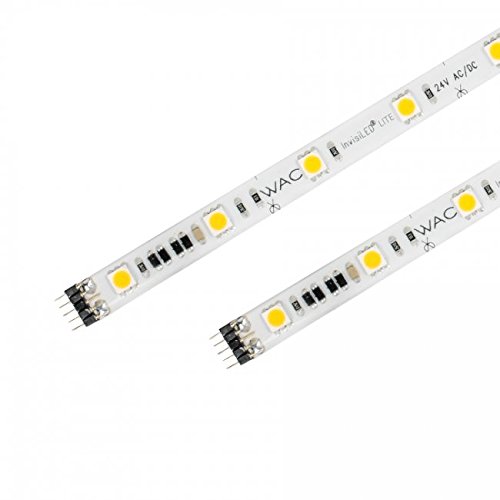
WAC Lighting offers various mounting styles that cater to different cabinetry constructions. Linear LED strips are ideal for seamless, modern looks where you want the light source to be invisible. These are perfect for long runs under continuous countertops. If your cabinetry has specific architectural details or if you are retrofitting an older space, puck lights or small directional canisters might be more practical. Puck lights provide discrete 'pools' of light that work beautifully in segmented cabinetry, while linear fixtures provide a continuous, even wash. Pay close attention to the depth of your cabinets; some fixtures require a certain clearance to allow for heat dissipation and proper light spread.
Color Temperature and Color Rendering Index (CRI)
This is perhaps the most critical decision for any high-end lighting project. Color temperature, measured in Kelvin (K), dictates the 'feel' of the room. For kitchens, a warm white (around 2700K to 3000K) creates an inviting, cozy atmosphere, whereas a cooler white (4000K+) can feel more clinical and professional. However, temperature is only half the battle. You must also look at the Color Rendering Index (CRI). Because under-counter lights shine directly onto food and expensive countertop materials like marble or quartz, you should aim for a CRI of 90 or higher. A high CRI ensures that the colors of your ingredients and the natural veining of your stone appear vibrant and true to life, rather than washed out or grey.
Dimming Capabilities and Control Integration
To achieve true versatility, your under-counter fixtures must be dimmable. A bright light is necessary for morning meal prep, but a dimmed, low-intensity glow is essential for evening entertaining. When selecting your fixtures, verify that they are compatible with your existing dimming system—whether that is a standard wall slider or a sophisticated smart-home integration. Many high-end WAC models are designed to work seamlessly with various control protocols, allowing you to adjust the mood of the room without installing complex new wiring. Always ensure the driver or transformer required for dimming is compatible with the specific LED technology used in the fixture to avoid flickering or buzzing.
Material Durability and Heat Management
Kitchens are high-moisture, high-heat environments. While under-counter lights are generally protected from direct steam, they are subject to ambient heat from ovens and dishwashers. Look for fixtures constructed from high-quality metals like aluminum, which acts as an effective heat sink. Proper thermal management ensures that the LEDs do not degrade prematurely, maintaining their brightness and color consistency for years. Furthermore, consider the finish of the fixture; if the light is visible at certain angles, a brushed nickel or matte black finish can complement your hardware, whereas a white finish can disappear into the underside of a cabinet.