PickSmartly Review

Best Midline Valve Valves in 2026

9.7 PM Score
Products Evaluated
37
Reviews Analyzed
3,964
Brands Ranked
2
We independently evaluate all recommended products and services. If you click on links we provide, we may receive compensation.

In the specialized world of fluid management and medical device regulation, the midline valve serves as a critical control point. Unlike standard industrial valves that manage bulk flow, midline valves are engineered for precision, often acting as the gatekeeper in complex tubing systems, medical delivery setups, or high-sensitivity laboratory environments. Choosing the wrong valve can lead to pressure irregularities, leaks, or, in clinical settings, compromised safety. This guide is designed to help you navigate the technical nuances of midline valve selection, ensuring your choice aligns with your specific flow requirements and environmental constraints.

#1

Midline Valve GASLxFA3812 Angle Gas Ball Valve with 3/8 in. x 1/2 in. Flare x FIP Connections, Brass

Midline Valve Brass Angle Gas Ball Valve

4.7 (146 ratings)
MIDLINE VALVE GASLXFA3812 2.00 X 2.00 X 2.00 Inches

Reviews for MIDLINE VALVE (PM Score)

9.7 PM Score
Buy on Amazon
  • For reliable flow control in your natural. Manufactured. Mixed liquefied petroleum gases and LP gasair applications
  • UL Listed and CSA Approved 600 psi WOG. 175 psi WSP Temperature 4°F thru 149°F Ends conform to ANSI.B1.20.1
  • ALUMINUM ALLOY QUARTER TURN HANDLE: allows easy shutoff in your gas lines
  • SUPERIOR QUALITY: heavy duty DZR lead free forged brass construction and stainless steel ball
  • LEAKFREE JOINTS: valve features secure Flare x FIP connections
  • Forged brass body
  • UL, CSA approved
  • Quarter-turn for easy on/off operation
SELLER SELLER SCORE AMAZON FULFILLED PRIME FREE SHIPPING
Amazon.com 9.68 Yes Yes Yes

Most people assume gas line safety relies on complex electronic sensors, but the real hero is often a simple, heavy-duty brass valve. I found that the Midline Valve angle ball valve provides exactly that kind of peace of mind through its robust DZR lead-free forged brass construction and stainless steel ball. It handles natural, manufactured, and LP gases with ease, backed by UL and CSA approvals that you just can't ignore. The quarter-turn aluminum alloy handle makes shutting off the flow incredibly intuitive during an emergency. Because it uses a secure Flare x FIP connection, you aren't left guessing about leak-free joints. It is a compact, high-pressure rated component that proves reliability often comes down to the quality of your metalwork.

What We Like
Forged brass construction
Stainless steel ball
Quarter-turn operation
Leakfree Flare connections
UL and CSA approved
#2

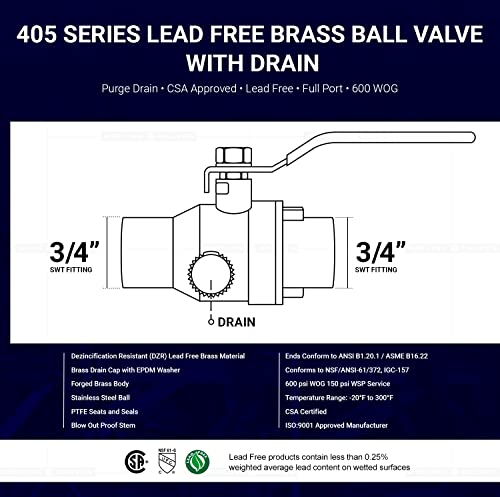
MIDLINE VALVE 627C256-NL Premium Full Port Ball Valve with Drain Brass, x 3/4 in. SWT, 3/4 in. SWT x 3/4 in. SWT

MIDLINE VALVE Premium Brass Full Port Ball Valve

4.5 (95 ratings)
MIDLINE VALVE 627C256-NL 2.00 X 1.00 X 1.00 Inches

Reviews for MIDLINE VALVE (PM Score)

9.3 PM Score
Buy on Amazon
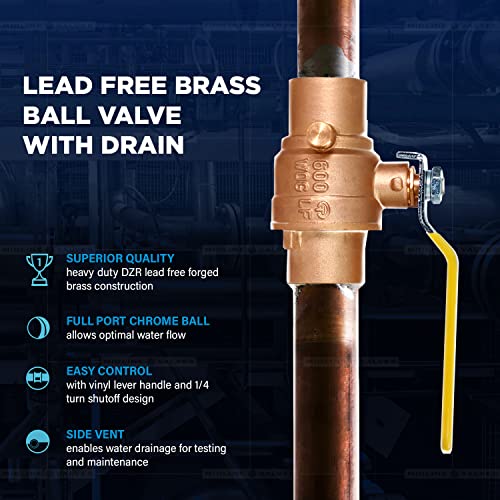
  • SUPERIOR QUALITY: heavy duty DZR lead free forged brass construction
  • SIDE VENT: enables water drainage for testing and maintenance
  • FULL PORT CHROME BALL: allows optimal water flow
  • EASY CONTROL: with vinyl lever handle and 1/4 turn shutoff design
  • CERTIFICATIONS: CSA, UPC and ANSI
SELLER SELLER SCORE AMAZON FULFILLED PRIME FREE SHIPPING
Pro Plumbing Supply 9.85 Yes Yes Yes

Maintaining a plumbing system becomes a nightmare when you can't easily drain lines for repairs or seasonal winterization. This MIDLINE VALVE solution solves that headache with an integrated side vent that makes water drainage straightforward during testing and maintenance. I was impressed by the heavy-duty DZR lead-free forged brass construction, which feels substantial enough to handle daily residential use. The full port chrome ball ensures you won't deal with restricted water flow, while the 1/4 turn shutoff design paired with a vinyl lever handle makes operation smooth and intuitive. It is a professional-grade component that meets CSA, UPC, and ANSI certifications, giving you real peace of mind regarding its reliability and safety.

What We Like
Lead-free forged brass
Integrated side vent
Full port chrome ball
Vinyl lever handle
1/4 turn shutoff
#3

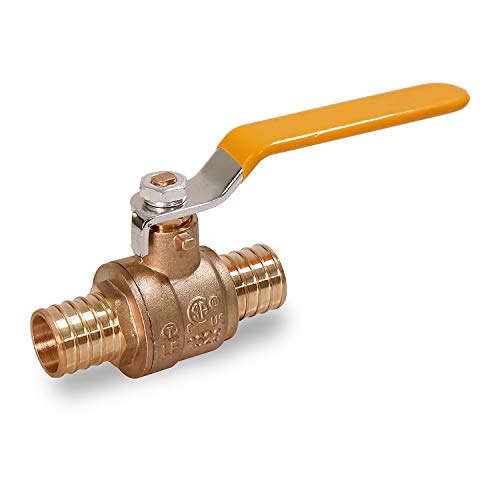
Pexflow Midline 600P012-NL Full Port PEX Ball Valve 1/2 Inch Lead-Free Forged Brass, 1/2

PEXFLOW Forged Brass Full Port PEX Ball Valve

PEXFLOW 600P012-NL 3.00 X 1.00 X 2.00 Inches

Reviews for PEXFLOW (PM Score)

0.0 PM Score
Buy on Amazon
  • Useful for heavy duty commercial and residential applications
  • The construction of heavy duty forged brass valve pressure is rated 150 PSI for steam and 600 PSI for water, oil and gas
  • 1/2 inch pex connections on both ends
  • Constructed from heavy duty forged brass
  • Full port chrome plated brass ball
  • Approved By UPC, NSF
  • Working Pressure 600 WOG, 150 WSP
  • Brass Body Constructed
SELLER SELLER SCORE AMAZON FULFILLED PRIME FREE SHIPPING
Pro Plumbing Supply 9.84 No No No

Most people assume a small 1/2 inch valve is just a minor component, but the PEXFLOW Midline is built with a heavy-duty forged brass construction that punches far above its weight class. I was particularly impressed by its versatility. While it handles standard residential setups easily, its pressure ratings make it a legitimate contender for commercial applications. You get a full port chrome-plated brass ball that ensures minimal flow restriction, which is critical when you need reliable performance. Whether you are running water, oil, or gas, the 600 PSI WOG rating provides a significant safety margin. It is a robust, lead-free solution that meets UPC and NSF standards, making it a dependable choice for anyone who refuses to compromise on plumbing integrity.

What We Like
Forged brass construction
Full port design
600 PSI rating
Lead-free brass
UPC NSF approved
Buying Guide

A Guide to Selecting the Best Midline Valves

A Guide to Selecting the Best Midline Valves

Understanding Flow Dynamics and Pressure Ratings

The most fundamental factor in selecting a midline valve is understanding the medium it will regulate. You must assess the pressure differentials expected during both static and active flow states. A valve that performs well at low pressure may fail catastrophically under a sudden surge. When reviewing specifications, look beyond the maximum pressure rating. Pay close attention to the 'cracking pressure' or the minimum pressure required to actuate the mechanism. If your system operates on low-pressure gravity feeds, a high-threshold valve will cause significant flow resistance and potential system backups.

Material Compatibility and Chemical Resistance

Because midline valves are frequently used in environments involving aggressive chemicals, saline solutions, or specialized reagents, material science is a non-negotiable consideration. The 'wetted parts'—the components that come into direct contact with the fluid—must be chemically inert relative to your medium. For medical-grade applications, biocompatibility is paramount. Ensure the materials are non-reactive and do not leach contaminants into the stream. Common high-performance materials include medical-grade silicone, PTFE (Teflon), and high-density polymers. If you are working with organic solvents or acidic solutions, a standard thermoplastic valve may degrade, leading to seal failure and leakage.

Actuation Method: Manual vs. Automated

Your decision on how the valve is operated will dictate the complexity of your entire system integration. Manual midline valves are ideal for simple, low-frequency adjustments where human oversight is constant. However, if your application requires precise timing, remote operation, or integration with a digital controller, you must opt for automated versions. These may be solenoid-driven, pneumatic, or motorized. If choosing an automated valve, consider the response time (latency) and the power requirements. A solenoid valve offers rapid switching but can generate heat, whereas a motorized valve might offer smoother, more gradual flow control at the expense of speed.

Seal Integrity and Leak Prevention

The reliability of a midline valve is defined by its ability to maintain a hermetic seal when closed. Look for designs that utilize high-quality O-rings or diaphragm seals. Diaphragm-style midline valves are often preferred in high-purity applications because they completely isolate the fluid from the mechanical moving parts, significantly reducing the risk of contamination and wear. Additionally, consider the 'dead space' within the valve body. Minimal dead space is critical in processes involving sterilization or sensitive chemical reactions, as it prevents stagnant fluid from accumulating and causing bacterial growth or chemical degradation.

Environmental and Sterilization Constraints

Finally, consider the environment in which the valve will reside. Will it be subjected to repeated autoclave cycles, chemical sterilization, or extreme temperature fluctuations? If the valve is part of a sterile field, it must be capable of withstanding these rigorous cleaning protocols without losing its structural integrity or seal precision. For industrial settings, consider ingress protection (IP) ratings to ensure that dust or moisture in the surrounding environment does not interfere with the valve's mechanical or electronic components.

Ready to choose?

Jump back to our ranked picks or compare the shortlist side by side.

Frequently Asked Questions

Quick answers about Midline Valve Valves before you buy.

A midline valve is designed to regulate or control the flow of fluids or gases through a central conduit, ensuring precise pressure management and preventing backflow within a system.

Choose a ball valve for quick on/off operation and tight sealing, whereas a gate valve is better suited for applications requiring gradual flow control without causing significant pressure drops.

For aggressive chemical environments, look for valves constructed from high-grade stainless steel, PTFE (Teflon), or specialized fluoropolymers to prevent corrosion and degradation.

Yes. Selecting a valve with a pressure rating that exceeds your system's peak operating pressure is critical to prevent seal failure, housing fatigue, and catastrophic leaks.

Manual valves require physical intervention via a handle or lever, while automated valves use actuators (pneumatic, electric, or hydraulic) to allow for remote control and integration into automated industrial processes.

Inspection frequency depends on the fluid type and pressure. However, regular checks for seal integrity, debris buildup, and actuator responsiveness are recommended to prevent unexpected downtime.

Only if specifically rated for heat. High-temperature environments require specialized gaskets and body materials that can withstand thermal expansion without losing their seal.

Cavitation occurs when rapid pressure changes cause vapor bubbles to form and collapse violently, which can erode the valve's internal components and reduce its operational lifespan.
Research & Insights

Our Analysis of Midline Valve Valves

3,964 Reviews Analyzed
37 Products Evaluated
6.9 Avg PM Score
2 Brands Ranked

Top 10 Midline Valve Valves Brands on Amazon

Share of top-ranked products by brand, from our editorial analysis.

  1. 01 Midline Valve 36 (97.3%)
  2. 02 Pexflow 1 (2.7%)

What Our Analysis Found

We've carried out a comprehensive analysis of 3,964 reviews on Midline Valve Valves, using our selection criteria to identify the best options in the categories. Our findings reveal that most customers typically select Midline Valve Valves priced around $26.30.

Our team of expert editors reviewed these high-quality items and handpicked the top 3 Midline Valve Valves for your consideration..

We are dedicated to assisting our users in finding the right valves Products based on their needs, saving them considerable time when choosing which Midline Valve Valves to buy. We take pride in the number of satisfied users we've helped through our thorough and insightful reviews.

Side by Side

Comparison Table

Compare the top 3 picks at a glance — select a column to sort.