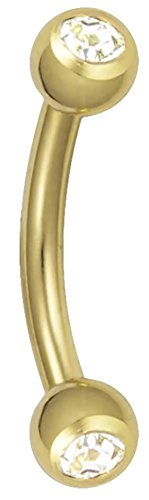
The most critical decision factor in selecting a barbell is the material composition. Because barbells are often used in piercings that are either healing or subject to high movement, the metal must be inert. For those seeking an edgy look without compromising health, Implant Grade Titanium (ASTM F-136) is the gold standard. It is hypoallergenic, lightweight, and lacks the nickel content found in many cheaper 'surgical steel' alternatives, which can cause long-term sensitivity or allergic reactions. If you prefer a luxury aesthetic, 14k or 18k solid gold is an excellent choice, though ensure it is not gold-plated, as plating can flake off and cause irritation in the piercing tract. Avoid mystery metals or low-grade alloys that promise a 'dark' or 'black' finish through coating, as these coatings can leach into the skin.
Understanding Gauge and Length
A common mistake in purchasing barbells is ignoring the specific gauge (thickness) and length required for the anatomy. Barbells are measured in gauges, where a lower number indicates a thicker post. For example, a 16g barbell is thicker than a 20g barbell. When selecting jewelry for an unconventional or 'forbidden' piercing, you must account for swelling. If the barbell is too short, it will cause pressure and potential embedding. If it is too long, it will snag on clothing and cause unnecessary trauma. Always measure the thickness of your existing jewelry or consult a professional piercer to determine the exact gauge needed. For initial piercings, a slightly longer barbell is often recommended to accommodate the natural inflammatory response during the healing phase.
End Styles and Aesthetic Impact
The 'forbidden' aesthetic is often defined by the ends of the barbell. While standard ball-end barbells are functional and discreet, you can elevate the look using various decorative ends. For a more aggressive or industrial vibe, consider spikes, heavy geometric shapes, or even anatomical motifs. If you are looking for something more sophisticated yet still subversive, high-quality gemstones or opals set in titanium can provide a striking contrast. Pay close to the threading mechanism: internally threaded or threadless (push-pin) barbells are superior to externally threaded ones. Internally threaded jewelry ensures that the threads are on the post rather than the decorative end, preventing the sharp edges from scraping the inside of your piercing during insertion.
Durability and Finish Quality
Finally, consider the longevity of the piece. A high-quality barbell should have a seamless finish with no visible burrs or rough edges on the post. Any imperfection in the polishing process can act as a micro-abrasion site for bacteria, leading to infection. If you are opting for colored barbells, ensure the color is achieved through anodization (for titanium) rather than a surface coating. Anodized colors are integrated into the metal itself through an electrochemical process, meaning the color will not chip or peel, ensuring your jewelry remains as striking as the day you bought it.