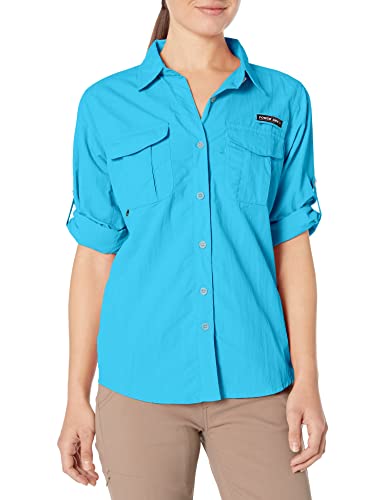
Prioritize Fabric Composition and Moisture Management
The primary job of a hiking shirt is to move sweat away from your body to prevent chilling during breaks and overheating during climbs. When browsing this brand, look closely at the fabric blend. Most of their high-performance shirts utilize synthetic polyester blends designed for rapid evaporation. If you are planning high-intensity treks in humid environments, prioritize shirts with a high percentage of moisture-wicking synthetics. However, if you prefer a softer, more natural feel for casual day hikes, look for their blends that incorporate lightweight textures that mimic natural fibers without the heavy water-retention issues of pure cotton. Avoid anything that feels heavy or 'sponge-like' when damp. You want a fabric that feels light even when you are working hard.
Understand the Fit and Silhouette Variations
One of the standout features of this specific brand is the attention to the female form. Unlike generic unisex shirts that can feel boxy and restrictive in the chest or too loose in the waist, these shirts are often tailored to provide a more streamlined fit. When making your decision, consider your activity level. For technical mountaineering or fast-packing, a more 'athletic' or slim fit is preferable as it prevents excess fabric from snagging on brush or flapping in the wind. For casual hiking or long-distance backpacking where comfort and airflow are paramount, a slightly more relaxed cut can help prevent skin irritation. Pay attention to the shoulder construction. A shirt with raglan sleeves (where the seam runs diagonally from the underarm to the collarbone) will typically offer a better range of motion for trekking pole use.
Sun Protection and UV Ratings
High-altitude hiking exposes you to much more intense UV radiation than a walk in the park. A key decision factor for any serious hiker is the UPF (Ultraviolet Protection Factor) rating. Many of these shirts are engineered with built-in sun protection. When selecting a shirt, check if the manufacturer specifies a UPF rating. A shirt with a rated UPF of 30 or 50 provides a physical barrier that is far more reliable than applying sunscreen alone. This is especially important for long-sleeve options, which are excellent for keeping both the sun and biting insects at bay during summer treks.
Thermal Regulation and Layering Potential
Your choice of shirt should depend heavily on the season and the climate of your destination. For summer excursions, look for shirts with mesh ventilation panels, particularly in high-heat zones like the underarms or the back. These small design details make a massive difference in preventing heat exhaustion. For transitional seasons like spring or autumn, consider the weight of the fabric. A slightly heavier, long-sleeve moisture-wicking shirt can serve as a base layer under a lightweight fleece or shell. The goal is to build a system where each layer assists the next in maintaining a steady core temperature.
Durability and Maintenance
Hiking gear takes a beating from sweat, salt, and constant washing. Look for shirts that feature reinforced stitching at the seams. Since these shirts are designed for outdoor use, they should be able to withstand the occasional scrape against a rock or branch without fraying. Additionally, consider how easy the shirt is to care for. You want a garment that can be tossed in a standard wash and dries quickly in a backpack or a hotel sink, making it ideal for multi-day trips where gear hygiene is essential.