Mattress Buying Guide_ Firmness, Materials, and Trial Periods Explained
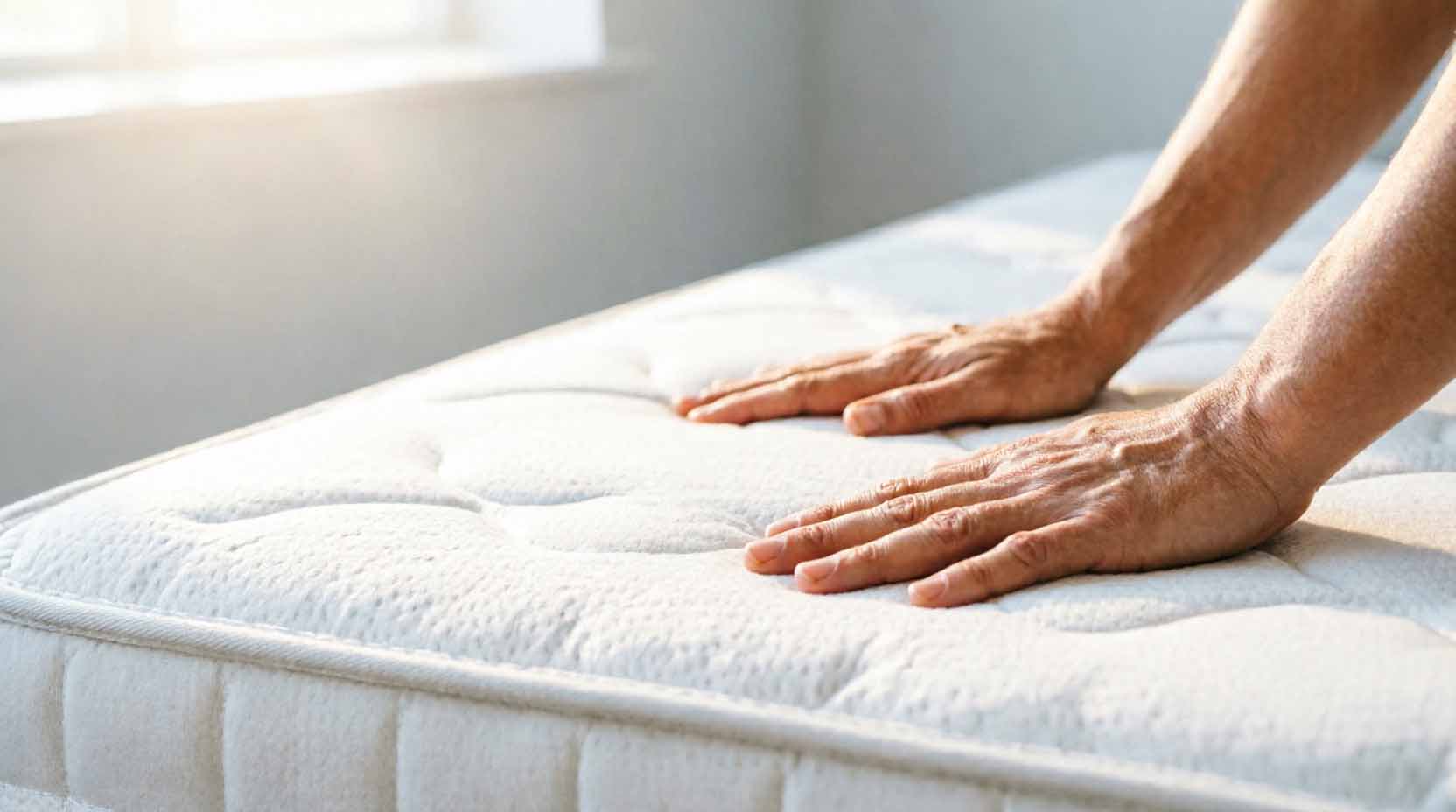
A mattress is one of the few purchases most people make without ever touching the product before checkout, and that's exactly why the return rate on online mattress sales runs higher than almost any other bulky home good. This guide exists to close that gap. It covers three things: how to translate a "firmness rating" into something that actually matches your body, what the major mattress materials do differently once you've slept on them for a month (not one night in a showroom), and how sleep trials and warranties really work once you read past the "100-night risk-free trial!" banner.
The short version: firmness numbers aren't standardized across brands, foam density matters more than foam type, and "risk-free" trials almost always carry conditions: minimum sleep periods, non-refundable shipping, or store-credit-only refunds, that are worth knowing before you click buy, not after.
A note on the numbers in this guide: Specific figures below (foam density, coil count/gauge, warranty sag thresholds, return-pickup fees) reflect ranges commonly published across major mattress-in-a-box and traditional manufacturers' spec sheets and warranty terms, not a single controlled lab test. Where a brand's actual spec differs from these typical ranges, treat the brand's own published number as authoritative.
Mattress Firmness Scale: How to Choose the Right Firmness by Sleep Position and Weight
Firmness is measured informally on a 1–10 soft-to-firm scale, but there's no regulatory body enforcing it. One brand's "6/10 medium" can feel like another brand's "7/10 firm." That inconsistency is the single biggest source of buyer complaints in mattress reviews. The two variables that actually predict how a mattress will feel to you are sleep position and body weight.
|
Sleep Position |
Body Weight |
Recommended Firmness |
Why |
|
Side sleeper |
Under 130 lbs |
Soft to medium (3–5) |
Needs shoulder/hip give without a firmer surface pushing back |
|
Side sleeper |
130–230 lbs |
Medium (5–6) |
Balances pressure relief with enough support to avoid spine sag |
|
Side sleeper |
Over 230 lbs |
Medium-firm (6–7) |
Needs a firmer comfort layer so the shoulder/hip don't bottom out to the support core |
|
Back or stomach sleeper |
Under 130 lbs |
Medium (5–6) |
Prevents the lower back from arching into an unsupported gap |
|
Back or stomach sleeper |
130–230 lbs |
Medium-firm to firm (7–8) |
Keeps the hips from sinking below shoulder line |
|
Back or stomach sleeper |
Over 230 lbs |
Firm (8+) |
Requires a denser support core to prevent excess spinal curvature |
|
Combination sleeper (any weight) |
— |
Medium (5–6), responsive material |
Needs to reposition easily without feeling "stuck" |
The spine-alignment check: Lie in your normal sleep position on the mattress (a showroom test works for this even if you buy online elsewhere). Have someone glance at your spine from the side. If it looks straight- no bend upward at the waist (mattress too firm) and no sag downward at the hips (mattress too soft) the firmness is right for you, regardless of what number is printed on the label.
Body weight adjustment rule of thumb: Under 130 lbs, a mattress will typically feel about one point firmer than its rated number because there isn't enough body weight to compress the top comfort layer fully. Over 230 lbs, expect the opposite: the same mattress will feel about one point softer than rated because the comfort layer compresses further before the support core engages.
Mattress Materials Compared: Memory Foam vs. Hybrid vs. Latex vs. Innerspring
Every material category has a real, well-documented drawback that marketing copy tends to bury in a bullet point or skip entirely. Here's the trade-off for each.
|
Material |
Feel |
Motion Isolation |
Cooling |
Typical Price (Queen) |
Best For |
Common Complaint |
|
Memory foam |
Slow-contouring, "hugs" the body |
Excellent |
Below average unless gel-infused |
$500–$1,200 |
Side sleepers, pressure-point pain |
Sleeps warm. Feels slow to move on |
|
Latex |
Responsive, slight bounce-back |
Good |
Above average (naturally breathable) |
$1,200–$2,500 |
Combination sleepers, eco-conscious buyers |
Higher price. Rubbery odor for the first few days |
|
Innerspring |
Classic bounce, minimal sink |
Poor to fair |
Excellent (open airflow) |
$400–$900 |
Stomach sleepers, hot sleepers on a budget |
Strong motion transfer. Less pressure relief |
|
Hybrid (coil + foam/latex) |
Blends contouring with bounce |
Good |
Above average |
$900–$1,800 |
Most undecided buyers, couples |
Quality varies widely by coil-to-foam ratio. Not always cheaper than a pure category |
Memory Foam Mattresses: Density, Cooling, and What the Label Won't Tell You
The number that predicts how long a memory foam mattress will actually hold its shape is density, measured in pounds per cubic foot (PCF), not thread count, not the brand name on the box. Foam rated 4–5 PCF is a reasonable durability baseline for a primary mattress. Anything under 3 PCF is common in budget mattresses and tends to develop visible body impressions within 2–3 years of nightly use, even if the listing doesn't disclose the PCF number at all (many don't treat that omission as a signal to ask before buying).
Real-world vs. lab claim: "Cooling gel memory foam" reduces surface heat retention, but it does not eliminate the core issue. Memory foam's cell structure traps body heat more than latex or coils by design. Expect a gel-infused foam mattress to sleep noticeably warmer than a hybrid or innerspring model, even with cooling marketing on the box.
Latex Mattresses: Natural vs. Synthetic Latex Explained
"Latex" on a listing can mean 100% natural Dunlop or Talalay latex, a synthetic petroleum-based substitute, or a blend of both, and the difference affects both price and durability significantly. Natural latex typically outlasts synthetic by several years and carries a distinct rubber smell for the first 24–72 hours after unboxing, which is normal off-gassing, not a defect. If a listing just says "latex" without specifying natural, Dunlop, Talalay, or blend percentage, assume it's a cheaper synthetic or blended version.
Innerspring Mattresses: Coil Count and Coil Gauge Explained
Coil count above roughly 800 (queen size) combined with coil gauge in the 13–15 range (lower gauge number = thicker, more durable wire) generally signals a more durable support core. Pocketed coils, each spring individually wrapped in fabric, reduce motion transfer meaningfully compared to open-coil (Bonnell) systems, which is the deciding factor for couples with different bedtimes.
Hybrid Mattresses: Why the Coil-to-Foam Ratio Matters Most
"Hybrid" is a marketing category, not a technical spec. A mattress with a thin foam layer over a basic coil unit and one with a substantial 3–4 inch comfort layer over pocketed coils will both be labeled "hybrid" at very different price points and comfort levels. Check the layer breakdown in the product description before assuming the hybrid label guarantees quality.
CertiPUR-US, OEKO-TEX, and GREENGUARD: What Mattress Certifications Actually Mean
CertiPUR-US, OEKO-TEX Standard 100, and GREENGUARD Gold certify that foam or textile materials meet specific chemical emissions and safety testing thresholds. None of these certifications measure comfort, durability, or firmness. A CertiPUR-US label tells you the foam was tested for harmful substances, not that it's a good mattress. Treat certification badges as a safety baseline to look for, not a quality differentiator between two otherwise similar products.
The PickSmartly 3-Layer Check: A Mattress Evaluation Framework
Before buying any mattress on this site or anywhere else, you should be able to answer three questions using the listing or the brand's spec sheet. If you can't answer all three, that's a signal the listing is leaning on marketing language instead of substance.
- Support core: What is it (coil gauge, high-density foam), and what's the specific number (gauge or PCF)?
- Comfort layer: What material sits on top, and what's its density in PCF?
- Trial terms: What's the minimum required sleep period, who pays return shipping, and is the refund cash or store credit?
How to Choose a Mattress: Step-by-Step Buyer Decision Tree
Use this in order. Stop at the first line that matches your situation.
- Do you run hot at night? → Rule out memory foam under 3 PCF without gel infusion. Prioritize latex, innerspring, or coil-dominant hybrids.
- Do you sleep with a partner on a different schedule? → Rule out open-coil innerspring. Prioritize memory foam, latex, or pocketed-coil hybrids.
- Is your body weight over 230 lbs? → Rule out anything rated softer than medium-firm (6/10). Confirm the support core is reinforced (higher coil gauge or higher-density foam base layer).
- Do you have lower back pain and sleep on your back or stomach? → Rule out soft-rated mattresses. Prioritize medium-firm to firm with a verified support core.
- None of the above apply? → Default to a mid-tier hybrid (medium, 5–6 rating) as the lowest-risk starting point, and rely on the sleep trial to fine-tune from there.
Mattress Sleep Trial Period and Warranty Explained
Sleep Trial vs. Warranty: What's the Difference?
A sleep trial covers comfort preference for a limited window (typically 100 nights, ranging from 30 to 365 depending on the brand). If you don't like how it feels, you can return it. A warranty covers manufacturing defects over a much longer period (commonly 10–20 years) and does not cover the fact that you simply don't like the firmness. Confusing the two is the most common source of buyer frustration after purchase.
Mattress Break-In Period: How Long Before You Should Judge It
Expect a new mattress, especially memory foam or latex, to need 2–4 weeks before it reaches its true feel as the material fully expands and the comfort layer softens with body heat. Most brands build a mandatory minimum trial period (commonly 30 days) into their return policy specifically because judging a mattress on night one produces unreliable impressions.
What a "Risk-Free" Mattress Trial Doesn't Always Cover
Before assuming a trial is entirely free, verify:
- Who pays return shipping or pickup. Some brands cover this fully. Others deduct a pickup fee (commonly $50–$150) from your refund.
- Cash refund vs. store credit. Not all "risk-free" trials return actual cash. Some issue store credit only.
- Minimum sleep period before you're eligible to return. Many brands require 30 nights minimum before processing any return, even if you already know it's not working.
Prorated vs. Non-Prorated Mattress Warranty Explained
A non-prorated warranty covers full repair or replacement at no cost to you within the stated window. A prorated warranty is common on longer 15–20 year terms. It shifts an increasing percentage of the replacement cost onto you as the mattress ages, often starting as early as year 2 or 3. A "20-year warranty" that's prorated after year 2 offers less protection than a 10-year non-prorated warranty, even though the number on the box looks bigger.
Sag threshold detail most buyers miss: Warranties commonly define a minimum body-impression depth, often 0.75 to 1.5 inches before they'll honor a sagging claim. Normal, expected softening under that threshold isn't a covered defect, which is why "it feels softer than when I bought it" complaints are frequently denied.
Who Should Not Buy Each Mattress Type (Honest Drawbacks)
- Skip memory foam if you run hot year-round and aren't willing to pair it with a cooling mattress protector. Gel infusion reduces but doesn't eliminate heat retention.
- Skip budget innerspring if you share a bed with a partner on a different sleep schedule. Motion transfer on open-coil systems is noticeable enough to disrupt sleep.
- Skip natural latex if budget is the primary constraint. The price premium over foam or hybrid options is real and substantial, and the comfort difference is marginal for people without a specific pressure-point issue.
- Skip mattresses marketed primarily on coil count or warranty length. These numbers are frequently used as marketing shortcuts. Coil gauge and comfort-layer density are more reliable durability signals than count or warranty years alone.
- Skip "premium" mattresses priced above roughly $2,000 (queen) if your primary goal is durability and pressure relief rather than brand cachet. Past the mid-range price tier, additional cost increasingly reflects marketing and retail markup rather than proportionally better materials.
Best Mattresses by Category: Where to Go Next
Once you've identified your target firmness and material using the framework above, browse PickSmartly's Bedding category to apply this framework to specific in-stock options.
Editorial note: dedicated roundup pages for "Best mattresses for side sleepers," "Best cooling mattresses," and "Best mattresses for back pain" are referenced conceptually above but are not yet confirmed as live URLs on PickSmartly. Create and verify these pages (or the correct existing slugs) before publishing, then replace the Bedding category link above with the specific roundup links.
For more on how PickSmartly evaluates and scores individual products, see our scoring methodology page.
Mattress Buying Guide: Frequently Asked Questions
How do I know what firmness mattress I need if I've never tried one?
Match your sleep position and body weight against the table in this guide, then apply the spine-alignment check on any mattress you can test in person. A showroom visit, even if you ultimately buy online, is the fastest way to confirm the number on the label matches how it actually feels to you.
Is a firmer or softer mattress better for back pain?
It depends on sleep position, not on pain alone. Back and stomach sleepers with lower back pain generally need medium-firm to firm support to prevent hip sag. Side sleepers with back pain often need a softer comfort layer at the shoulder and hip with a firmer support core underneath. "Firmer is always better for back pain" is a common oversimplification.
Do memory foam mattresses really sleep hot?
Yes, as a general rule, the closed-cell structure that gives memory foam its contouring feel also traps body heat more than latex or coils. Gel infusion and open-cell foam variants reduce this effect but don't eliminate it. Hot sleepers typically get better results from latex, innerspring, or a coil-dominant hybrid.
What does a mattress trial period actually cover, and who pays for returns?
It covers your right to return the mattress if you don't like the feel within a defined window. It does not automatically mean the return is entirely free. Return shipping/pickup fees and whether refunds are issued as cash or store credit vary by brand, so check both before purchase.
How long should I sleep on a new mattress before deciding I don't like it?
Give it at least 2–4 weeks. New foam and latex mattresses need time to fully expand and soften with regular body heat, and most brands build a similar minimum period into their trial policy for exactly this reason.
Is a more expensive mattress always better?
No. Quality improves meaningfully from budget to mid-range as material density and construction improve, but the relationship flattens out past roughly the $1,500–$2,000 mark (queen size). Beyond that, price increasingly reflects brand marketing and retail overhead rather than proportionally better materials.