What Is a Steam Mop and Which Floors Is It Safe For?
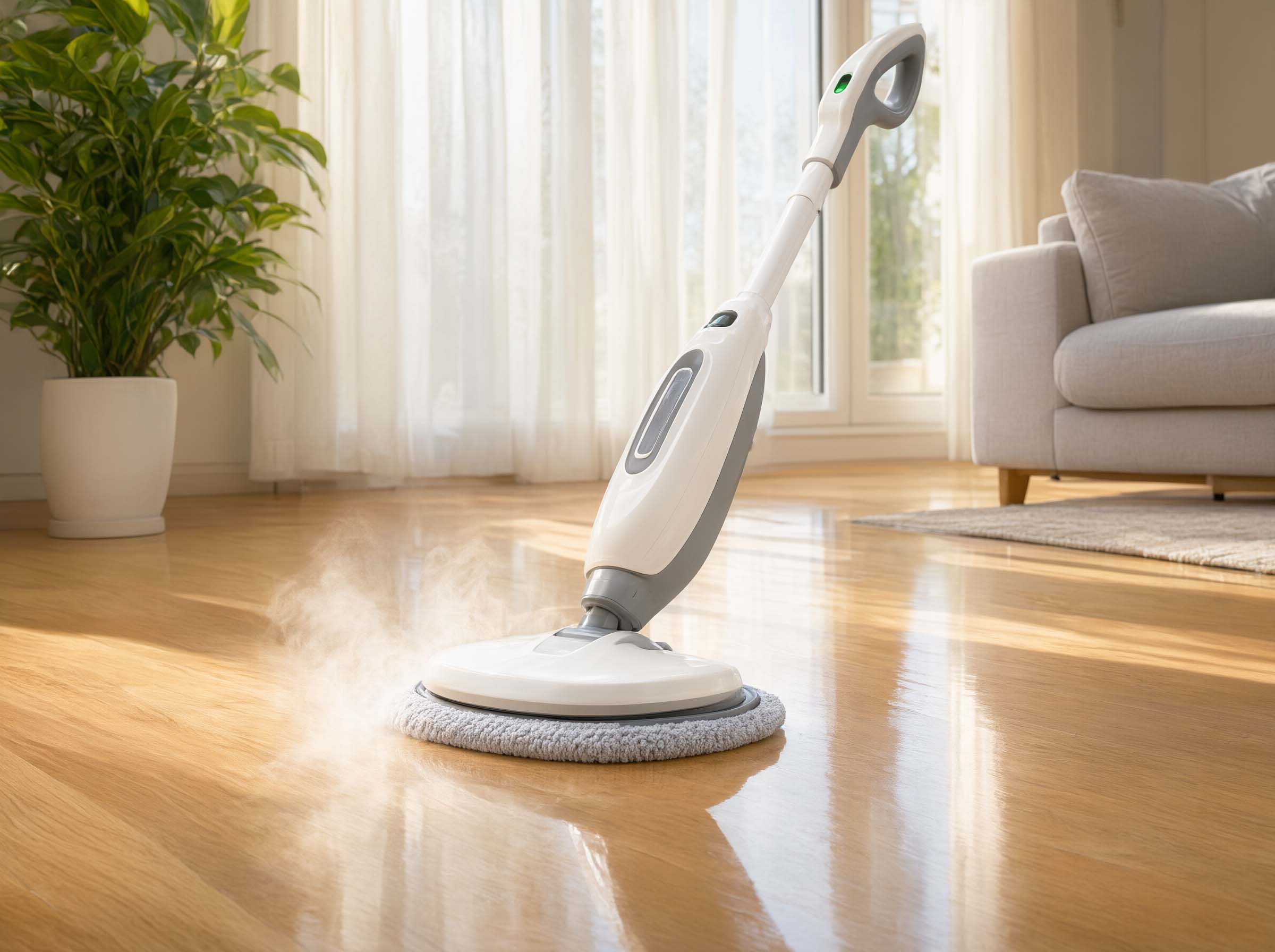
A steam mop is an electric cleaning tool that heats water into vapor and releases it through a microfiber pad to sanitize floors without chemical cleaners. It works well on sealed tile, sealed hardwood, and most vinyl plank. It can ruin laminate, unsealed wood, and unsealed natural stone in a single use. That's the short answer. Here's everything you need to know before you plug one in.
What Is a Steam Mop, Exactly?
A steam mop is a small water tank on a wand attached to a heating element and a microfiber pad. Fill the tank, plug it in, and it heats water to roughly 200 to 250 degrees Fahrenheit. That heat converts water into pressurized vapor. The vapor releases through small holes near the pad, and the pad both distributes the moisture and physically lifts dirt off the surface.
Most units reach operating temperature in 15 to 30 seconds. Steam at the point of contact typically measures close to 212 degrees Fahrenheit, the boiling point of water at sea level.
Think of it like a handheld sauna for your floor. Short blast of heat, quick evaporation, no residue left behind if used correctly.
Steam Mop vs. Traditional Mop vs. Spin Mop
A traditional wet mop uses standing water and a cleaning solution swished around in a bucket. That bucket water gets dirtier with every pass, which means you're partly redistributing grime rather than removing it.
A spin mop relies on mechanical wringing. No heat, no vapor, just a tighter squeeze than you'd manage by hand.
A steam mop skips the bucket entirely. Fresh water, heated on demand, applied in a thin layer that evaporates fast. It replaces chemistry with temperature. That's the entire pitch, and it's worth remembering as you read every marketing claim from here on.
How Does a Steam Mop Actually Clean?
Two things happen at once. Heat loosens grime and kills a large percentage of common household bacteria on contact. Independent testing on steam cleaning devices has shown kill rates above 99 percent for many common bacteria strains when steam contacts a surface for several seconds at full temperature. The microfiber pad does the second job: physically grabbing loosened debris so it doesn't just sit back down on a wet floor.
Most steam mops need only water. No added detergent required. That's the real selling point for households trying to cut down on chemical residue, especially with pets or crawling infants around.
The Sanitizing Limit You Need to Know
Rule of thumb: steam mops sanitize. They don't deep-scrub. Sweep or vacuum first, always. Steam is not strong enough to lift dried mud, caked food, or gravel. It softens grease reasonably well. It does not replace a first pass with a broom.
A quick gut check. If your floor currently has visible debris on it, steam mopping first is a wasted step. Clear the surface, then steam.
Which Floors Are Safe for a Steam Mop?
Safety here depends less on the material name and more on whether the floor has an intact protective seal. A sealed surface resists moisture penetration. An unsealed or worn surface absorbs it.
Generally safe options include sealed hardwood, ceramic tile, porcelain tile, sealed natural stone like granite or sealed slate, sealed concrete, and most luxury vinyl plank when the manufacturer explicitly approves steam cleaning.
Numeric rule: if your hardwood or tile was sealed within the last 1 to 2 years and shows no visible gaps, cracks, or lifted edges, steam on the lowest setting carries low risk. Older seals or floors you're unsure about need the test later in this guide before you commit.
A Tale of Two Hardwood Floors
Picture two homeowners. One has polyurethane-sealed oak installed last year, tight seams, glossy finish. Steam mopping on low is reasonable for that floor. The other has original 1990s oak with a worn, dull finish and visible gaps between boards. That floor is a gamble, even if it's technically "hardwood." Age alone doesn't disqualify a floor. Condition does.
Safe Floor Reference Table
|
Floor Type |
Safe? |
Conditions or Caveats |
Recommended Steam Setting |
|
Sealed hardwood (recent finish) |
Yes, with care |
No gaps, glossy sealant, dry pad passes only |
Low |
|
Ceramic tile |
Yes |
Check grout condition, avoid pooling water |
Low to medium |
|
Porcelain tile |
Yes |
Most durable tile option for steam |
Medium |
|
Sealed natural stone (granite, sealed slate) |
Yes, with care |
Reseal every 1 to 2 years for safety |
Low |
|
Luxury vinyl plank (LVP) |
Conditional |
Only if manufacturer approves steam use |
Low |
|
Sealed concrete |
Yes |
Common in garages and basements |
Medium |
|
Laminate |
No |
Core swells with moisture exposure |
Not recommended |
|
Unsealed or waxed hardwood |
No |
Moisture penetrates finish immediately |
Not recommended |
|
Unsealed natural stone (marble, limestone) |
No |
Porous surface absorbs steam and stains |
Not recommended |
|
Cork or non-glued vinyl |
No |
Seams lift, and edges curl with heat |
Not recommended |
Which Floors Should You Never Steam Mop?
Four categories deserve a hard no. Laminate, unsealed or waxed hardwood, unsealed natural stone, and non-glued vinyl or cork.
Why Laminate Is the Biggest Trap
Laminate is the big one. Its core layer is compressed wood fiber pressed under a printed plastic top layer. That core swells permanently when exposed to moisture for more than a few minutes. Major manufacturers, including Pergo and Mohawk, state clearly in their care documentation that steam cleaning can void the product warranty. This is not a gray area. It's printed in the fine print most buyers never read.
The trap here is visual. A lot of laminate is printed to look exactly like real hardwood. Buyers assume they own wood, run a steam mop across it, and find swollen, peeling boards a week later. If you're not certain whether your "wood floor" is laminate or genuine hardwood, treat it as laminate until proven otherwise.
Full Avoid List
Do not steam mop these floors:
- Laminate flooring of any brand or age
- Unsealed or waxed hardwood
- Marble, limestone, or any unsealed natural stone
- Cork flooring
- Vinyl that isn't fully glued down at the seams
- Any floor with visible water damage history
How to Test If Your Floor Is Steam-Safe
Three steps. Takes less than five minutes.
- Check your documentation. Look up the flooring manufacturer's care guide online, or check the box or receipt from installation. This single step resolves most uncertainty instantly.
- Inspect for wear. Look closely at seams, edges, and high-traffic areas. Gaps, dullness, or lifted corners mean the seal is compromised, regardless of what the floor was rated for when new.
- Run a hidden-corner test. Pick a spot inside a closet or under furniture. Apply low steam for 10 seconds and check for discoloration, warping, or moisture pooling after it dries.
If all three steps check out clean, proceed with steam mopping on the lowest setting for your first few passes.
The PickSmartly Water Drop Test
Here's a signature check we use that most buying guides skip entirely. Drop a small bead of water on an inconspicuous part of your floor. Watch what happens.
If the water beads up and sits on the surface for 15 seconds or longer before soaking in, your seal is likely intact enough for cautious steam use. If it absorbs in under 2 to 3 seconds, the seal is compromised, or the floor was never sealed. Skip the steam mop. No exceptions.
This test takes 30 seconds and costs nothing. It's more reliable than guessing based on the floor's age or how it looks from across the room.
Steam Mop Pros and Cons
No product is universally right. Here's the honest breakdown.
|
Pros |
Cons |
|
No chemical cleaners needed for most jobs |
Not effective on large debris or dried mud |
|
Kills over 99 percent of common bacteria on contact |
Steep learning curve on floor compatibility |
|
Floors dry faster than traditional wet mopping |
Replacement pads add ongoing cost over time |
|
Compact and easy to store |
Small water tank means frequent refills on large homes |
|
Cuts down on plastic bottle waste from cleaning sprays |
Can void flooring warranties if used on the wrong surface |
Buyer Decision Tree
Work through this in order. Stop at the first answer that fits.
Step 1: Identify Your Floor Type
Is your floor laminate, unsealed wood, unsealed stone, or cork? If yes, do not buy a steam mop for this floor. Use a microfiber dry mop or a pH-neutral cleaner instead.
Step 2: Run the Water Drop Test
Did the water drop test absorb in under 3 seconds? If yes, your seal is compromised. Reseal the floor first or skip steam mopping entirely.
Step 3: Confirm Your Floor Qualifies
Is your floor sealed hardwood, tile, sealed stone, or approved LVP, with the seal intact? If yes, a steam mop is a reasonable purchase. Start on the lowest setting for the first three uses.
Step 4: Weigh the Household Factor
Do you have pets, young kids, or someone in the household sensitive to cleaning chemicals? If yes, the chemical-free angle of a steam mop adds real value beyond just cleaning power.
Who Should Skip Steam Mops Entirely
Radical honesty matters more than a sale. Skip a steam mop if any of these apply to you.
Your Home Is Mostly Laminate
No steam mop workaround makes this safe long-term, regardless of what a product listing claims about "universal floor safety." Even a small amount of steam exposure adds up over repeated cleanings.
Your Hardwood Is Old and Unsealed
The upfront cost of a steam mop isn't worth the risk of warping boards you'd then need to refinish. Reseal first, or wait until you're ready to commit to that project.
You're Dealing With Heavy, Dried-On Mess
A steam mop softens light grime well. It struggles against anything that needs actual scrubbing pressure, like tracked-in mud or baked-on food residue near a stove.
You Want One Tool for Every Surface
You want a single tool that handles grout deep cleaning, hardwood, and laminate equally well. That tool doesn't exist. Buy a dedicated grout brush for tile and skip steam near your laminate rooms entirely.
Final Words
A steam mop is a genuinely useful tool on the right floor and a genuinely expensive mistake on the wrong one. The difference almost never comes down to the machine itself. It comes down to whether your floor's seal is actually intact, and most buyers never check that before their first use.
Run the water drop test before you commit. Respect the avoid list, especially if you have laminate that's printed to look like real wood. And remember that steam sanitizes. It doesn't scrub, so a quick sweep before every session still matters.
Get those three habits right and a steam mop earns its place in your cleaning routine for years. Skip them, and you're gambling with flooring that costs far more to replace than the mop ever did.
Frequently Asked Questions
Can a steam mop damage hardwood floors?
Yes, if the seal is worn, cracked, or more than a couple of years old without refinishing. Sealed hardwood in good condition handles occasional steam mopping on a low setting reasonably well. Unsealed or waxed hardwood should never be steam mopped.
Is it safe to use a steam mop on laminate flooring?
No. Laminate's core layer absorbs moisture and swells permanently, even from brief exposure. Most major manufacturers state this voids the warranty. Use a slightly damp microfiber mop instead.
Do steam mops work without chemicals?
Yes, for most routine cleaning and sanitizing. Heat alone kills the majority of common household bacteria. Heavily soiled areas may still need a manufacturer-approved cleaning solution added to the tank.
How often should I steam mop tile floors?
Once or twice a week for typical household traffic works well. Daily steam mopping on grout lines can gradually wear down grout sealant faster than expected, so reseal grout roughly once a year if you clean this often.
Will a steam mop void my flooring warranty?
It can, particularly with laminate and some engineered wood products. Check your specific manufacturer's care documentation before your first use. This single check prevents most warranty disputes.
Can I use a steam mop on vinyl plank flooring?
Only if the manufacturer explicitly approves it. Many LVP products handle steam fine when seams are fully glued and sealed. Floating vinyl plank with unglued seams is a different story, since heat and moisture can lift the edges over time.