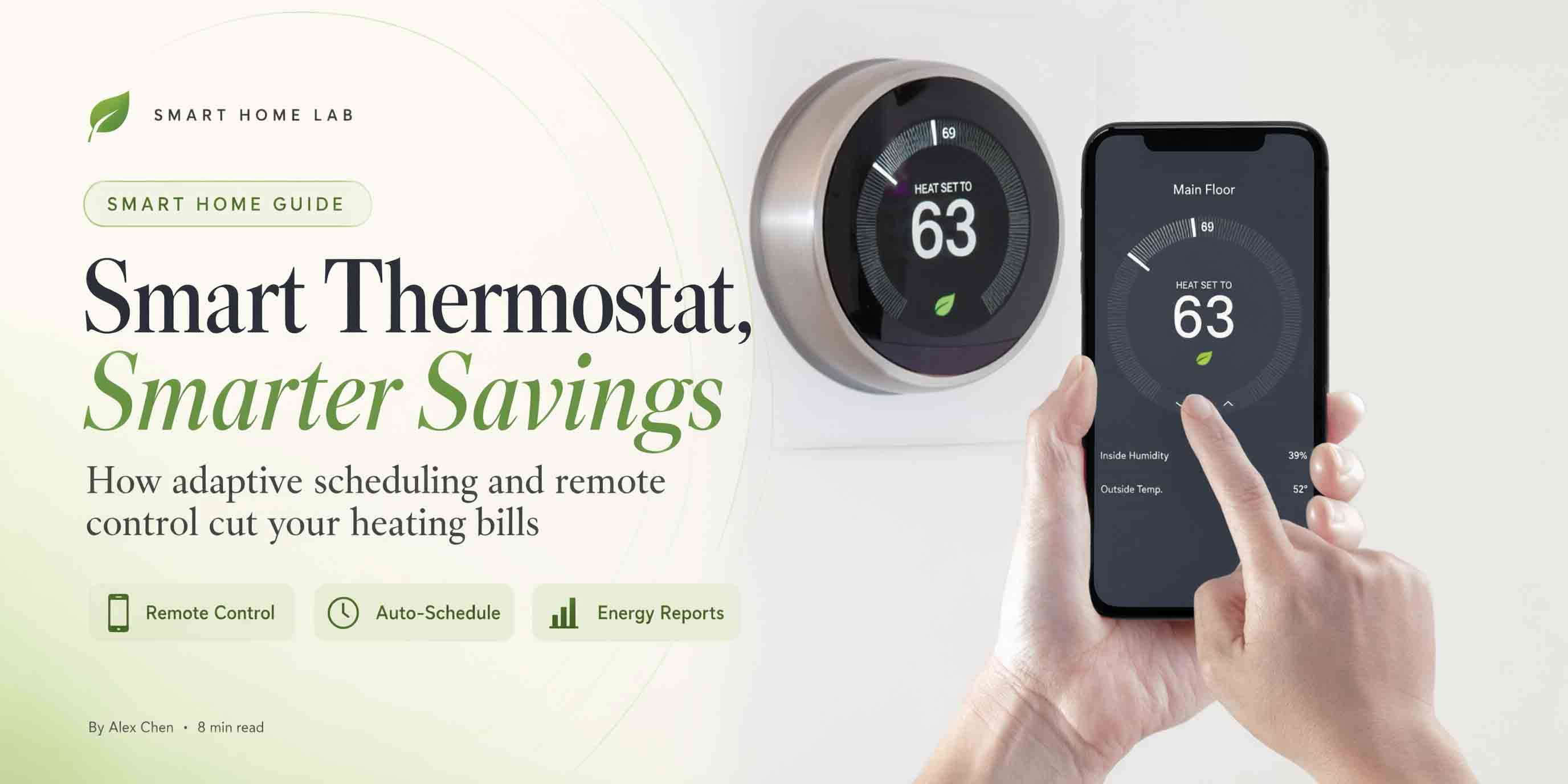
What Is a Smart Thermostat and How Much Can It Save You?
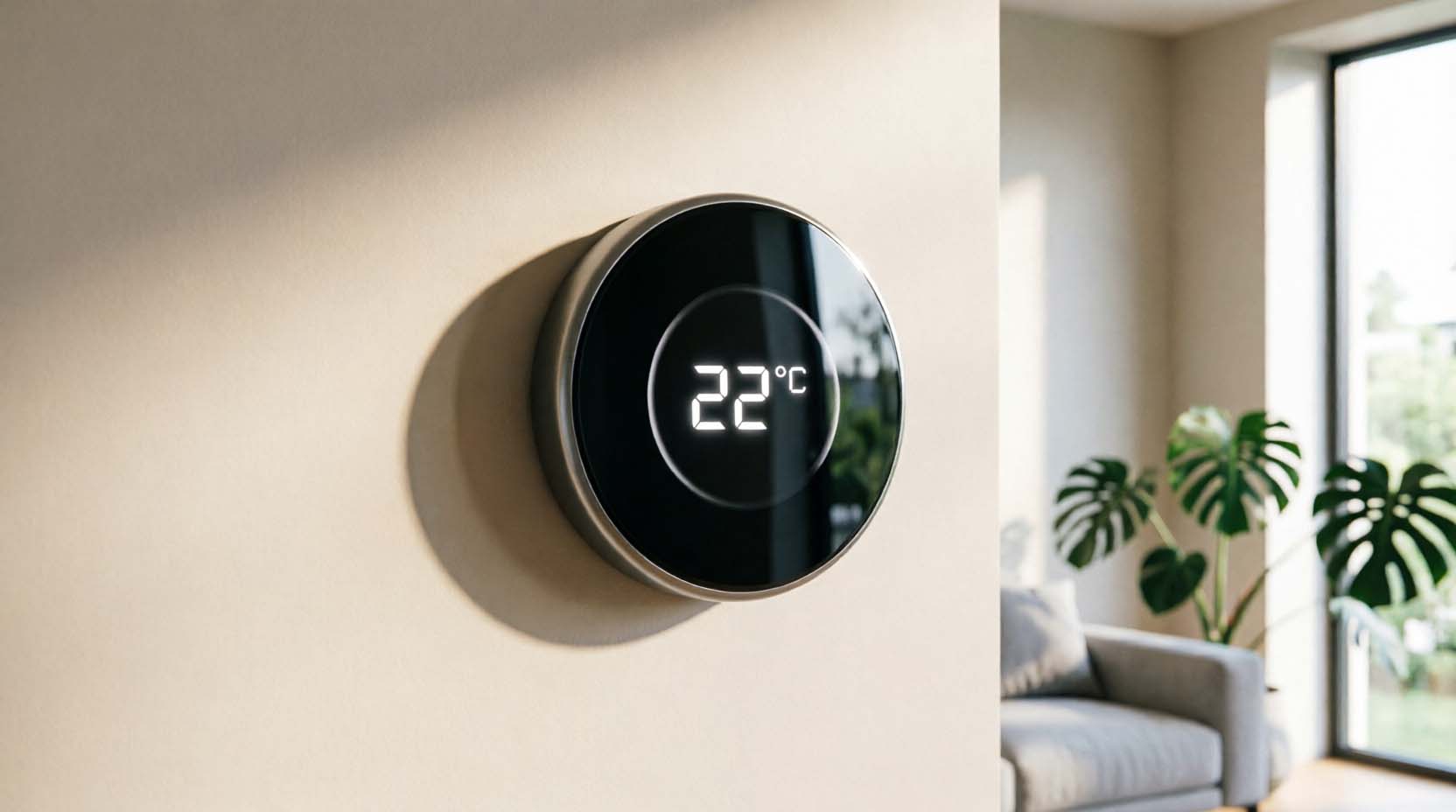
A smart thermostat is a Wi-Fi-connected device that learns your schedule and adjusts heating and cooling automatically instead of running on a fixed, manual routine. The honest savings number is 8% on your annual heating and cooling costs, or roughly $50 a year, according to ENERGY STAR's certified program data that finds certified smart thermostats save an average of 8% on heating and cooling costs per year. That's the floor, not the ceiling. Depending on your current setup, your real savings could be much higher.
This guide breaks down exactly why that range is so wide, what determines where you land in it, and whether the math actually works out for your specific home.
What Is a Smart Thermostat? (Quick Definition)
A smart thermostat connects to your home Wi-Fi and controls your HVAC system through an app, voice assistant, or automatic scheduling. It uses sensors, location data, and usage patterns to adjust temperature without you touching a dial.
That's different from a standard programmable thermostat. A programmable model only follows whatever fixed schedule you manually typed in years ago. It doesn't know if you're home. It doesn't learn. It doesn't adjust when your routine changes.
Here's the simple test. If a thermostat can't be controlled remotely from your phone and doesn't adjust based on your actual presence or habits, it's programmable. Not smart.
A Nest Learning Thermostat builds a schedule automatically within about a week of use. A basic Honeywell 7-day programmable thermostat does exactly what you told it to do on day one, forever, until you change it yourself.
How Does a Smart Thermostat Actually Save Energy?
Three mechanisms drive the savings. None of them are magic. They just close the gap between what your HVAC does and what your home actually needs.
Occupancy and Geofencing Sensors
Built-in sensors detect motion and activity around your home. Some models, like ecobee's SmartThermostat line, add remote sensors for individual rooms so the system knows your bedroom is empty at 2 PM even if someone's in the kitchen.
Geofencing uses your phone's location to start heating or cooling before you arrive home, instead of running the system all day just in case.
Learning Algorithms and Auto-Scheduling
This is the biggest difference from a programmable thermostat. Instead of you setting a fixed schedule once, the device watches when you adjust the temperature manually and builds a schedule around that behavior.
Most learning thermostats need about one to two weeks of regular use before the auto-schedule becomes reliable. Expect some manual overrides during that break-in period. That's normal, not a defect.
Real-Time Usage Reports and Behavioral Nudges
This part gets overlooked constantly. Weekly and monthly energy reports create awareness on their own. When people see "you used 18% more energy this week," they adjust their behavior even without the thermostat doing anything automatically.
Quick checklist of what actually drives the savings:
- Occupancy sensors reduce conditioning of empty rooms
- Geofencing prevents all-day running for a home nobody's in
- Learning schedules replace guesswork with actual usage patterns
- Usage reports create behavioral awareness that compounds over time
How Much Can a Smart Thermostat Actually Save You?
The Verified Baseline
Start with the conservative number. ENERGY STAR calculates that certified smart thermostats save households about 8% on heating and cooling costs annually, or roughly $50 per year. That figure comes from real household data across a wide range of climates and home types, not a marketing lab.
Treat 8% and $50 a year as your floor. Anything above that is a bonus, not a guarantee.
Manufacturer and Utility Claims (With Context)
Manufacturers report higher numbers, and they're not lying, they're just measuring a different starting point. Google Nest reports that its thermostats save on the order of 10-15% on cooling and heating costs in typical use, while ecobee claims customers save up to 26% on combined heating and cooling.
Some independent utility research lands in the middle. One analysis found that homeowners who installed smart thermostats saved an average of 12% on their heating bills and 15% on their cooling bills.
Here's the rule of thumb that explains the gap. The worse your old habits were, the higher your real savings will land. If you're upgrading from a manual dial thermostat you never touched correctly, expect numbers closer to that 15 to 26% range. If you already had a well-programmed digital thermostat and adjusted it religiously, expect something much closer to the 8% floor.
What This Looks Like in Dollars
Percentages don't mean much until you see them against an actual bill. Here's how the math typically plays out for a household spending around $2,000 a year on heating and cooling combined.
|
Starting Point |
Avg. Annual HVAC Spend |
Estimated Savings % |
Estimated $ Saved Per Year |
|
Manual dial thermostat, never programmed |
$2,000 |
15% to 23% |
$300 to $460 |
|
Basic programmable thermostat, rarely adjusted |
$2,000 |
10% to 15% |
$200 to $300 |
|
Already using a well-programmed digital thermostat |
$2,000 |
6% to 8% |
$120 to $160 |
If your HVAC spend is lower, say $1,200 a year for a smaller or well-insulated home, scale these numbers down proportionally. A well-insulated 1,000 square foot condo won't see $400 in savings no matter which thermostat you buy.
How Long Until It Pays for Itself?
This is the number that actually matters for a buying decision. Not the percentage. The payback period.
Quick Payback Formula: Device Price divided by Annual Dollar Savings equals Years to Break Even.
A $249 ecobee saving you $200 a year pays for itself in about 15 months. The same $249 device saving you only $50 a year takes nearly five years, which starts eating into the device's typical 5 to 7 year working lifespan.
Here's the threshold worth remembering. If your estimated annual savings falls under $40 a year, skip the $250 premium models. A $99 to $150 budget smart thermostat, or in some cases no upgrade at all, makes more financial sense.
Do Rebates and Utility Incentives Change the Math?
Often, yes, and dramatically. Many utility companies offer instant rebates on ENERGY STAR-certified models, sometimes up to $200 per unit depending on your provider and region.
A $249 ecobee can effectively drop to $49 to $99 after a qualifying rebate. That turns a multi-year payback period into a matter of months.
How to check if you qualify:
- Search your utility provider's website for a "rebates" or "energy efficiency programs" section
- Use ENERGY STAR's official rebate finder tool at energystar.gov to search by zip code
- Ask your HVAC installer directly, many track current local rebate programs
Don't skip this step. It's the single fastest way to shrink your payback period without changing which thermostat you buy.
Is a Smart Thermostat Worth It for Everyone?
No. And any guide that tells you otherwise is selling something, not informing you.
Who should think twice before buying:
- Renters without landlord approval. Many leases prohibit hardwired thermostat swaps. Check your lease first, or look at battery-powered options that don't require rewiring.
- Homes without a C-wire (common wire) or an adapter workaround. Installation gets complicated fast and may require an electrician, which cuts directly into your projected savings.
- Households already running a disciplined, well-programmed digital thermostat. You're likely looking at the 5 to 8% range, meaning a $250 premium model could take four or more years to break even.
- Small, well-insulated homes with HVAC bills under $800 to $1,000 a year. The dollar savings may simply be too small to justify a premium purchase. A budget model, or skipping the upgrade entirely, is the more honest recommendation.
- Privacy-sensitive households. These devices collect occupancy data through Wi-Fi-connected sensors. If that's a dealbreaker for you, it's worth knowing before you buy, not after.
PickSmartly's 3-Question Savings Check
Before buying anything, run your own numbers with this framework instead of trusting a generic percentage.
- What's my current annual heating and cooling bill? Pull this from last year's utility statements, not a guess.
- What's my current thermostat type? A dial thermostat means high savings potential. A programmable-but-ignored model means medium potential. A well-programmed digital thermostat means low potential.
- Does my utility offer a rebate? If yes, subtract it from the device price before calculating anything else.
Multiply your annual bill by 8% for your conservative estimate and by 20% for your optimistic one. Then divide the device's post-rebate price by your conservative savings figure. That number is your worst-case payback timeline, and it's the one you should actually plan around.
Buyer Decision Tree
Use this threshold table to skip straight to the right category instead of scrolling through generic roundups.
|
Your Situation |
Recommended Path |
|
Manual dial thermostat, HVAC bill over $1,500/year |
Premium model (ecobee or Nest), rebate strongly recommended |
|
Programmable thermostat rarely adjusted, HVAC bill $1,000 to $1,500/year |
Mid-range model ($150 to $200), check rebate eligibility |
|
Well-programmed digital thermostat already, HVAC bill under $1,200/year |
Budget model under $100, or skip the upgrade |
|
No C-wire, renting, or lease restrictions |
Battery-powered smart model or hold off until move-out |
Final Word
Smart thermostats aren't a guaranteed money-saver. They're a tool that pays off based on your starting point.
If you're still running a manual dial thermostat, the upgrade almost always makes financial sense. If you already run a tight, well-programmed schedule, your savings will be modest, and that's fine to know upfront.
Run the 3-Question Savings Check before you buy anything. Check your rebate eligibility. Then pick the model that matches your actual bill, not the one with the flashiest marketing number attached to it.
That's the whole decision. Nothing more complicated than that.
Frequently Asked Questions
What's the actual difference between a programmable and a smart thermostat?
A programmable thermostat follows a fixed schedule you set manually and never adjusts on its own. A smart thermostat learns your habits, connects to Wi-Fi, and adjusts automatically based on occupancy, location, and usage patterns.
How much money will a smart thermostat really save me per year?
Expect around 8% of your annual heating and cooling costs as a conservative baseline, roughly $50 for a typical household. Real savings can climb to 15 to 26% if you're upgrading from a poorly used manual thermostat.
Do I need a professional to install a smart thermostat?
Not always. Most models install in 30 to 45 minutes with basic tools if your home has a C-wire. Homes without one may need an adapter or a licensed electrician, which adds to upfront cost.
Will a smart thermostat work with my HVAC system?
Most modern smart thermostats support the majority of standard residential HVAC systems, but heat pumps, multi-stage systems, and older setups need direct compatibility checks before purchase. Check the manufacturer's compatibility tool using your system's model number first.
Are there ongoing subscription fees for smart thermostats?
Most core features, including scheduling and basic app control, come free with purchase. Some brands charge for advanced features like extended historical energy reports or professional monitoring add-ons.
How long does it take for a smart thermostat to pay for itself?
Typically 1 to 3 years for most households, faster with a utility rebate. If your projected annual savings is under $40, payback can stretch past 4 years, which cuts into the device's usable lifespan.
Is my data or privacy at risk with a Wi-Fi-connected thermostat?
These devices collect occupancy and usage data to function, and that data typically syncs to the manufacturer's cloud service. Review the specific privacy policy of any model before buying if this is a concern for you.