What Is a Hybrid Car and How Does It Work?
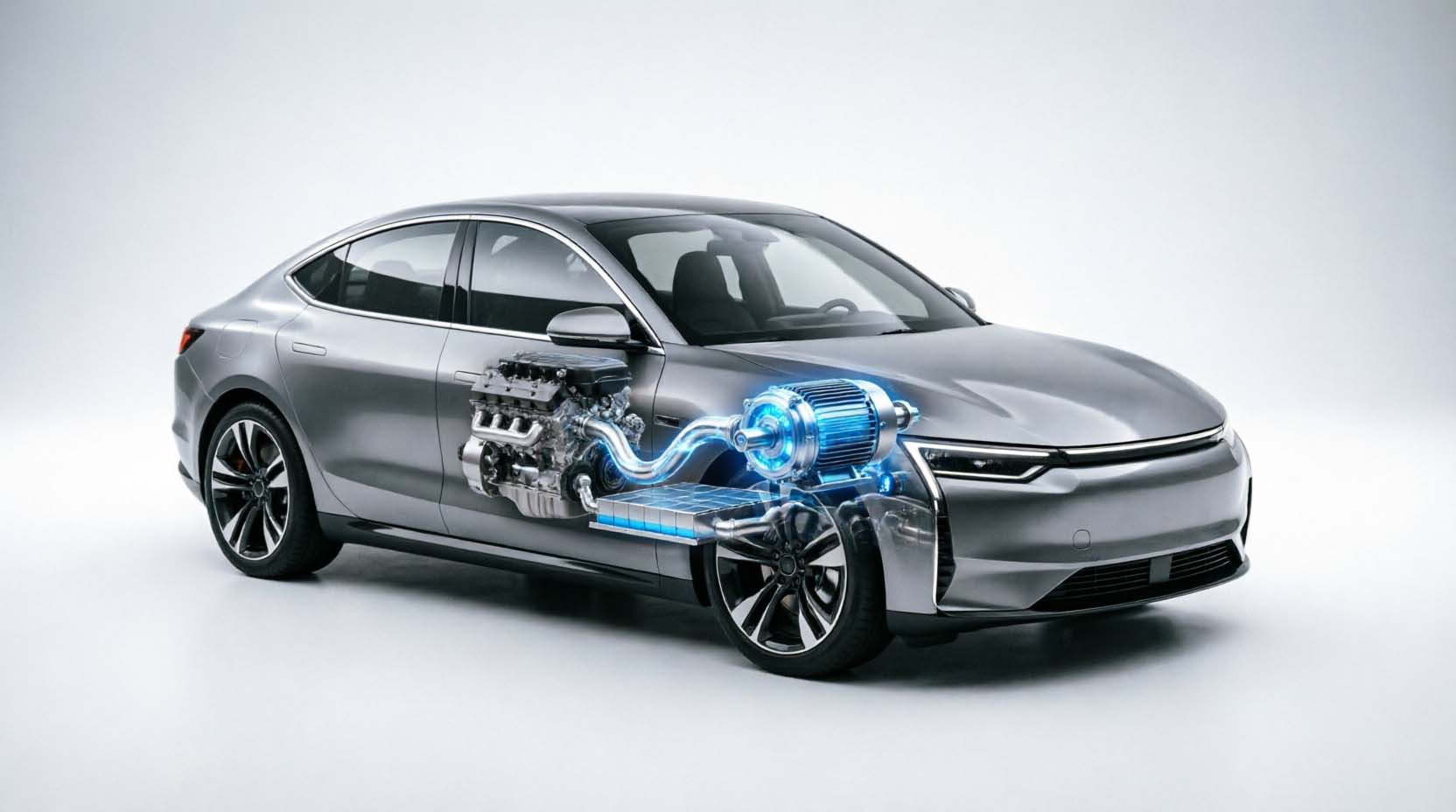
A hybrid car pairs a gasoline engine with an electric motor and a battery. The car switches between them to save fuel and recharges the battery through braking. Hybrids suit drivers who cover 10,000+ miles a year, especially in city traffic. Highway-only drivers gain less.
Key takeaways
- A standard hybrid never needs plugging in. A plug-in hybrid (PHEV) does.
- City driving gives the biggest savings. Sustained 70+ mph driving shrinks them.
- Run the Miles-to-Payback Rule below before you pay the price premium.
- Below 6,000 miles a year, skip the hybrid premium.
Picture a 45-minute crawl through rush-hour traffic. The engine shuts off at every red light, and the car creeps forward in near silence. That is a hybrid doing its job. This guide explains how it works, which type to shop for, and whether the math favors you.
What Is a Hybrid Car? (Plain-English Definition)
A hybrid car combines a gasoline engine with one or more electric motors and a battery. The car decides which power source to use at any moment. The goal is to burn less fuel.
Think of a cyclist who coasts downhill and stores that momentum to help climb the next hill. A hybrid does the same with braking energy.
A compact hybrid sedan often lands around 45 to 55 mpg combined on EPA ratings. A comparable gas-only sedan usually sits in the low 30s. Check current figures for any model on fueleconomy.gov before you shop.
How a Hybrid Car Works (Step by Step)
The system runs on a loop of five stages.
- Starting and crawling: The electric motor moves the car at low speeds. The engine stays off.
- Hard acceleration: The engine and motor work together for extra power.
- Cruising: The engine does most of the work. It may also charge the battery.
- Braking and coasting: Regenerative braking turns the motor into a generator. It converts motion into electricity instead of wasting it as heat.
- Stopping: The engine shuts off at a red light. The battery keeps the lights and air conditioning running.
A small gearbox called a power-split device blends engine and motor power. You never shift it yourself.
Regenerative braking works like a water wheel that catches energy you would otherwise throw away. It is the main reason hybrids do so well in traffic.
Why Hybrids Save More in the City Than on the Highway
Stop-and-go traffic gives the battery constant chances to recharge. It also lets the engine sit idle. At steady speeds above 70 mph, the engine does most of the work, so the gain shrinks.
Where hybrids shine:
- Rush-hour commutes and delivery routes
- Short trips with frequent stops
- Hilly suburban driving
Where the gain shrinks:
- Long interstate drives at 70+ mph
- Towing or hauling heavy loads
- Deep winter cold (more on that below)
Compare a rideshare driver working downtown with someone commuting 60 miles of open interstate. The first gets the full benefit. The second gets a smaller one.
The 3 Types of Hybrid Cars (HEV, PHEV, Mild Hybrid)
The word "hybrid" covers three different setups. Buying the wrong one is the most common mistake.
|
Type |
Plugs in? |
Electric-only driving? |
Typical extra cost |
Best for |
Main drawback |
|
Full hybrid (HEV), such as the Toyota Prius or Camry Hybrid |
No |
Yes, for short distances at low speeds |
Roughly $1,000 to $3,000 over a gas twin |
City commuters and apartment dwellers |
Limited electric-only range |
|
Plug-in hybrid (PHEV), such as the Toyota RAV4 Prime or Hyundai Tucson Plug-in |
Yes |
Yes, roughly 25 to 50 miles |
Roughly $5,000 to $10,000 over a gas twin |
Short commutes with a home outlet |
Extra weight wasted if you rarely plug in |
|
Mild hybrid (MHEV) |
No |
No, the motor only assists the engine |
Roughly $500 to $1,500 |
Buyers wanting a small mpg bump |
Gains are modest |
Extra costs vary widely by model and trim. Verify current pricing before you budget.
The rule of thumb is simple. A commuter with a 30-mile round trip and a home outlet suits a PHEV. An apartment dweller with no outlet suits a full hybrid. A mild hybrid is closer to a fuel-saving gas car than a true hybrid.
Hybrid vs Electric Car vs Gas Car
- Hybrid: No charging infrastructure needed. Mid-range price. Strong mpg.
- Electric car (EV): No engine and no gas. Needs reliable charging and works best with a home charger. Range planning matters on road trips.
- Gas car: Lowest sticker price. Highest fuel use. Simple and familiar.
A hybrid is the bridge for drivers who want lower fuel bills without changing their routine. If you can charge at home and mostly drive under 200 miles a day, a full EV may beat it.
Are Hybrids Worth It? (The Real Cost and Payback Math)
Sometimes yes. It depends on your annual miles, your local gas price, and how long you keep the car.
This is the Miles-to-Payback Rule, the PickSmartly method for a fast answer.
Step 1: Calculate yearly fuel savings.
(Annual miles ÷ gas car mpg minus annual miles ÷ hybrid mpg) × gas price per gallon.
Step 2: Divide the hybrid price premium by yearly savings to get years to payback.
Step 3: Apply the thresholds.
- Under 5 years: Buy the hybrid.
- 5 to 8 years: Buy only if you will keep the car that long.
- Over 8 years: A gas car is the smarter buy.
Worked example. Premium: $2,000. Driving: 12,000 miles a year. Gas car: 30 mpg. Hybrid: rated 50 mpg, but real-world 44 mpg (a 12% haircut from the EPA label). Gas price: $3.30 as an assumed figure, so swap in your local price.
- Gas car uses 400 gallons. Hybrid uses about 273 gallons.
- Savings: about 127 gallons × $3.30 = about $420 a year.
- Payback: $2,000 ÷ $420 = about 4.8 years.
That is a buy if you keep the car 5+ years. Using the unadjusted 50 mpg rating would show payback in about 3.8 years. That looks better on paper than it will in your driveway.
Now test the same numbers at low mileage. At 6,000 miles a year, savings drop to roughly $210 and payback stretches to nearly 10 years. That is the 6,000-Mile Floor. Below it, skip the premium.
One overlooked factor is incentives. The federal clean vehicle tax credit ended for vehicles acquired after September 30, 2025. Check current state and utility incentives before you assume a discount.
Who Benefits Most
Take a delivery or rideshare driver logging 25,000+ miles a year, mostly in city traffic. Using the same assumptions, savings jump to roughly $875 a year, and the $2,000 premium pays back in about 2.3 years. That driver should buy a hybrid.
Who Should Skip a Hybrid
- You drive under 6,000 miles a year.
- You tow heavy loads regularly. Most hybrids have lower towing limits.
- Your daily route is a long rural highway at 70+ mph.
- You can charge at home and would prefer a full EV.
- You plan to sell within 2 to 3 years. You will likely not recoup the premium.
Hybrid Battery Life, Maintenance and Repair Costs
Most hybrid batteries last well beyond the warranty. Many owners report reaching 150,000 miles or more on the original pack. Still, batteries age, and out-of-warranty replacement is the biggest cost risk.
Warranty: Most automakers cover the hybrid battery for at least 8 years or 100,000 miles. States that follow California emissions rules often require 10 years or 150,000 miles on certain models. Confirm the exact terms on the manufacturer's warranty page for the car you are considering.
Replacement cost: Expect a wide range, roughly $2,000 to $8,000 depending on the model, whether the part is new or refurbished, and the shop. Get a written quote before buying any used hybrid past its warranty.
Picture a 10-year-old Prius with 150,000 miles on its original battery. That happens often. So does an owner facing a four-figure replacement bill at year 12. Both outcomes are real.
What lasts longer:
- Brake pads, because regenerative braking does much of the slowing
- Starter and alternator in many designs, since the electric motor handles those jobs
What still needs service:
- Oil changes and filters
- Tires (hybrids are often heavier, so tires can wear faster)
- Coolant for the battery and power electronics
- Cabin air filters and standard maintenance
No hybrid is maintenance-free. The mix of costs just shifts.
What to Look for When Buying a Hybrid (Buyer Checklist)
Use these pass/fail thresholds before you visit a dealer.
- Battery warranty: At least 8 years or 100,000 miles. Skip anything shorter.
- Combined mpg: Look for at least 40 mpg in a sedan or 35 mpg in a small SUV. Lower, and the payback math gets harder.
- PHEV electric range: Choose 30+ miles if your daily round trip is under 30 miles.
- PHEV charging access: Skip a PHEV if you cannot plug in at least 3 to 4 nights a week. Without charging, you carry a heavy battery for little benefit.
- Cargo space: Check the trunk in person. Some hybrids lose room to the battery.
- AWD availability: Confirm it if you live in snow country.
- Reliability data: Check owner-reported reliability from Consumer Reports or similar sources.
- Resale value: Compare 5-year resale figures for the models you like.
Popular Hybrid Models Compared
Specs and prices change every model year. Verify current EPA ratings on fueleconomy.gov and pricing with a dealer before you decide.
|
Model |
Type |
Best for |
Combined mpg (EPA, approx.) |
Approx. starting price |
Main drawback |
|
Toyota Prius |
HEV |
Maximum efficiency |
About 57 |
Roughly $30,000 |
Less cargo height than an SUV |
|
Toyota Camry Hybrid |
HEV |
Family sedan |
About 51 |
Roughly $30,000 |
Not available with a hatch or SUV space |
|
Honda CR-V Hybrid |
HEV |
Small family SUV |
About 37 to 40 |
Roughly $35,000 |
Lower mpg than sedans |
|
Hyundai Tucson Plug-in Hybrid |
PHEV |
Short commutes with a home outlet |
About 35 on gas, plus roughly 33 miles electric |
Roughly $40,000 or more |
Higher price and needs charging to pay off |
|
Ford Maverick Hybrid |
HEV |
Light-duty pickup |
About 37 |
Roughly $28,000 |
Hybrid towing tops out near 2,000 lb |
How to Drive a Hybrid for Best Mileage
Your driving style can swing real-world mpg by 10% or more.
- Accelerate gently. Hard launches force the engine on.
- Look ahead and coast. Lifting early lets regenerative braking capture more energy.
- Brake smoothly. A gradual squeeze recovers more than a late stomp.
- Check tire pressure monthly. Use the pressure on the driver's door-jamb sticker, not the number on the tire sidewall.
- Use eco mode in city traffic. It softens throttle response.
- Limit cabin heating and cooling load. Preheat or precool while plugged in if you own a PHEV.
Expect winter to cost you. Fueleconomy.gov data suggests hybrids can lose roughly 30% or more of their mpg on short trips at 20°F. The engine runs more often to heat the cabin and warm the battery. Plan for a real-world drop versus the EPA label.
Common Hybrid Myths
- Myth: Hybrids must be plugged in. Fact: Only plug-in hybrids do. Standard hybrids charge themselves.
- Myth: Hybrid batteries die after a few years. Fact: Many last 10+ years, and warranties usually run 8 years or 100,000 miles at minimum.
- Myth: Hybrids are slow. Fact: The electric motor adds torque at low speeds, so many feel quick off the line.
- Myth: Hybrids are too expensive to repair. Fact: Routine costs are similar to gas cars. The battery is the main out-of-warranty risk.
- Myth: Hybrids are worse for the environment because of the battery. Fact: Manufacturing a battery adds emissions upfront, but lower fuel use typically offsets that over the car's life. The exact break-even depends on miles driven and your local power grid.
Which Path Fits You? A Quick Decision Tree
- Do you drive under 6,000 miles a year? Yes, buy a gas car. No, go to step 2.
- Do you tow heavy loads or drive mostly long rural highways at 70+ mph? Yes, a hybrid gives you less. Check the payback math carefully. No, go to step 3.
- Can you charge at home at least 3 to 4 nights a week? Yes, consider a PHEV or a full EV. No, go to step 4.
- Do you drive mostly in city traffic? Yes, choose a full hybrid (HEV). No, run the Miles-to-Payback Rule.
- Do you need AWD or 8+ inches of cargo depth? Yes, look at the CR-V Hybrid or a hybrid SUV. No, a sedan like the Prius or Camry Hybrid saves the most fuel.
- Is payback under 5 years? Yes, buy. 5 to 8 years: buy only if you keep the car that long. Over 8 years, buy a gas car.
Bottom Line
A hybrid is worth buying if you drive 10,000+ miles a year, spend much of that in traffic, and keep the car at least 5 years. It is not magic. The premium, the cold-weather penalty, and the out-of-warranty battery risk are real.
The Miles-to-Payback Rule:
- Under 5 years: buy.
- 5 to 8 years: buy only if you will keep the car that long.
- Over 8 years: buy a gas car.
Your next three steps:
- Write down your annual miles and your local gas price today.
- Run the payback formula for two models from the comparison table using each one's current EPA mpg and price.
- Get a written battery warranty and replacement quote before you sign.
Frequently Asked Questions
What is a hybrid car in simple terms?
It is a car with both a gas engine and an electric motor. The two work together to save fuel. The battery charges itself through braking, so you fill up at the gas pump as usual.
How does a hybrid car work?
The electric motor moves the car at low speeds and assists the engine during acceleration. Regenerative braking recaptures energy when you slow down. The engine shuts off at stops to save fuel.
Do you have to plug in a hybrid car?
Not with a standard hybrid. Only plug-in hybrids (PHEVs) need charging, and even those can run on gas alone. Charging just delivers the biggest fuel savings.
What is the difference between a hybrid and a plug-in hybrid?
A plug-in hybrid has a larger battery and can drive roughly 25 to 50 miles on electricity alone. A standard hybrid has a smaller battery and cannot be plugged in.
How long does a hybrid battery last, and what does it cost to replace?
Many last 10+ years or 150,000 miles. Replacement typically runs about $2,000 to $8,000 depending on the model. Check your automaker's warranty, which usually covers 8 years or 100,000 miles at least.