How to Choose a Camera: Sensor Size, Lenses, and Use Cases
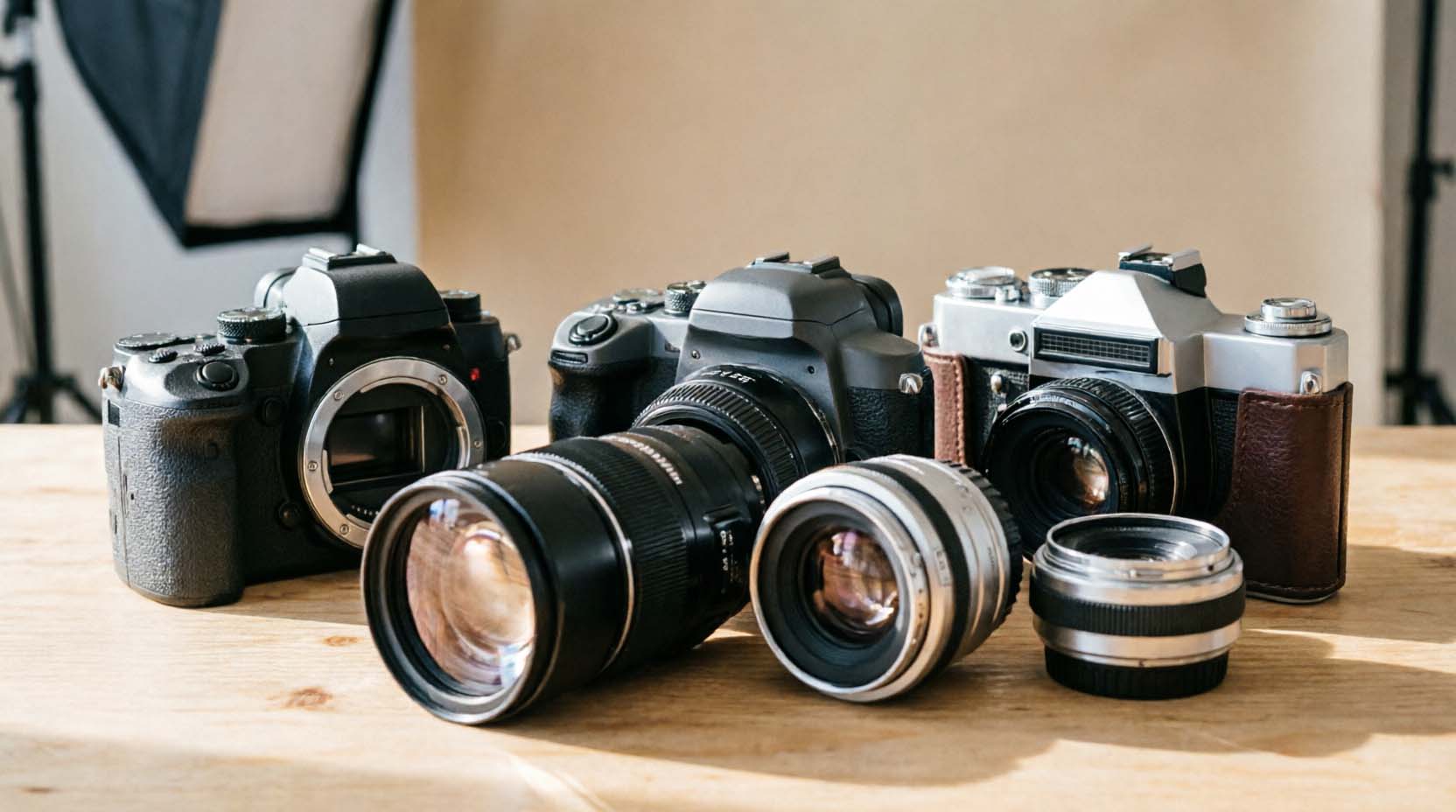
Camera shopping feels harder than it should be, and there's a reason for that. You're not buying a single device. You're buying into a system of body, sensor, and lenses that all have to work together for years.
This guide skips the spec-sheet overload and gives you a real framework: how sensor size, lens choice, and your actual use case fit together, plus exactly which combination to pick for your situation.
Why Camera Shopping Feels So Confusing
Most buyers focus on the camera body first, then get blindsided by lens costs later. A camera body typically makes up only 40-50% of what you'll actually spend on a working system, with lenses eating up the rest.
That's the trap. You fall in love with a body, buy it, then discover the lenses you actually need cost more than the camera did.
The 3 Factors That Actually Matter
Understanding these three pieces separately makes the buying decision click into place fast.
Sensor Size: The Single Biggest Decision You'll Make
Sensor size is the physical area capturing light inside the camera. Bigger sensors gather more light, which directly improves low-light photos and creates that soft, blurred background look photographers call bokeh.
Rule of thumb: Full-frame sensors have roughly 2.3 times the surface area of APS-C sensors, translating to a real one- to one-and-a-half-stop advantage in low light. Micro Four Thirds bodies and lenses typically run 30-50% lighter than full-frame equivalents at the same focal length.
Bigger isn't automatically better, though. It's a tradeoff, not an upgrade. Every increase in sensor size drags lens size, weight, and price up with it.
A travel photographer hauling gear through airports all week benefits more from a Micro Four Thirds kit than from a full-frame body that turns their backpack into a workout. A wedding photographer shooting dim reception halls genuinely needs the full-frame low-light advantage, because missed shots at someone's wedding aren't fixable later.
|
Sensor Size |
Relative Size |
Low-Light Performance |
Lens Size/Cost |
Best For |
|
Full-Frame |
Largest |
Excellent |
Large, expensive |
Professional work, weddings, low-light events |
|
APS-C |
~44% of full-frame |
Good |
Moderate |
Enthusiasts, travel, everyday shooting |
|
Micro Four Thirds |
~25% of full-frame |
Fair to good |
Small, affordable |
Travel, vlogging, portability priority |
|
1-inch |
Smallest common tier |
Fair |
Compact, fixed lens |
Casual point-and-shoot, pocket cameras |
Lenses: Why the Body Matters Less Than You Think
Lens choice shapes your photos more than the camera body does. A great lens on a mid-range body beats a mediocre lens on a flagship body almost every time.
Kit lenses come bundled with the camera and cover a general zoom range. They're versatile but slow, meaning they let in less light, which hurts low-light shots and background blur.
Prime lenses have a fixed focal length, no zoom. They're sharper, faster (more light-gathering), and cheaper than equivalent zoom lenses, at the cost of flexibility.
Zoom lenses trade some sharpness and speed for range, letting you cover multiple focal lengths without swapping gear.
A 50mm prime on a full-frame body is the closest match to natural human eye perspective, which is why it's often recommended as a first lens purchase. Any lens with an aperture under f/2.8 counts as "fast" for low light and background blur purposes.
Checklist for matching lens type to your shooting scenario:
- Indoor kid photos in low light: 35mm or 50mm prime, f/1.8 or faster
- Wildlife or distant sports action: 100-400mm telephoto zoom
- Landscape and architecture: 16-35mm wide-angle zoom
- General everyday walkaround: 24-70mm standard zoom
- Portrait work with blurred backgrounds: 85mm prime, f/1.8 or faster
The lens mount matters just as much as the lens itself. Once you buy into a brand's mount system, switching brands later usually means selling your entire lens collection and starting over.
Use Cases: Matching the System to What You Actually Shoot
Photography and video have different priorities, even on the same camera. Video leans harder on autofocus tracking and stabilization, while stills photography leans harder on dynamic range and resolution.
A vlogger needs a flip-out screen, reliable face-tracking autofocus, and decent in-body stabilization for handheld walking shots. A landscape photographer on a tripod cares far more about dynamic range for sunrise and sunset shots, and barely notices autofocus speed at all.
|
Use Case |
Sensor Priority |
Lens Priority |
Key Feature to Check |
|
Vlogging/YouTube |
APS-C or Micro Four Thirds |
Wide zoom, 16-35mm equivalent |
Flip screen, autofocus tracking |
|
Family/travel photos |
APS-C |
Standard zoom, 24-70mm |
Portability, battery life |
|
Wildlife/sports |
APS-C or Full-Frame |
Telephoto zoom, 100-400mm |
Autofocus speed, burst rate |
|
Portraits |
Full-Frame or APS-C |
Prime lens, 50-85mm |
Wide aperture (f/1.8 or lower) |
|
Landscape |
Full-Frame |
Wide zoom, 16-35mm |
Dynamic range, weather sealing |
The System Lock-In Triangle: PickSmartly's Rule of Thumb
Here's a framework most camera guides skip entirely. Sensor size, lens ecosystem, and budget form a triangle, and the camera body should be the last decision you make, not the first.
Before picking a body, check what lenses actually exist for that mount at the focal lengths you need. Confirm the price ceiling of that lens lineup fits your long-term budget, not just today's starter purchase.
A camera body gets replaced every few years as sensors improve. A lens investment usually sticks around for a decade or more. Buyers who pick the body first and the lens ecosystem second are the ones who end up stuck or forced into an expensive system switch.
How to Choose Based on Your Use Case
For Beginners Upgrading from a Phone
Pick an APS-C mirrorless body with a standard kit lens, then budget for one fast prime (35mm or 50mm, f/1.8) within your first year. This combo covers 90% of everyday situations without overwhelming you with gear.
Scenario anchor: Someone tired of blurry, grainy indoor phone photos of their kids gets the single biggest improvement from adding a 50mm f/1.8 prime, not from upgrading the camera body itself.
For Vlogging and Video Content
Pick an APS-C or Micro Four Thirds body with strong autofocus tracking, a flip screen, and a wide zoom lens in the 16-35mm equivalent range. Prioritize portability since you'll be carrying this daily.
Scenario anchor: A new YouTuber filming talking-head content in a small apartment needs a wide lens more than a big sensor, since cramped rooms require getting the whole shot in frame.
For Family, Travel, and Everyday Photography
Pick an APS-C body paired with a 24-70mm standard zoom. This is the most balanced, least regret-prone setup for someone who wants good photos without carrying a full bag of lenses.
Scenario anchor: A parent photographing birthday parties, school events, and vacations needs one versatile lens that handles group shots and candid close-ups without constant lens swapping.
For Enthusiast/Semi-Pro Photography
Pick full-frame if your work leans toward low-light events or client-facing portraits, or stay APS-C if portability and budget matter more than the low-light ceiling. Invest in two or three primes over chasing every zoom range.
Scenario anchor: Someone shooting weekend weddings as a side business needs the full-frame low-light advantage an APS-C body can't fully match once venues turn the lights down for dancing.
Other Specs Worth a Quick Look
Don't get stuck comparing these for hours. Check them, then move on to the decision that actually matters.
- Megapixels: Past 24 megapixels, most hobbyists see zero practical difference on screens or standard prints up to 16x20 inches. Extra megapixels mainly help with heavy cropping or large-format printing, not everyday sharpness.
- Image stabilization: In-body stabilization helps every lens you attach, while lens-based stabilization only helps that specific lens. In-body is the better long-term investment if you're building a multi-lens system.
- Autofocus points and tracking: Matters far more for moving subjects (kids, pets, sports) than for static subjects like landscapes or products.
- Weather sealing: Worth paying for if you shoot outdoors regularly in unpredictable conditions, skippable if you mostly shoot indoors or in controlled settings.
Common Mistakes to Avoid
- Buying a body without budgeting for at least one additional lens beyond the kit lens
- Choosing a sensor size based on brand prestige instead of your actual shooting scenario
- Ignoring lens mount availability before committing to a brand, then hitting a wall when you want to upgrade
- Assuming megapixels equal image quality, when lens sharpness and sensor size matter more
Hard Threshold Comparison: Which Spec to Prioritize
|
Your Priority |
Recommended Sensor |
Recommended First Lens |
Skip If |
|
Beginner, general use |
APS-C |
Kit lens + 50mm f/1.8 prime |
You mainly shoot outdoors in bright daylight only |
|
Vlogging/video |
APS-C or Micro Four Thirds |
16-35mm wide zoom |
You need shallow background blur for cinematic video |
|
Travel/portability |
Micro Four Thirds |
Compact standard zoom |
Low light performance is your top priority |
|
Portraits/events |
Full-Frame |
85mm f/1.8 prime |
Your budget caps lens spending under $500 total |
|
Wildlife/sports |
APS-C |
100-400mm telephoto |
You mostly shoot static subjects indoors |
Buyer Decision Tree
Work through this in order. Stop at the first question that applies to you.
- Is your main use vlogging or video content? If yes, prioritize autofocus tracking and a wide lens. Go APS-C or Micro Four Thirds, 16-35mm equivalent.
- Is your main use portraits or low-light events? If yes, prioritize sensor size and a fast prime. Go full-frame if budget allows. APS-C with an f/1.8 prime if not.
- Is your main use wildlife or sports? If yes, prioritize autofocus speed and reach. Go APS-C with a 100-400mm telephoto.
- Is your main use family, travel, and everyday photos? If yes, prioritize versatility and portability. Go APS-C with a 24-70mm standard zoom.
- Still unsure? Default to an APS-C mirrorless body with a kit lens, then add a 50mm f/1.8 prime within your first year. This combination covers the widest range of everyday shooting needs.
Who Should NOT Buy Certain Systems
Here's the candor most camera guides skip.
Skip full-frame if you're a beginner on a budget or prioritize portability. Full-frame lenses run heavier and significantly pricier than APS-C or Micro Four Thirds equivalents at the same focal length, and beginners rarely hit the limits where full-frame's advantage actually matters.
Skip chasing high megapixel counts if you mainly post to social media or print standard 4x6 and 8x10 photos. Files above 24 megapixels mostly add storage burden with no visible benefit at those output sizes.
Skip budget lens mount systems if you're planning to grow into enthusiast-level shooting. Some lower-cost mirrorless mounts have a thin third-party lens ecosystem, meaning you'll hit a selection wall within a year or two of serious use.
Skip trusting the kit lens bundle as your long-term lens. Kit lenses are often the slowest, least versatile lenses in a brand's lineup, and most serious hobbyists replace theirs within the first year.
Final Verdict
Stop picking the camera body first. Use the System Lock-In Triangle: check the lens lineup for a mount before you fall in love with a body, confirm the price ceiling fits your long-term budget, and match your sensor size to your actual shooting scenario using the decision tree above. That approach saves you from the expensive mistake of switching systems two years in.
Frequently Asked Questions
Is full-frame really better than APS-C for beginners?
Not necessarily. Full-frame offers a real low-light and background blur advantage, but the heavier, pricier lenses often aren't worth it for beginners still learning composition and settings.
Should I buy a mirrorless camera or a DSLR in 2026?
Mirrorless is the stronger long-term choice for most buyers, since manufacturers are concentrating new lens development and autofocus improvements on mirrorless mounts.
Do I need multiple lenses when I'm starting out?
No. One kit lens plus one fast prime (35mm or 50mm) covers the vast majority of beginner shooting situations without overspending.
Does a higher megapixel count mean better photos?
Not past a certain point. Beyond 24 megapixels, most hobbyists see no visible difference on screens or standard prints, since lens quality and sensor size affect image quality more.
What's the difference between a kit lens and a prime lens?
A kit lens zooms across a general range but lets in less light. A prime lens has a fixed focal length, letting in more light for better low-light shots and background blur.
Is Micro Four Thirds good enough for serious photography?
Yes, for most use cases outside of professional low-light or large-print work. It trades some low-light performance for a meaningfully lighter and more affordable system.
Can I switch camera brands later without losing my lenses?
Generally no. Lens mounts are brand- and often model-line specific, so switching brands usually means selling your existing lenses and rebuilding your kit.
What camera setup is best for vlogging and YouTube?
An APS-C or Micro Four Thirds body with a flip screen, reliable autofocus tracking, and a wide zoom lens in the 16-35mm equivalent range covers most vlogging needs.