How to Choose a Steam Mop: Best Uses, Pros, and Limitations
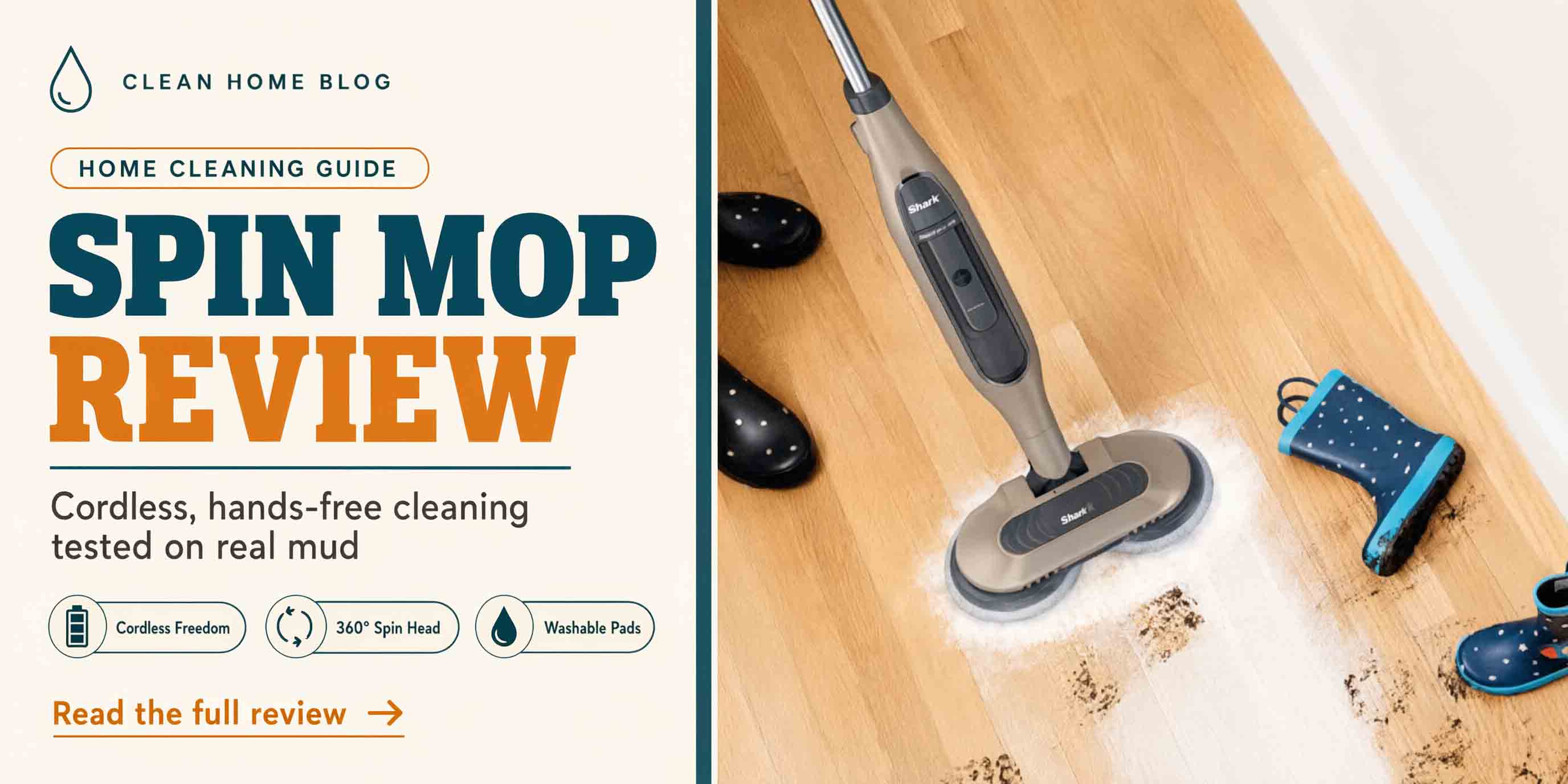
A steam mop is a strong fit for sealed, hard floors with sticky or greasy residue. It's a poor fit for unsealed wood, most laminate, and floors where your main mess is dry dust or crumbs. This guide walks through the 3-Gate Steam Mop Test, a floor compatibility chart, and seven features worth comparing before you buy. It's not a ranked roundup. It's a decision guide.
|
Buy if |
Your hard floors are sealed and steam-approved, your mess is sticky or greasy, and you're willing to do 5 minutes of pad and water upkeep per session |
|
Consider if |
Some floors qualify but not all, or you want a budget model first before committing |
|
Skip if |
Your floors are unsealed hardwood, waxed, or a warranty excludes steam, or your main mess is dry debris |
Picture two households. One has sealed tile in the kitchen and bath. The other has waxed hardwood running through the whole main floor. Same steam mop, opposite verdict. That's what this guide sorts out before you spend the money.
What a Steam Mop Actually Does (and Doesn't)
A steam mop heats water in a small onboard tank and releases it as steam through a microfiber pad, which loosens residue on sealed hard floors. It does not vacuum, sweep, or pick up loose debris. Think of it as a heat-and-lift tool, not an all-in-one cleaning machine.
Water boils at 212°F (100°C) at sea level, and that's where the process starts. But the steam that actually reaches your pad and floor is cooler than that by the time it travels through the tank and hose. So don't trust any floor-level temperature claim unless the manufacturer states it directly in the manual.
A quick example. Dried juice on kitchen tile. Steam softens the sugar residue in a few seconds, and the microfiber pad lifts it right off. No chemical spray needed, no scrubbing on your knees.
One more thing worth defining clearly. "Cleaning" removes dirt and some germs. "Sanitizing" reduces germs to a level considered safe under specific test conditions. "Disinfecting" kills a much higher percentage of specific germs and is EPA-regulated. These words get used loosely in marketing, and they're not interchangeable.
Steam Mop vs. Traditional Mop vs. Steam Cleaner
These three get confused constantly, and they're genuinely different tools.
|
Feature |
Steam Mop |
Traditional Mop |
Steam Cleaner |
|
Weight |
Light, roughly 6 to 9 lb |
Light, varies with bucket |
Heavier, canister or backpack style |
|
Setup time |
Fast, fill tank and go |
Fast, fill bucket |
Slower, more attachments to assemble |
|
Cost tier |
Budget to mid-range |
Cheapest |
Mid-range to high, prices shift often, check current listings |
|
Versatility |
Hard floors only |
Hard floors, with chemical solution |
Grout, appliances, upholstery, and more with attachments |
A small apartment with one type of hard flooring usually just needs a steam mop, something you can store in a closet. A home with heavy grout lines and detail cleaning across bathrooms and kitchens gets more mileage out of a full steam cleaner with attachments.
Best Uses: Where a Steam Mop Shines
A steam mop earns its keep on sealed, non-porous hard floors that see regular sticky spills, grease film, or light grime, especially in households avoiding harsh chemicals. The standard routine is simple: vacuum or sweep first, then steam. Skipping that first step is the single most common reason results disappoint.
|
Best for |
Why it works |
|
Sealed tile and grout |
Steam softens residue in grout lines and on tile surface without scrubbing |
|
Sealed vinyl and LVP |
Fast, chemical-free cleaning, though warranty terms vary by brand |
|
Kitchen grease film |
Heat cuts through grease better than a cold water pass |
|
Pet and kid households |
No chemical residue left behind for paws or crawling hands |
One caution worth repeating here. Warranty rules vary by manufacturer, even within the same flooring category. Always check your specific floor's care guide before your first use, not after.
Sealed Tile and Grout
A typical kitchen and dining area runs around 150 to 200 square feet, a realistic session size on sealed tile. Grout, being more porous than tile, benefits most from steam loosening grime sitting in the texture.
Sealed Vinyl and Luxury Vinyl Plank (LVP)
LVP is popular and generally steam-tolerant when sealed, but not universally. Some manufacturers explicitly prohibit steam, since heat and moisture at the seams can cause issues over time. Check the warranty first, every time.
Kitchens With Grease Film
This is where a steam mop often outperforms a quick water-only pass. The heat helps break down grease that a cold mop just smears around.
Pet and Kid Households
Paw prints, sticky handprints, and a general preference for skipping chemical cleaners near crawling babies. A steam mop fits this need well, as long as the floor itself qualifies.
Steam Mop Pros
- No cleaning chemicals needed. Water alone does the work on approved floors.
- Low running cost. Mainly electricity and water, plus occasional pad replacement.
- Reusable washable pads reduce waste. Look for at least 2 pads in the box so one can dry while the other's in use.
- Generally faster dry time than a wet mop. Less standing water means less waiting before you can walk across the floor.
- Effective on sticky residue and light grout grime. This is the sweet spot the tool was actually built for.
One honest note. Some manufacturers publish lab-tested sanitizing claims, like "kills 99.9% of common household bacteria." Real results, but not the same as an EPA-registered disinfectant claim. More on that distinction next.
Limitations and Floors to Avoid
Steam mops are not a universal floor tool, and heat plus moisture can genuinely damage certain flooring types, especially anything unsealed, waxed, or moisture-sensitive. They also won't pick up loose debris, and they struggle with deep or dried-on grime that needs actual scrubbing.
Floor Compatibility Chart
This is general guidance. Always confirm with your specific floor manufacturer before using steam on any surface.
|
Floor type |
General guidance |
Note |
|
Sealed ceramic/porcelain tile |
Usually safe |
Sealed grout performs best |
|
Sealed vinyl / LVP |
Usually safe. Check warranty |
Some manufacturers prohibit steam |
|
Sealed natural stone |
Check manufacturer |
Marble and limestone are riskier |
|
Linoleum |
Use caution |
Sensitive to moisture. Check the care guide |
|
Laminate |
Usually avoid |
Seams can swell. Many warranties exclude steam |
|
Solid or engineered hardwood |
Avoid |
Finish and moisture damage risk |
|
Unsealed, waxed, bamboo, cork |
Avoid |
High damage risk |
Do Steam Mops Actually Sanitize?
Steam can reduce bacteria on a surface, and some models carry lab-tested sanitizing claims, but a steam mop is not the same as an EPA-registered disinfectant used according to its label. That's the direct answer. Here's the nuance.
Manufacturer claims like "kills 99.9% of household bacteria" typically come from controlled lab testing on specific surfaces, with a specified contact time, often longer than steam actually lingers during normal mopping. Real-world results vary based on surface, dirt load, and dwell time.
According to the CDC, cleaning and disinfecting are distinct processes, and disinfecting requires an EPA-registered product used per its label to reliably kill specific pathogens. A steam mop is genuinely useful for chemical-free cleaning with some sanitizing benefit. If you need to actually disinfect, say after an illness or a raw meat spill, use an EPA-registered disinfectant instead and follow its label directions.
Other Limitations
- Slower than a quick wet-mop pass on heavy soil, and may not fully remove deep or dried-on grime in one pass.
- Streaking risk, usually from too much moisture, a dirty pad, hard-water residue, or skipped vacuuming.
- Cords limit your reach. An 18-foot cord or shorter means frequent re-plugging in larger rooms.
- Hard water causes scale buildup. Above roughly 120 mg/L (about 7 grains per gallon), water is classified as hard by USGS standards, and mineral deposits can clog the heating element. Use distilled water if your area is hard or the manual requires it.
- Plastic-heavy construction on many models. Leaks and cheap tank seals show up repeatedly in customer review patterns, so check recent feedback for leak complaints before choosing a model.
- Repeated heat exposure can affect some floor finishes over time, even on approved floors, if used more often than recommended.
The 3-Gate Steam Mop Test: How to Decide If You Should Buy
This is PickSmartly's signature framework for this category. Three yes-or-no questions, asked in order.
|
Gate |
Question |
If no |
|
Gate 1: Floor Gate |
Are at least 70% of your hard-floor areas sealed and manufacturer-approved for steam? |
Stop. A steam mop isn't for you. |
|
Gate 2: Mess Gate |
Is your typical mess sticky, greasy, or residue-based, rather than mostly dry dust and crumbs? |
A vacuum or robot vacuum will serve you better. |
|
Gate 3: Habit Gate |
Will you vacuum first, use the right water, and wash pads after use, about 5 extra minutes per session? |
You'll likely stop using it within a few months. |
Scoring the gates. Three yeses means buy. Two yeses, with Gate 1 passed, means consider a budget model first before committing to a premium one. If Gate 1 fails, skip a steam mop entirely, regardless of how the other two gates score.
Three quick profiles.
- Sealed tile throughout the kitchen and bath, regular kid and pet messes: three yeses, buy with confidence.
- Waxed hardwood throughout the main floor: fails Gate 1 immediately. Skip regardless of mess type.
- Laminate flooring, lease discourages floor-modification risk: likely fails Gate 1, since most laminate warranties exclude steam. Skip and look at a quality microfiber flat mop instead.
The Floor-First Rule sums this whole framework up in one line: if your floor manufacturer doesn't approve steam, no other feature on the mop is worth having.
7 Features to Compare When Choosing a Steam Mop
Once your floors clear Gate 1, these are the specs actually worth comparing. Verify all numbers against current manufacturer listings before buying, since these are rules of thumb, not fixed standards.
Tank Capacity and Run Time
Look for a tank in the roughly 12 to 20 oz range (about 350 to 600 ml), giving a typical runtime of 15 to 25 minutes per fill. The Runtime Rule: pick a tank that lasts at least as long as your longest continuous mopping session, plus about 5 minutes of buffer. Time yourself mopping your largest room at a normal pace if you haven't already, and treat any number you haven't personally clocked as an estimate.
Heat-Up Time
Under 30 seconds feels genuinely fast. 30 to 45 seconds is acceptable for most routines. Past 60 seconds starts to feel annoying for frequent quick cleanups, like wiping up a spill before guests arrive.
Weight and Maneuverability
Under about 6 lb feels light. 7 to 9 lb is the common range. In a furniture-heavy small space, check for a swivel head specifically, since that matters more than raw weight for tight corners.
Cord Length
The 20-Foot Rule: aim for a cord around 20 feet or longer, which covers a typical room without constant re-plugging. Long hallways and kitchen islands are where a short cord becomes a genuine annoyance rather than a minor inconvenience.
Steam Control
Look for at least 2 to 3 adjustable steam settings. Tile generally handles higher steam output well. More moisture-sensitive floors like sealed vinyl usually call for a lower setting.
Pads and Attachments
2 or more washable microfiber pads should come in the box. If you have heavy grout coverage or pets, look specifically for a scrubbing or grout attachment, since a flat pad alone struggles with textured grout lines.
Water Type and Build Quality
Check whether the manual requires distilled water. Look for a removable tank, since that makes refilling and cleaning genuinely easier. And read recent review patterns specifically for leak complaints or scale buildup issues, since these come up repeatedly across budget models in this category.
Safety, Water, and Care Basics
Do
- Keep children and pets away from the mop head and pad during use, since both get genuinely hot.
- Use distilled water if your manual requires it or your water tests hard.
- Wash pads after each use and let them fully dry before storing.
- Empty the tank after each session rather than leaving standing water inside.
- Follow the manufacturer's descaling instructions on schedule, not just when steam output drops noticeably.
Don't
- Add vinegar or any cleaning chemical to the tank unless the manual explicitly allows it.
- Leave the mop head resting on delicate flooring while paused.
- Ignore reduced steam output. That's usually mineral buildup asking for a descale.
- Store the tank full of water between uses.
A household in a hard-water area noticing weaker steam and visible white mineral crust on the heating plate is looking at a textbook scale problem. Switching to distilled water and descaling on schedule usually resolves it.
Common Mistakes That Ruin Results
- Skipping the vacuum first. Fix: always sweep or vacuum loose debris before steaming.
- Holding the mop head in one spot on delicate flooring. Fix: keep the mop moving. Never let it sit static on the same spot.
- Using the wrong water type. Fix: check the manual and use distilled water if it's required or your water is hard.
- Overloading a dirty pad. Fix: swap to a clean pad partway through a large area instead of pushing grime around.
- Using steam on floors the manufacturer doesn't approve. Fix: check the care guide before the first use, not after a problem shows up.
Who Should Not Buy a Steam Mop
Skip it if:
- Your hard floors are unsealed, waxed, or oiled hardwood, bamboo, or cork.
- Your laminate or vinyl warranty specifically excludes steam cleaning.
- Your home is mostly carpeted, with only small hard-floor areas.
- Your main mess is dry dust, hair, or crumbs. A vacuum or robot vacuum comes first, not a steam mop.
- You need hospital-grade disinfection. Use an EPA-registered disinfectant per its label instead.
- You can't safely store or use a hot appliance around toddlers or pets in your home.
- You're not willing to launder pads, refill water, and descale occasionally.
Final Verdict: Should You Buy a Steam Mop?
Run the 3-Gate Test. If your floors are sealed and steam-approved, your mess is sticky or greasy, and you're willing to spend 5 extra minutes on pad care, a steam mop is a genuinely good fit. If your floors are unsealed, waxed, or your warranty excludes steam, skip it entirely, no matter how good the reviews look.
Next step: check your specific floor manufacturer's care guide first, then browse PickSmartly's steam mop buying guides for models matched to your household's priorities.
Frequently Asked Questions
Are steam mops worth it?
For sealed hard floors with sticky or greasy messes, generally yes, especially if you want to cut chemical use. For dry-mess homes or unsealed flooring, usually no. Run the 3-Gate Test above before deciding.
Can I use a steam mop on hardwood floors?
Generally no. Solid and engineered hardwood are moisture- and heat-sensitive, and most manufacturers advise against steam. Always check your specific floor's care guide.
Can I use a steam mop on laminate or vinyl plank?
Laminate is usually a no, since heat and moisture at the seams can cause swelling, and many warranties exclude steam explicitly. LVP depends entirely on the specific warranty, so check before your first use.
Do steam mops really kill germs?
Steam can reduce bacteria on a surface, and some models carry lab-tested sanitizing claims. But a steam mop is not the same as an EPA-registered disinfectant used per its label.
Steam mop or regular mop: which is better?
Depends entirely on floor type and mess type. A steam mop wins on sealed floors with sticky residue and no-chemical preference. A traditional mop wins on floors that can't handle steam, or for tough stains needing a stronger clean.
Do I need distilled water?
Check your manual first. If it requires distilled water, or your local water tests hard, above roughly 120 mg/L or 7 grains per gallon, distilled water is the safer call to prevent scale buildup.