How to Choose a Car Seat: Installation, Safety Ratings, and Fit
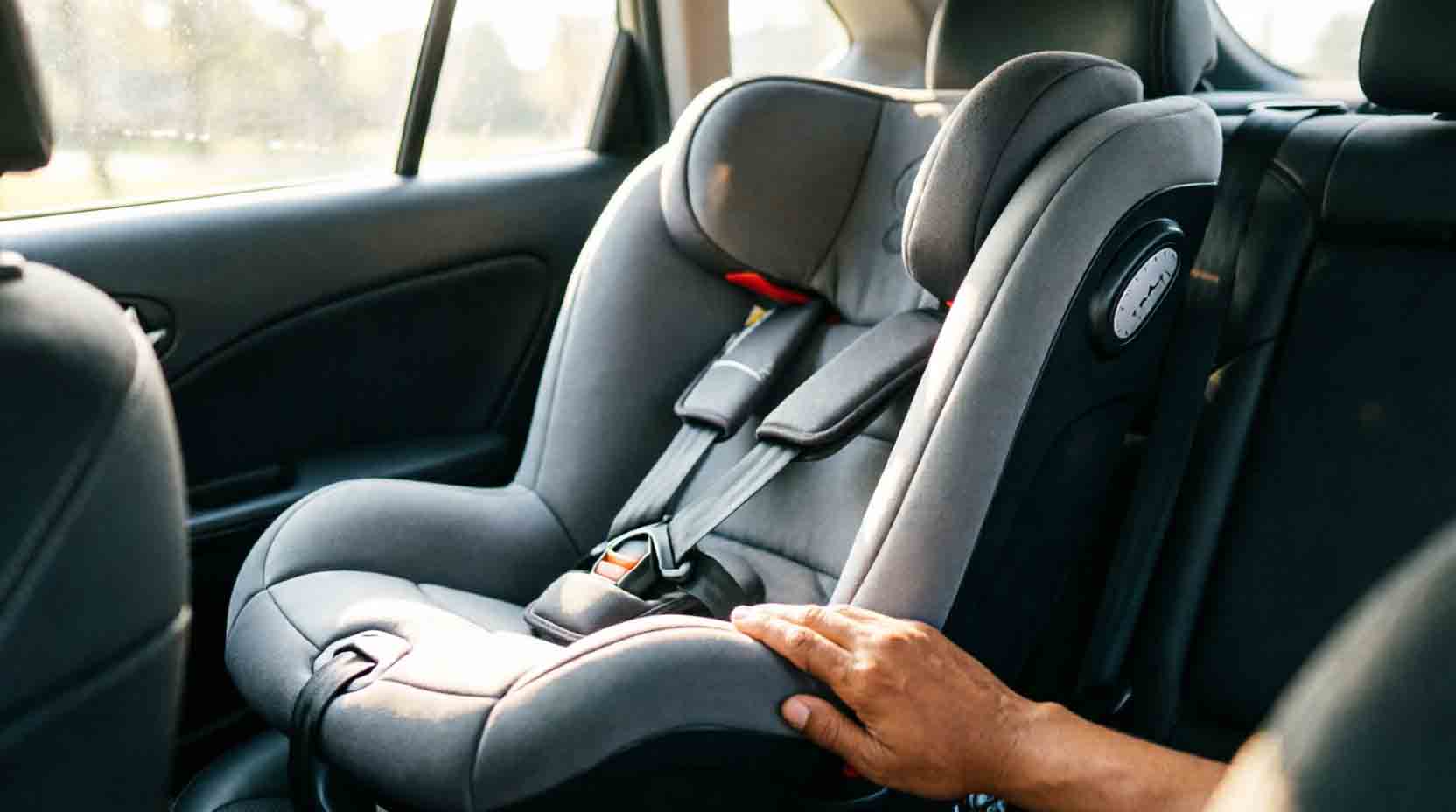
The safest car seat is the one that fits your child right now, installs tightly in your specific car, and that every caregiver can use correctly on every trip. Not the most expensive one. Not the one with the most stars. The installation standard to aim for is less than 1 inch of movement at the belt path, side to side and front to back.
Picture a parent at 36 weeks pregnant with a hospital discharge date circled on the calendar. This guide is built for exactly that kind of deadline pressure, minus the panic.
Editorial transparency note. This guide is written from NHTSA, AAP, IIHS, and FMVSS 213 documentation, not from hands-on installs or a named Child Passenger Safety Technician review. For genuinely YMYL content like car seat safety, that distinction matters, and we're not going to claim a credentialed review that hasn't actually happened. Before this guide publishes, get an actual CPST reviewer's name, credential, and review date added here, and confirm every specific product spec against the current manual. Free inspections are available through NHTSA's and Safe Kids' locator tools.
How to Choose a Car Seat in 5 Steps
- Match seat type to your child's current size, using height and weight limits, not age.
- Confirm it fits your vehicle. Back seat width, anchor locations, and recline angle all matter.
- Check the federal standard and ease-of-use data, and understand what each rating actually measures.
- Check installation options. LATCH or seat belt, whichever gives you a consistently tighter fit.
- Pick features you'll actually use, not the ones that sound impressive on a box.
Car Seat Types and Stages
|
Type |
Typical range |
Best for |
Biggest trade-off |
|
Rear-facing infant seat |
About 4 to 35 lb, outgrown at shoulder height or weight limit |
Newborns, portability, stroller click-in |
Outgrown in roughly 9 to 18 months |
|
Convertible |
Rear-facing about 5 to 40/50 lb, forward-facing to about 65 lb |
One seat for years, better long-term value |
Not portable, bulkier |
|
All-in-one |
Rear-facing through booster, up to roughly 100 to 120 lb |
Longest single-seat lifespan |
Heavy, may fit newborns less snugly |
|
Combination forward-facing |
Harness from about 22 to 25 lb minimum, converts to booster |
Toddlers past rear-facing limits |
Not usable rear-facing |
|
Booster (high-back or backless) |
Typically 40 lb minimum, roughly ages 4 to 12 |
Positions the adult belt correctly |
Backless offers no head support for younger kids |
Rear-facing outgrown signal. The child's head is within 1 inch of the top of the shell, or they hit the seat's weight limit, whichever comes first. AAP and NHTSA both recommend staying rear-facing as long as the seat allows, and many states set age 2 as a legal minimum, not a target to rush toward.
What Do Car Seat Safety Ratings Actually Mean?
Every car seat sold in the US must pass the same federal crash standard, FMVSS 213 (49 CFR 571.213), which currently covers child restraints for children up to 80 lb. That's a pass-or-fail requirement, not a scale.
|
Rating source |
What it measures |
What it does NOT measure |
|
FMVSS 213 |
Pass/fail crash performance, labeling, buckle strength |
Not a ranking. All sold seats already pass |
|
NHTSA 5-star ease-of-use |
Labels, instructions, ease of installation and securing the child |
Not crash protection |
|
IIHS booster ratings |
How well the vehicle belt fits a child on that booster |
Not the seat's crash performance |
|
Independent testers (e.g., Consumer Reports) |
Their own test protocols |
Methods vary and aren't directly comparable across outlets |
Myth vs. fact. Myth: a higher price means a safer seat. Fact: per NHTSA, price doesn't necessarily correlate with crash safety, since every seat already clears the same federal floor. Extra cost usually buys convenience, install aids like load legs or anti-rebound bars, or materials, not a higher legal safety standard.
A quick, calm note on flame retardants. Some manufacturers now sell seats marketed as free of added flame-retardant chemicals. That's a parental preference option, not a safety-standard requirement or a sign the seat is otherwise safer.
The PickSmartly 3-Fit Test
Before buying anything, run every seat through three checks.
- Child Fit. Does the height and weight range cover your child now and for the next 12 to 24 months? Does the harness pass the pinch test at the collarbone, with the chest clip at armpit level?
- Car Fit. Does it install with less than 1 inch of movement at the belt path, at the correct recline, in the seat you'll actually use?
- Life Fit. Can every caregiver install and buckle it correctly, every trip, tired, in the rain, with a fussy kid?
If a seat fails any one of the three, it's the wrong seat for you, regardless of its reviews.
Know three numbers before you shop: your child's current height and weight, your usable back-seat width, and where your lower anchors and tether points actually sit.
Fitting Your Child, Your Car, and Your Life
Harness Fit Checklist. Rear-facing straps at or below the shoulders. Forward-facing straps at or above. Chest clip at armpit level, never on the belly or throat. Pinch test at the collarbone, no slack. No puffy coats under the harness.
Vehicle Fit. Measure back seat width, front-to-back depth, and where your lower anchors sit, since the center position often lacks its own anchors entirely. Check the recline indicator matches your seat's actual slope.
Life Fit. Consider how often the seat swaps between cars, whether you need an FAA-approved label for air travel, stroller click-in compatibility, and whether covers are machine washable for the inevitable mess.
Installing a Car Seat: LATCH vs. Seat Belt
LATCH and the seat belt are equally safe when used correctly. Use whichever gives you a tighter, more consistent install, not whichever sounds more high-tech.
LATCH has a combined weight limit, typically 65 lb total for child plus seat, per FMVSS 213's lower-anchor testing threshold. Check both your seat's manual and your vehicle's manual, since some seats set a lower limit. Use the top tether on every forward-facing install, every time. Don't combine LATCH and the seat belt unless the manual explicitly allows it.
7 installation mistakes that show up constantly:
- Loose install exceeding the 1-inch movement standard.
- Wrong recline angle for the child's age and seat.
- Twisted harness straps.
- Chest clip too low, at belly level.
- Loose harness that fails the pinch test.
- Missing top tether on a forward-facing install.
- Aftermarket inserts or covers not approved by the seat's manufacturer.
Get a free inspection. A certified CPST can check your specific install in your specific car through NHTSA's or Safe Kids' locator tools. This is genuinely worth doing once, even if you're confident.
Features That Matter vs. Mostly Marketing
|
Must-have |
Nice-to-have |
Skip-unless |
|
Clear recline indicator |
Machine-washable cover |
360-degree rotation, unless back or access issues make it necessary |
|
Easy-to-read labels |
Cup holders |
Premium fabric upgrades |
|
No-rethread harness |
Easy-clean fabric |
"Extra safety" claims with no standard behind them |
A seat lasts roughly 6 to 10 years from its manufacture date, so buy for your child's next 2 years of growth, not the seat's theoretical maximum.
How Much Should You Spend?
|
Type |
Typical price band |
|
Infant seats |
About $100 to $350 |
|
Convertibles |
About $120 to $400 |
|
All-in-ones |
About $150 to $400 |
|
Boosters |
About $20 to $150 |
Verify current prices at the listing before publishing. These are directional bands, not live figures.
Cost-per-month formula: price divided by months you'll realistically use it. A $220 infant seat used for 12 months runs about $18 a month. A $170 all-in-one used across 8 years runs under $2 a month. Extra upfront cost isn't automatically wasted, but do the math before assuming the pricier option is the better value.
When to Move Up: The 5-Step Seat Belt Test
Move up only when the current seat's limits are reached, never by birthday alone. Before switching a child to the adult seat belt, all five must be true: back flat against the seatback, knees bend naturally at the seat edge, lap belt sits on the upper thighs, shoulder belt crosses the chest and collarbone, and the child stays seated correctly for the entire trip. Most kids pass this around 4 feet 9 inches and ages 8 to 12, not automatically at a specific birthday. Kids under 13 belong in the back seat regardless.
A tall 2-year-old with bent legs in a rear-facing seat isn't at any added injury risk. Bent legs are normal and comfortable at that age, not a safety concern.
Expiration, Used Seats, and After a Crash
Check the manufacture date and expiration label, usually on a sticker on the seat's shell or underside. Never buy a used seat if you don't know its full crash history, it's expired, it's been recalled, or it's missing original parts or the manual.
Replace after a moderate or severe crash. Per NHTSA, a seat may not need replacing only if every one of these is true: the vehicle was drivable afterward, the door nearest the seat was undamaged, no one was injured, the airbags didn't deploy, and there's no visible damage to the seat. Follow your manufacturer's specific crash policy if it's stricter than this baseline. Register every seat for recall notices.
Who Should Think Twice Before Buying
- Skip an infant carrier if you want one seat for years and rarely carry the baby around in it. It's outgrown in 9 to 18 months.
- Skip an all-in-one if you need something light and portable between two cars or frequent caregivers.
- Skip 360-degree rotation if you're budget-limited or driving a small car. It costs more, weighs more, and isn't a crash-safety upgrade.
- Skip a narrow "3-across" seat if you don't actually need three seats side by side. Narrow designs often trade harness comfort for width.
- Skip a backless booster for a child who still needs harness support or head support during sleep.
- Skip any used seat unless you personally know its complete history.
Sources and Methodology
This guide draws on NHTSA's car seat and FMVSS 213 guidance, AAP recommendations via healthychildren.org, IIHS booster seat ratings, and Safe Kids Worldwide inspection resources. Product specs, prices, and availability should be reconfirmed at publish time, since listings change. This article has not undergone a named CPST review at the time of writing. Add reviewer name, credential, and review date before publishing, consistent with the accuracy this topic deserves.
For a free professional check of your actual install, use NHTSA's inspection station locator or Safe Kids Worldwide's locator tool.
This guide is educational. Always follow your specific seat and vehicle manuals, and consult a Child Passenger Safety Technician for your individual situation.
Frequently Asked Questions
What is the safest car seat?
There's no single "safest" seat. Every seat sold in the US passes the same federal standard, FMVSS 213. The safest seat is the one that fits your child, installs tightly in your car, and gets used correctly on every trip.
Is a more expensive car seat safer?
Not necessarily, per NHTSA. Extra cost typically buys convenience features and install aids, not a higher crash-safety standard, since all seats already clear the same federal floor.
Is LATCH safer than the seat belt?
No. Both are equally safe when installed correctly. Watch the LATCH combined weight limit, typically 65 lb, and check your specific seat's manual.
When can my child face forward?
Only after they outgrow the seat's rear-facing height or weight limit, and only once they meet your state's minimum age law. Rushing to forward-facing early isn't a milestone worth chasing.
Is the center seat always safest?
Not automatically. A correct install in an outboard position beats a poor install in the center. Use whichever position lets you hit the 1-inch movement standard.
Can I use a second-hand car seat?
Only if you know its full history, it's unexpired, unrecalled, and complete with its manual. Otherwise, no.
How long do car seats last?
Typically 6 to 10 years from the manufacture date, printed on the seat's label. Check that date directly rather than guessing.
Do I need to replace a seat after a minor accident?
Follow NHTSA's five minor-crash criteria: driveable vehicle, undamaged nearest door, no injuries, no airbag deployment, no visible seat damage. If all five are true, replacement may not be required, but check your manufacturer's specific policy too.
Can I take a car seat on a plane?
Yes, if it carries the FAA-approved label for aircraft use. Check the seat's label or manual to confirm before your trip.