How to Choose a Dehumidifier for Basements and Damp Rooms
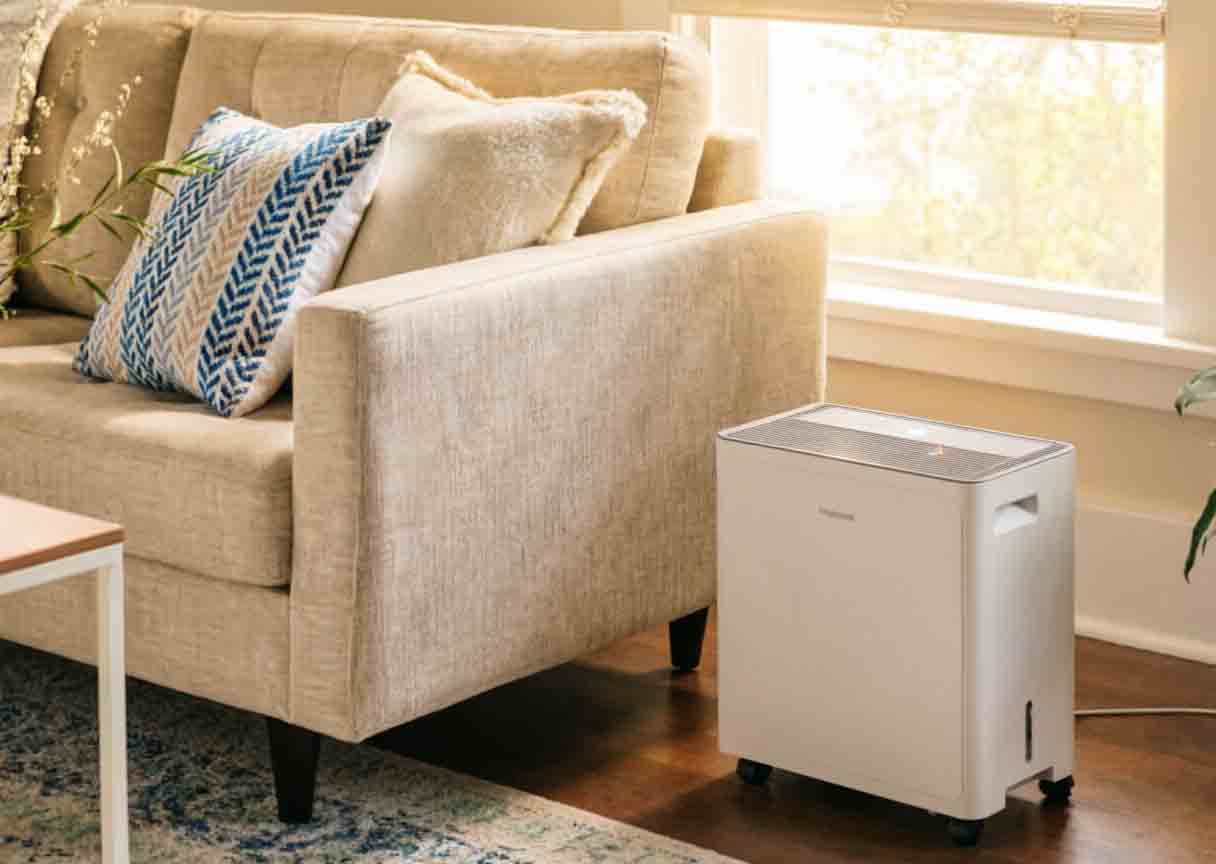
Measure your humidity first, size by square footage and dampness level, match the unit to your room's temperature, pick a drain method you'll actually use, then check noise and running cost. Target indoor relative humidity of 30 to 50 percent, per EPA guidance. Above 60 percent sustained, mold risk climbs fast.
Take a 900-square-foot finished basement that smells musty every summer. That single symptom kicks off everything below.
Most dehumidifier guides hand you a generic pint chart and call it done. This one walks a five-step sequence instead: size it correctly, match the type to your room's temperature, pick a drain method you'll actually use, check the real running cost, and skip the features that don't matter. Before any of that, it checks whether you need a dehumidifier at all. It also covers the 2019 DOE rating change that confuses many shoppers comparing listings.
Do You Actually Need a Dehumidifier?
If your space smells musty, shows condensation, or feels clammy, you likely need one, but not if water is actively entering the room. That second part matters more than most guides admit.
Watch for these signs: musty odor, condensation on windows or pipes, peeling paint, white mineral crust on concrete (efflorescence), soft cardboard after a humid week, or visible mold spots.
Measure before buying. Grab a cheap hygrometer, place it at chest height away from vents, and log readings morning and night for 3 to 7 days.
|
RH Reading |
What it means |
What to do |
|
Below 30% |
Too dry |
Dehumidifier not needed |
|
30 to 50% |
Healthy target |
Maintain, no action needed |
|
50 to 60% |
Borderline: dust mites thrive above ~50% |
Consider a dehumidifier |
|
Above 60% sustained |
Mold-risk zone |
Dehumidifier likely needed |
A dehumidifier manages moisture. It does not fix leaks. If water is entering through grading issues, clogged gutters, a window well, plumbing, or a failing sump pump, fix that first. Standing water or active seepage needs a repair, not an appliance.
Step 1: Size by Pints per Day (and the 2019 Rating Change)
Pint rating measures water removed in 24 hours under test conditions, and in 2019 the DOE changed that test from 80°F to 65°F, which dropped labeled capacities across the board. A machine once labeled 70 pints may now show up as roughly 50. A 50-pint machine may now read closer to 35. Same hardware, smaller number.
So when you compare two Amazon listings, one at 50 pints and one at 70, check the test date before assuming the 70 is bigger. It might just be an older label.
|
Space size |
Damp (musty smell only) |
Wet or very wet (visible condensation, seepage) |
|
Up to 500 sq ft |
20 to 22 pints |
25 to 30 pints |
|
500 to 1,000 sq ft |
25 to 30 pints |
35 pints |
|
1,000 to 1,500 sq ft |
30 to 35 pints |
35 to 50 pints |
|
1,500 to 2,500 sq ft |
35 to 50 pints |
50 pints, or two units |
Size up one tier if ceilings run above 8 feet, the space is open-plan, doors open frequently, laundry happens down there, or summer humidity stays persistently high.
Bigger isn't automatically better. An oversized unit costs more, runs louder, draws more power, and can short-cycle in a small, mildly damp room, meaning it shuts off before it's actually pulled the air dry.
Step 2: Match the Type to Your Temperature
Not every dehumidifier handles cold the same way, and this is where a lot of basement buyers get burned. A unit that works perfectly in a heated living room can ice up completely once it's moved downstairs.
|
Type |
Best temperature |
Typical space |
Main drawback |
|
Standard compressor |
Above ~65°F |
Finished basement, living space |
Coils can frost in the low 40s to 50s°F |
|
Low-temp, auto-defrost compressor |
Down to roughly 40°F |
Cool unfinished basement |
Costs more upfront |
|
Desiccant |
Works in cold spaces |
Unheated basement, garage |
Uses more energy per pint |
|
Thermoelectric (Peltier) |
Small enclosed spaces only |
Closet, small bathroom |
Removes far less water |
A finished basement sitting around 68°F is a standard compressor's home turf. An unheated basement through a northern winter needs low-temp or desiccant, full stop. A closet with stored clothes doesn't need basement-grade power at all.
Step 3: Choose Your Drainage Method
Three real options exist here, and picking wrong means either a daily chore or a return trip to the store.
Bucket only. Simple and portable, but you're emptying it daily in a genuinely wet basement. Most hold 1.5 to 2 gallons. Auto shut-off protects the motor, but it also means the unit stops working the moment the bucket fills.
Gravity drain with a hose. A standard garden hose runs to a floor drain or sink, no emptying required. The drain has to sit lower than the unit's outlet, or gravity won't cooperate.
Built-in condensate pump. Needed when there's no floor drain nearby, or the drain sits higher than the unit. Typical vertical lift runs 10 to 16 feet, but confirm the specific listing. It adds cost, adds noise, and adds one more part that can eventually fail.
No floor drain and a laundry sink upstairs? That's a pump situation, not a bucket situation.
Step 4: Running Cost and Efficiency
Cost formula: watts ÷ 1,000 × hours per day × price per kWh = daily cost.
Worked example. A 50-pint unit pulling 600 watts for 10 hours a day, at $0.17 per kWh, runs about $1.02 daily, roughly $30 a month.
ENERGY STAR-certified units use roughly 13 to 15 percent less energy than non-certified models rated for the same capacity, based on ENERGY STAR's own published figures, while removing the same amount of water.
Set your humidistat around 45 to 50 percent. If a unit runs more than about 16 hours a day and still can't hold 50 percent, it's either undersized or something's actively adding moisture you haven't solved.
Step 5: Features That Matter (and Ones That Don't)
|
Worth paying for |
Skip |
|
Adjustable humidistat |
Vague "smart" labels with no real humidistat accuracy |
|
Auto-restart after a power outage |
Coverage claims like "up to 4,500 sq ft" |
|
Continuous drain option |
Noise claims that omit the test conditions |
|
Washable filter, casters, full-bucket alert |
Wi-Fi app control, if you won't actually use it |
Noise guidance. Most units run 45 to 55 dB. Keep it under roughly 50 dB near any living or sleeping area.
Damp Rooms Beyond the Basement
|
Room |
What it needs |
|
Bedroom or closet |
Small, quiet compressor unit, well under 50 dB |
|
Laundry room |
Mid-size unit, since dryer heat adds humidity spikes |
|
Windowless bathroom |
Often an exhaust fan first, dehumidifier second |
|
Crawl space |
Purpose-built crawl space unit plus a proper vapor barrier |
|
Garage or workshop |
Desiccant or low-temp compressor, depending on season |
Setup Mistakes That Waste Money
- Blocking airflow by pushing the unit into a corner. Fix: leave clearance on all sides.
- Leaving doors and windows open while it runs. Fix: seal the space off during operation.
- Placing it away from the dampest zone. Fix: put it where the problem actually is.
- Skipping filter cleaning. Fix: clean monthly, more often in dusty basements.
- Ignoring the hygrometer after setup. Fix: keep logging RH for at least a week post-install.
Who Should Not Buy a Dehumidifier Yet
Skipping this section is how people end up with a returned unit and a still-musty basement. Check these five before you buy anything.
- Water is actively entering the space through a leak, seepage, or flooding. Fix the source first.
- You're expecting it to remove existing mold. It only slows new growth by lowering humidity. Established mold needs remediation.
- Your basement stays consistently below 60°F, and you're eyeing a standard compressor model without checking low-temp or desiccant options.
- You want a small thermoelectric unit to handle a real, whole-basement moisture problem. It won't.
- You're hoping this solves allergy or asthma symptoms outright. Lower humidity can help reduce dust mites and mold, but for medical concerns, talk to a doctor rather than relying on an appliance claim.
The PickSmartly 5-Point Damp Check
- Confirm. Is RH above 50 percent for several days, with no active leak?
- Size. Pull points from the chart above. Add a tier for high ceilings or open layouts.
- Temperature. Compressor above ~65°F. Low-temp or desiccant below that.
- Drain. Bucket, hose, or pump, based on where your drain actually is.
- Cost and noise. Run the formula. Keep it near or under 50 dB in living spaces.
The Runtime Test. After one week, if the unit runs more than 16 hours a day and RH won't drop 50 percent below, it's either undersized or you've still got an unsolved moisture source. Check with the hygrometer before buying a bigger unit.
Quick Decision Guide
|
Situation |
Spec profile |
|
Musty 600 sq ft finished basement |
~25 to 30 pints, humidistat, hose drain |
|
Cold unfinished basement |
Low-temp, auto-defrost compressor |
|
No floor drain available |
Built-in pump model |
|
Small closet or bathroom |
Compact unit, limited real capacity |
Browse PickSmartly's Appliances buying guides once you know your specs, evaluated against our scoring methodology.
Final Checklist
Confirm your RH reading, pick your pint size, match the type to your temperature, choose your drain method, and check the cost and noise numbers against your space. Then log humidity for a week after install to confirm it's actually working, not just running.
That last step matters more than people expect. A dehumidifier that sounds right on paper can still leave you at 55 percent RH if it's undersized or fighting a leak you haven't caught yet. The hygrometer tells you the truth the spec sheet can't.
Note: This guide is built from manufacturer specs, DOE and ENERGY STAR documentation, and EPA humidity guidance, not hands-on lab testing of specific units. Verify pump lift, bucket size, and noise figures against the current listing before buying, since specs shift between model revisions.
Frequently Asked Questions
What size dehumidifier do I need for a 1,000 sq ft basement?
Roughly 25 to 35 pints for damp conditions, up to 50 pints if it's wet or very wet. Size up a tier for high ceilings or an open floor plan.
What humidity level should a basement be?
30 to 50 percent relative humidity, per EPA guidance. Above 60 percent sustained is a real mold-risk zone.
Does the pint rating mean the same thing on every listing?
No. The DOE changed the test standard in 2019, so a current 50-pint unit performs close to an old 70-pint label. Check which standard a listing uses before comparing.
Do I need a dehumidifier with a pump?
Only if there's no nearby floor drain, or the drain sits higher than the unit's outlet. Otherwise, a gravity hose or bucket works fine.
Will a dehumidifier work in a cold basement?
A standard compressor model struggles and can frost below the low 40s to 50s°F. Choose a low-temp auto-defrost or desiccant model instead.
How much does it cost to run a dehumidifier?
Use watts ÷ 1,000 × hours × price per kWh. A typical 50-pint unit runs roughly $30 a month at 10 hours daily use.
Is a bigger dehumidifier always better?
No. Oversizing costs more, runs louder, and can short-cycle in a small space, shutting off before it's really dried the air.
Can a dehumidifier remove mold or the musty smell?
It can stop new mold growth by lowering humidity, and it helps with musty odor caused by ambient moisture. It won't remove existing mold colonies.
Is a dehumidifier worth it if my basement leaks?
Not until the leak's fixed. Running a dehumidifier against active water intrusion is treating a symptom while the actual problem keeps going.
Will it be too loud for a finished basement I actually spend time in?
Most units run 45 to 55 dB, which is noticeable but not overwhelming. For a finished space near living areas, look specifically for a model rated under 50 dB, and place it away from seating areas if possible