How to Choose a Dehumidifier: Size, Capacity, and Room Type
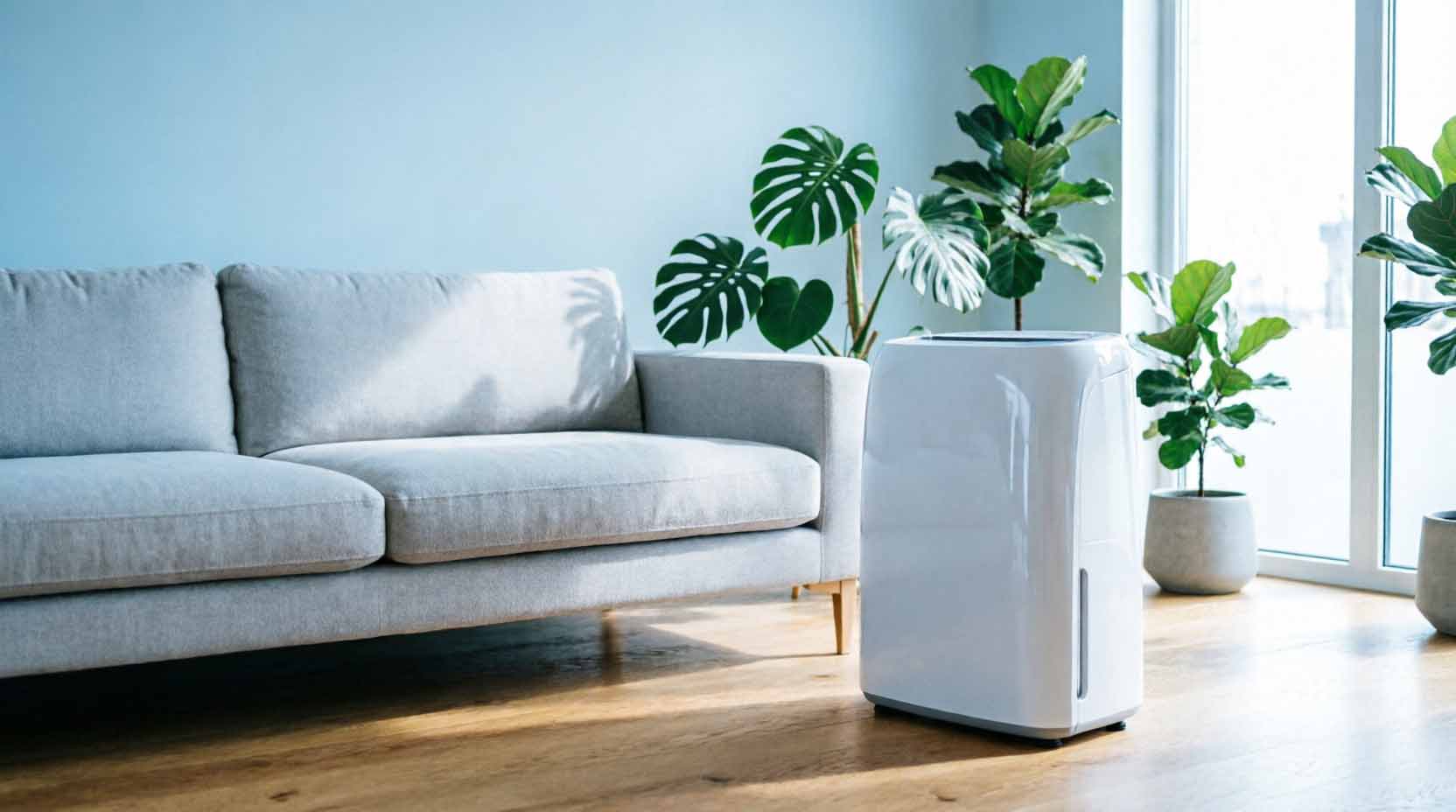
As a general starting rule, plan on roughly 10 pints per 500 sq ft for a moderately damp space, adding about 4–5 pints per 500 sq ft as conditions get wetter (visible condensation, musty odor, or standing water). This is a starting point, not a final number. Dampness level and room temperature both shift it, which the sections below walk through.
Sizing wrong is the single most common source of dehumidifier dissatisfaction: an undersized unit runs constantly and never quite catches up, like trying to bail out a slowly leaking rowboat with a teaspoon. It works itself hard without ever getting ahead, while an oversized unit short-cycles, wasting electricity without necessarily dehumidifying any better.
A note on the figures in this guide: Pint capacities, room-coverage estimates, and efficiency percentages below reflect ranges commonly published by manufacturers, ENERGY STAR, and the DOE's post-2019 testing standard, not a single lab test of one product. Always cross-check the specific rating on the model you're considering, since individual products vary.
Understanding Dehumidifier Capacity (Pints per 24 Hours)
What "Pints per Day" Actually Means
Dehumidifier capacity is measured in pints of water removed per 24 hours under standardized lab test conditions. This is the AHAM (Association of Home Appliance Manufacturers) rating printed on every legitimate listing.
The number that trips up most buyers: in 2019, the DOE changed the test standard, and pint ratings dropped as a result, not because dehumidifiers got weaker, but because the test temperature changed from 80°F to 65°F, and cooler air holds less moisture to begin with. Confirmed conversions under the new standard: an old (pre-2019) 50-pint unit is now labeled roughly 30 pints, and an old 70-pint unit is now labeled roughly 50 pints. If you're replacing an older unit and the new one's number looks smaller, that's the standard changing, not the machine getting weaker. Always check whether a listing or review is quoting pre- or post-2019 numbers before comparing two products.
Capacity vs. Real-World Performance
AHAM rating, defined: The certified pint-per-24-hour figure a dehumidifier achieves under fixed lab conditions (65°F, 60% relative humidity, as of the 2019 standard).
Expect real-world moisture removal to run below the AHAM-rated number in a cold, unheated basement. The rating is measured at 65°F, and dehumidifiers (especially compressor models) remove less moisture as ambient temperature drops further. A unit rated for 30 pints in a 65°F test room may remove noticeably less in a 50°F basement in early spring, which is a separate issue from sizing and is addressed in the compressor-vs-desiccant section below.
Dehumidifier Size Chart by Room Size and Dampness Level
|
Room Size |
Slightly Damp |
Moderately Damp |
Very Damp |
Wet/Flooded |
|
Up to 500 sq ft |
10 pints |
14 pints |
18 pints |
22 pints |
|
500–1,000 sq ft |
14 pints |
18 pints |
22 pints |
26 pints |
|
1,000–1,500 sq ft |
18 pints |
22 pints |
26 pints |
30 pints |
|
1,500–2,000 sq ft |
22 pints |
26 pints |
30 pints |
34 pints |
|
2,000–2,500 sq ft |
26 pints |
30 pints |
34 pints |
38 pints |
(Note: Figures reflect post-2019 DOE-standard pint ratings as commonly published across manufacturer sizing charts. Confirm the exact rating standard used on any specific product listing before buying.)
Scenario anchor: A 1,200 sq ft basement with visible condensation beading on the pipes falls in the "moderately damp" column at that size, roughly a 22-pint (current-standard) unit, not the 14-pint unit a size-only chart might suggest.
Dehumidifier Type by Room Type: Where You're Using It
Basements and Crawlspaces
Basements commonly run below 65°F, especially in cooler months. At temperatures below 65°F, frost can form on a standard compressor unit's coils, causing it to cycle on and off without actually removing moisture. Look for a compressor model explicitly rated for low-temperature operation (some are rated down to 42°F), or choose a desiccant unit, which doesn't rely on refrigeration and isn't affected by cold the same way.
Basement checklist:
- ✓ Low-temp rated (compressor) or desiccant type
- ✓ Continuous drain hose or built-in pump (basements are often unattended for days)
- ✓ Sized at 22+ pints for a typical 1,000–1,500 sq ft moderately damp basement
Bedrooms and Nurseries
Look for a unit rated under 50 dB if it will run overnight near someone sleeping. Most standard compressor units run louder than that on high fan speed, so check the manufacturer's specific noise rating rather than assuming "quiet mode" marketing applies at the setting you'll actually use.
Bathrooms and Laundry Rooms
These spaces see short, intense humidity spikes (a hot shower, a running dryer) rather than constant dampness. A small-capacity, compact-footprint unit (10–14 pints) is usually sufficient, since the goal is knocking down a spike quickly, not running continuously against a large space.
Whole-House / Multi-Room Humidity
If more than one floor or several rooms all run consistently damp, running three or more portable units is often less cost-effective long-term than a whole-house ducted system tied into existing HVAC. This is worth a conversation with an HVAC contractor rather than a portable-unit purchase, and is addressed further in the de-marketing section below.
Compressor vs. Desiccant Dehumidifiers: Which Do You Need?
|
Factor |
Compressor |
Desiccant |
|
Best for |
Warm, humid rooms (above 65°F) |
Cold spaces — unheated basements, garages |
|
Noise level |
Moderate to loud (compressor + fan) |
Generally quieter (no compressor) |
|
Cold-weather performance |
Degrades below 65°F. Can frost below ~42°F on non-rated models |
Performs consistently in cold, even below freezing |
|
Energy use |
More efficient at scale in warm conditions |
Less efficient per pint removed, especially in warm rooms |
|
Price range |
Generally lower per pint of capacity |
Generally higher per pint of capacity |
Bottom line: compressor units are the more efficient, more common choice for anything above 65°F. Desiccant units earn their higher price and lower efficiency specifically in cold spaces where a compressor unit would struggle. Don't default to desiccant for a warm room just because it runs quieter- you'll pay more to remove the same moisture less efficiently.
Other Factors That Affect Your Choice
Drainage Options
- Manual tank: No installation needed, but requires regular emptying, impractical for basements or any space you won't check daily.
- Continuous drain hose: Gravity-fed into a floor drain or sump pit. Eliminates manual emptying but requires a nearby drain and correct downward slope.
- Built-in condensate pump: Pumps water uphill to a sink or window, useful when there's no floor drain nearby. Adds cost and one more component that can fail.
Climate and Regional Humidity
Homes in the Gulf Coast, Southeast, and Pacific Northwest generally deal with higher ambient humidity for more of the year than drier climates. Readers in these regions should generally size up one tier from the chart above, or expect the unit to run closer to constantly during peak humidity months even at correct sizing.
Energy Efficiency (ENERGY STAR Rating)
ENERGY STAR-certified dehumidifiers use roughly 13–15% less energy than non-certified models rated for the same capacity, according to figures published by ENERGY STAR and multiple utility efficiency programs, while removing the same amount of moisture, not less. For a unit that may run for hours daily during humid months, that difference is worth checking on the spec sheet.
Common Sizing Mistakes to Avoid
- Buying based on room size alone, ignoring dampness level. The chart above exists because a 1,000 sq ft "slightly damp" room and a 1,000 sq ft "wet" room need very different capacities. Square footage alone gets you halfway there at best.
- Ignoring room temperature when choosing a compressor vs. desiccant. A compressor unit in a 50°F unheated basement will underperform its rating and may frost up repeatedly. This is a type mismatch, not a sizing mismatch, and buying a bigger compressor unit won't fix it.
- Assuming a dehumidifier fixes active leaks, standing water, or poor ventilation. A dehumidifier manages ambient air moisture. It does not stop a structural leak, dry out standing water quickly, or substitute for basic ventilation. Fix the moisture source first. Run the dehumidifier to manage what's left in the air.
- Defaulting to the biggest unit "just to be safe." Oversizing causes short-cycling. The unit satisfies the humidistat and shuts off before it's run a full, efficient cycle, which wastes electricity and can leave humidity less stable than a correctly sized unit running longer, steadier cycles.
The PickSmartly 3-Factor Sizing Formula
Before buying, work through three questions in order:
- Room size (sq ft): Find your baseline pint rating from the chart above.
- Dampness level: Adjust up one tier if the space smells musty or shows visible condensation. Adjust up two tiers for standing water or a recent flood.
- Room temperature: If the space regularly runs below 65°F in an unheated basement or garage, switch categories entirely to a low-temp-rated compressor or a desiccant unit. Capacity math alone won't help if the unit can't function efficiently in the cold.
If you can answer all three, you have both the right size and the right type. The two separate decisions most sizing charts collapse into one.
Dehumidifier Buying Decision Tree
Use this in order. Stop at the first line that matches your situation.
- Does your space regularly run below 65°F (unheated basement, garage)? → Rule out standard compressor units without a low-temp rating. Prioritize desiccant or a compressor explicitly rated for cold operation.
- Is the room used for sleeping (bedroom, nursery)? → Confirm the specific dB rating is under 50 before buying. Don't rely on "quiet mode" marketing language alone.
- Is more than one floor or several rooms affected? → Rule out running multiple portable units long-term. Get a quote for a whole-house ducted dehumidification system instead.
- Is your budget under $150? → Rule out desiccant units and continuous-pump models at this price point — quality and capacity both drop off sharply below this range. Prioritize a basic 20–30 pint compressor unit with manual tank or gravity drain, sized conservatively for your space.
- None of the above apply? → Use the 3-Factor Sizing Formula above to find your pint rating, choose a compressor unit (the default for most above-65°F spaces), and confirm continuous drain compatibility if the space won't be checked daily.
Who Should Not Buy Each Dehumidifier Type (Honest Drawbacks)
- Skip a portable unit entirely if your humidity problem spans multiple floors or several rooms. Running three or more portables is often less cost-effective long-term than a whole-house ducted system, and a professional HVAC assessment is worth the upfront cost.
- Skip desiccant models for warm rooms just because they're quieter. They're less energy-efficient and more expensive per pint of moisture removed than a compressor unit, and that trade-off only pays off in cold spaces where compressors struggle.
- Skip any dehumidifier as a fix for active mold growth or a structural leak. It manages ambient air moisture, not standing water or contamination. Treat the source first, or the unit will run constantly without solving the underlying problem.
- Skip oversized "just to be safe" purchases. A unit rated well above what the sizing chart recommends for your space will short-cycle, which wastes electricity and doesn't reliably dehumidify better than a correctly sized unit.
Best Dehumidifiers by Category: Where to Go Next
Once you've sized your unit using the framework above, browse PickSmartly's Bedding & Home Climate category to apply it to specific in-stock options.
Editorial note: dedicated roundup pages for "Best basement dehumidifiers," "Best compact dehumidifiers for apartments," and "ENERGY STAR certified dehumidifiers we recommend" are referenced conceptually in this guide's content brief but are not yet confirmed as live URLs on PickSmartly. Create and verify these pages before publishing, then replace the category link above with the specific roundup links.
For more on how PickSmartly evaluates and scores individual products, see our scoring methodology page.
Frequently Asked Questions
What size dehumidifier do I need for a 1,500 sq ft basement?
For a moderately damp 1,500 sq ft basement, plan on roughly 22–26 pints under the current post-2019 rating standard. If the space shows visible condensation or a history of standing water, size up to the "very damp" or "wet" column in the chart above.
Is a 30-pint dehumidifier the same as an old 50-pint one?
Yes, the DOE's 2019 test standard change lowered pint ratings across the board because the test temperature dropped from 80°F to 65°F. A current 30-pint unit removes roughly the same moisture as a pre-2019 50-pint unit. Always check which standard a listing or review is using before comparing two products.
Can a dehumidifier be too big for a room?
Yes. An oversized unit satisfies the humidistat and shuts off before completing a full, efficient dehumidification cycle, a pattern called short-cycling, which wastes electricity without necessarily removing moisture any better than a correctly sized unit running longer, steadier cycles.
Do I need a dehumidifier if I already have an air conditioner?
An AC unit removes some humidity as a byproduct of cooling, but it isn't optimized for it and won't reliably hold a room in the ideal 30–50% relative humidity range, especially in a basement, where an AC doesn't reach well. A dedicated dehumidifier is generally still worth it for a consistently damp space.
How do I know if my room is "moderately damp" vs. "very damp"?
A musty odor with no visible moisture generally indicates moderate dampness. Visible condensation on pipes or walls, or any history of standing water, indicates "very damp" or "wet." Use the higher column in the sizing chart whenever visible moisture is present, not just odor.
What's the ideal humidity level for a home?
Most guidance, including EPA indoor air quality recommendations, targets 30–50% relative humidity, with many sources citing roughly 45% as a reasonable middle target for comfort and mold prevention.