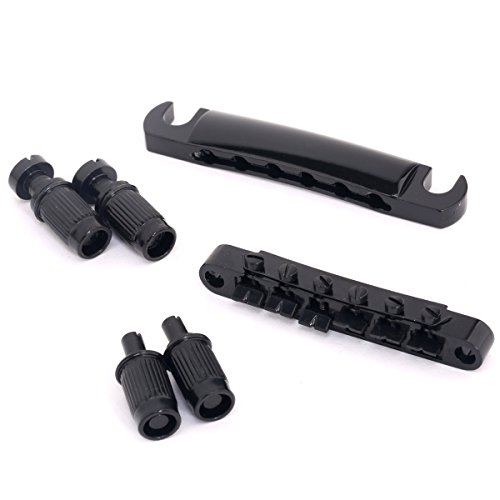
Understand Your Bridge Type and Mounting Pattern
The most important factor in your search is compatibility. Guitar bridges are not universal. They are categorized by their mounting style and the type of instrument they serve. If you are working on a Stratocaster-style guitar, you will likely be looking for a synchronized tremolo system. If you are working on a Telecaster, you need a fixed bridge with asymmetrical or symmetrical saddles. For Les Paul-style guitars, you must differentiate between Tune-O-Matic bridges and stopbar tailpieces. Before purchasing, measure your existing screw spacing and the width of your bridge mounting holes. A bridge that is even a millimeter off in its footprint will require drilling new holes in your guitar body, which can permanently damage the instrument's value.
Material Composition and Tone Impact
The material of your bridge and its individual components—such as saddles, studs, and inserts—will significantly influence your guitar's tonal profile. Harder metals like steel or brass generally offer more brightness and increased sustain, which is ideal for cutting through a mix in rock or metal genres. Conversely, softer alloys or zinc-based components may provide a warmer, more vintage-leaning tone. When browsing musiclily parts, pay close attention to whether the saddles are individual or part of a single block. Individual saddles allow for much more precise intonation adjustments, whereas a single-block design is often more stable for heavy tremolo use but offers less granular control over string height and pitch accuracy.
Intonation and Adjustability
A high-quality bridge must allow for accurate intonation. This means the saddles should be easily adjustable via screw mechanisms to compensate for the string length and tension. If you find that your guitar sounds in tune at the open strings but goes sharp or flat as you move up the neck, your bridge components are likely the culprit. Look for parts that offer smooth, non-binding movement when adjusting the saddle position. Additionally, consider the height adjustability. A bridge that allows for fine-tuning the action (string height) provides much more versatility for players who prefer either a low, fast setup or a higher, bluesy feel.
Hardware Finish and Durability
Beyond functionality, the aesthetic and structural longevity of the part are vital. Bridges are subject to constant tension and environmental changes. Ensure that the finish—whether it be chrome, gold, nickel, or black—is applied through a process that resists peeling and corrosion. If you are replacing parts on a high-end instrument, matching the patina of the existing hardware is essential to maintain a cohesive look. For players in humid or coastal environments, opting for higher-grade plating can prevent the dreaded 'pitting' that can ruin the look and feel of your hardware over time.
Decision Logic: What Should You Choose?
When deciding which part to buy, follow this hierarchy: First, confirm physical compatibility with your body type. Second, prioritize intonation adjustability over pure aesthetics. Third, select a material that complements your desired sound. If you are a beginner performing a simple repair, a standard replacement bridge is sufficient. However, if you are looking to enhance the performance of your instrument, investing in high-quality individual saddles and upgraded mounting studs will yield the most noticeable improvements in sustain and stability.