Determine Your Primary Carry Position
The first decision in selecting a Cya Supply Co. holster is deciding where the tool will live on your body. Most users gravitate toward Appendix Carry (AIWB), which offers the fastest access and keeps the firearm tucked against the body to minimize printing. However, if you prefer a more traditional profile, waistband carry or hip carry might be more suitable. Cya designs often emphasize a low-profile footprint, making them excellent for appendix carry even when wearing lighter clothing. Consider your body type and the waistband of your preferred trousers. A holster designed for appendix carry needs to sit comfortably against the abdominal area without digging in during sitting or bending.
Material Construction and Durability
Holster materials dictate the balance between retention and comfort. Cya Supply Co. typically focuses on high-grade Kydex or similar reinforced polymers. Kydex is the industry standard for a reason: it provides a consistent, 'clicky' retention that tells you exactly when the firearm is seated. It is also incredibly durable and resistant to the elements. When choosing, consider whether you want a rigid holster that offers maximum protection and a definitive draw stroke, or if you are looking for something with a slightly more forgiving edge for long-term comfort. A high-quality polymer holster should maintain its shape even after months of heavy use and environmental exposure.
Retention Levels and Draw Speed
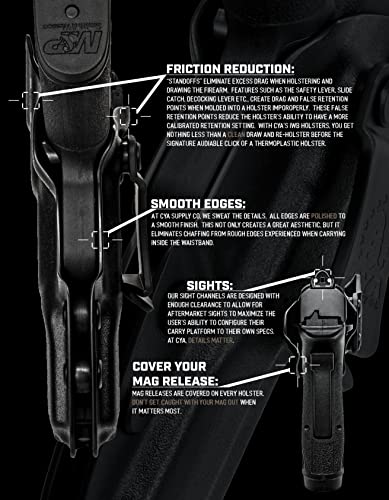
A holster that is too loose is a safety hazard, while one that is too tight becomes a hindrance in a high-stress situation. When evaluating Cya Supply Co. options, look at the adjustable retention features. Many of their designs allow for fine-tuning the tension. You want enough retention to prevent the firearm from falling out during physical activity or while sitting, but you must ensure that the 'break' of the holster is smooth. The goal is a predictable draw where the firearm clears the holster with a single, decisive motion. If you plan on practicing rapid draws, prioritize models that offer precise tension adjustment screws.
Attachment Systems and Modularity
How the holster connects to your belt is just as important as the holster itself. Look for attachment styles that match your existing gear. Some users prefer clip-on systems for quick transitions between different belts, while others prefer loop systems that integrate more seamlessly with heavy-duty tactical belts. Cya Supply Co. often focuses on minimalist attachment solutions that reduce bulk. If you use a specialized EDC belt, ensure the holster's mounting hardware is compatible with the thickness and material of your belt. A holster that wobbles or shifts during movement will compromise both your comfort and your ability to draw effectively.
Concealment and Printing Potential
The ultimate test of a high-quality holster is its ability to remain invisible under a shirt. This is known as 'printing.' To avoid printing, look for holsters with contoured edges and designs that follow the natural curve of your body. Cya Supply Co. excels in creating slim-line profiles that minimize the outward bulge. Consider the 'sweat guard' or the body-side molding of the holster. A well-designed holster will have a flange that sits against your skin to prevent your shirt from catching on the firearm, further enhancing concealment.