Understanding Pressure Ranges and Accuracy Classes
The first step in selecting a gauge is defining your operational window. You must consider not only your normal operating pressure but also the potential for pressure spikes or surges. A common mistake is selecting a gauge that operates too close to its maximum capacity. For longevity and accuracy, it is best practice to keep your working pressure within the middle third of the gauge's total range. Furthermore, pay close attention to the accuracy class. In high-precision chemical processes, you may require a class of 0.5% or 0.1%, whereas general HVAC or water utility monitoring might be perfectly served by a standard 1.0% or 1.6% accuracy rating. Choosing a higher accuracy than necessary increases costs unnecessarily, while choosing too low a grade risks inaccurate readings that can lead to process instability.
Material Compatibility and Environmental Resistance
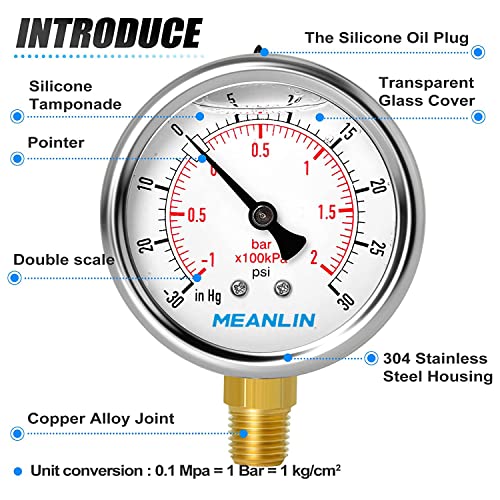
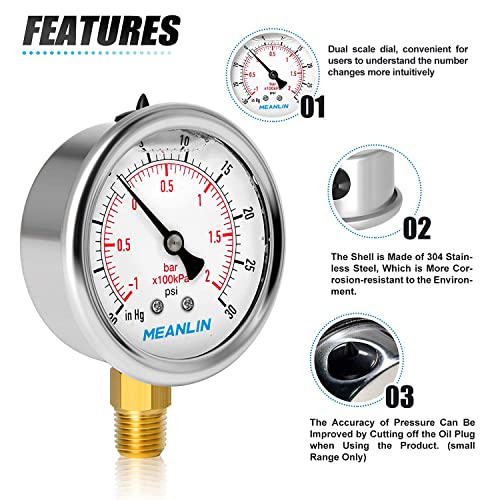
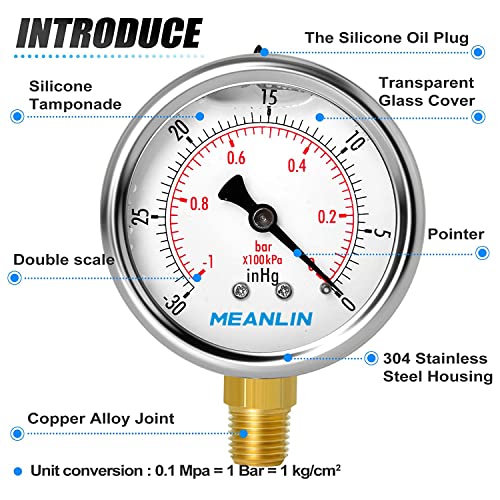
The medium being measured is just as important as the pressure itself. If you are measuring corrosive fluids, such as acids or brine, a standard brass internals setup will fail rapidly. In these instances, you must look for stainless steel wetted parts to prevent internal degradation. Beyond the fluid, consider the external environment. If the gauge is located outdoors or in a high-vibration area, look for models featuring liquid filling (typically glycerin or silicone). Liquid filling serves two purposes: it dampens the movement of the pointer caused by mechanical vibration, and it protects the internal movement from sudden pressure shocks. For extreme temperature fluctuations, ensure the casing material and the filling liquid are rated for the specific thermal range of your installation site.
Dial Size and Readability
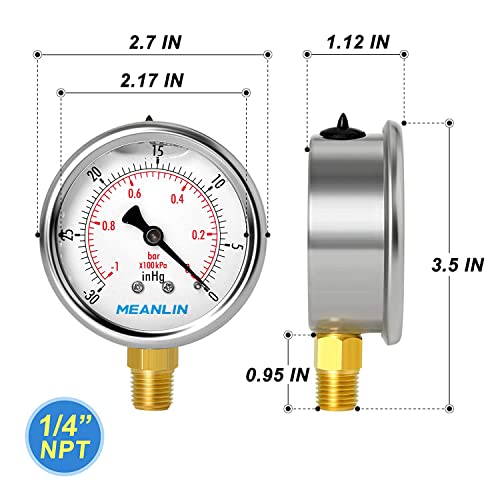
While it may seem like a secondary concern, the physical size of the gauge dial is critical for operational safety and ease of use. In a crowded control panel or a large-scale industrial plant, a small 2.5-inch dial may be difficult for an operator to read from a distance, potentially leading to missed readings during a critical event. A 4-inch or 6-inch dial provides much higher visibility but requires more physical space and a more robust mounting solution. When selecting a size, consider the distance from which the gauge must be read and the ambient lighting conditions of the facility.
Connection Types and Mounting Requirements
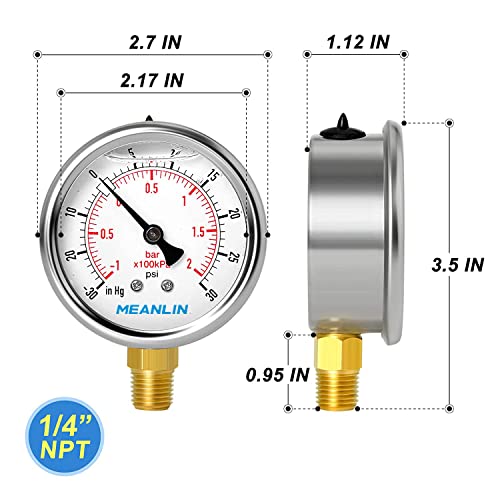
Finally, ensure the process connection matches your existing piping or manifold. Industrial gauges typically utilize threaded connections, such as NPT or BSP, but the size and gender (male or female) must be exact to prevent leaks. Beyond the thread, consider the mounting style. Do you need a bottom connection for vertical installation, or a back connection for mounting on a panel? For high-vibration environments, a radial connection might be preferred to allow the gauge to sit offset from the pipe, reducing the transmission of mechanical stress to the instrument housing.