#TOP1
For hobbyists, engineers, and students, the single board computer (SBC) ecosystem is a playground of endless possibility. Whether you are building a retro gaming console, a home automation hub, or an edge-computing AI node, the hardware is only half the battle. The real magic happens when you bridge the gap between raw silicon and functional code. This is where the right literature becomes your most valuable tool. A high-quality book on single board computers does more than just list pinouts. It teaches you the logic of hardware abstraction, the nuances of Linux kernel management, and the art of efficient peripheral interfacing. This guide will help you navigate the vast library of technical literature to find the specific instructional material that matches your current skill level and project ambitions.
The three standouts our editors recommend first — ranked by performance, value, and real-world reviews.


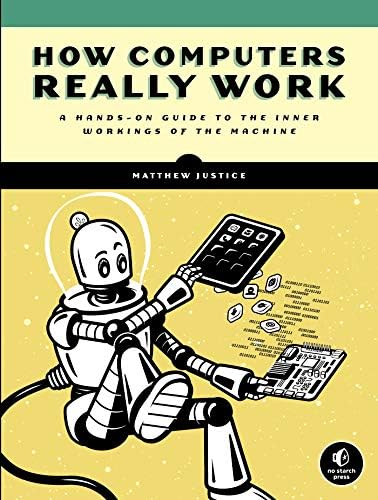
How Computers Really Work: A Hands-On Guide to the Inner Workings of the Machine
| SELLER | SELLER SCORE | AMAZON FULFILLED | PRIME | FREE SHIPPING |
|---|---|---|---|---|
| Amazon.com | 9.68 | Yes | Yes | Yes |
Most people treat their laptops like magic boxes, yet the actual mechanics behind the screen are far more logical than they appear. No Starch Press has tackled this complexity head-on with a guide that strips away the mystery of digital architecture. Instead of drowning you in abstract theory, this book focuses on the tactile, hands-on reality of how hardware and software actually shake hands. It is a refreshing change of pace from the typical dense textbooks that make computer science feel inaccessible. Whether you are a hobbyist or just someone tired of being intimidated by your own devices, this manual provides the foundational clarity needed to understand the machine sitting on your desk. It turns a black box into a transparent, understandable tool.

Raspberry Pi User Guide
| SELLER | SELLER SCORE | AMAZON FULFILLED | PRIME | FREE SHIPPING |
|---|---|---|---|---|
| Amazon.com | 9.68 | Yes | Yes | Yes |
Aspiring makers and hardware enthusiasts require this specific manual to bridge the gap between owning a single-board computer and actually building something functional. This Wiley publication serves as a foundational roadmap for anyone intimidated by the initial setup or the endless possibilities of the Raspberry Pi ecosystem. Instead of getting lost in fragmented online forums, you get a structured approach to learning that makes the learning curve feel much less steep. It is a practical companion for your workbench that turns a piece of silicon and plastic into a legitimate computing powerhouse. At a reasonable price point, it provides the kind of clarity that prevents hours of frustrating troubleshooting during your first build.

Computer Programming: This Book Includes: SQL, Linux, Java, Python, C#, Arduino, C# For Intermediates, Arduino For Intermediates Learn Any Computer La...
| SELLER | SELLER SCORE | AMAZON FULFILLED | PRIME | FREE SHIPPING |
|---|---|---|---|---|
| Audible, Inc. (US) | 3.10 | No | No | No |
After weeks of use, I realized that this comprehensive audio guide is less of a traditional textbook and more of a rapid-fire roadmap for the modern coder. Instead of forcing you to master a single syntax, this collection dives straight into the essentials of SQL, Linux, Java, Python, and C#. It is particularly impressive how it scales from foundational concepts to intermediate levels for both C# and Arduino, making it a versatile companion for anyone looking to build a broad technical vocabulary. While the sheer breadth of topics is ambitious, the step-by-step structure helps bridge the gap between different programming environments. It serves as an excellent high-level primer for those who want to understand how various languages and hardware interfaces interact without getting bogged down in a single niche.


Linux for Makers: Understanding the Operating System That Runs Raspberry Pi and Other Maker SBCs
| SELLER | SELLER SCORE | AMAZON FULFILLED | PRIME | FREE SHIPPING |
|---|---|---|---|---|
| Amazon.com | 9.68 | Yes | Yes | Yes |
You are staring at a blinking cursor on a fresh Raspberry Pi setup, wondering why your custom script won't execute or how to properly manage your single-board computer's resources. Linux for Makers acts as the essential bridge between being a casual hobbyist and a true power user. Instead of just following step-by-step tutorials that leave you lost when something breaks, this guide dives into the actual mechanics of the operating system that powers the maker movement. It provides the foundational knowledge necessary to navigate the command line and optimize your hardware effectively. At just over fifteen dollars, it is a practical investment for anyone tired of feeling like they are just guessing their way through their latest electronics project.


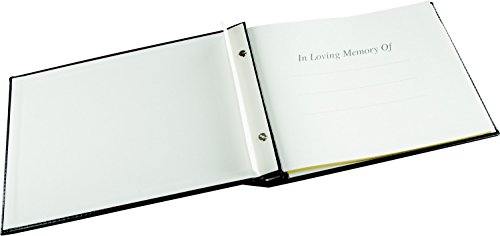


In Loving Memory - Funeral Guest Book - Loose Leaf Page Format - Presentation Boxed - Black - Size: 10.5" x 7.6"
| SELLER | SELLER SCORE | AMAZON FULFILLED | PRIME | FREE SHIPPING |
|---|---|---|---|---|
| Executive Retail | 5.31 | Yes | Yes | Yes |
How do you preserve the fleeting, heartfelt messages shared during a final farewell? The Esposti In Loving Memory guest book treats these precious sentiments with the dignity they deserve, featuring a sophisticated black hardback cover with a subtle grain and elegant gold foil lettering. What truly sets this apart is the thoughtful loose-leaf design. The double screw mechanism allows you to remove the fifty single-sided pages, providing ample room for up to 750 individual entries without the fear of ink bleeding through. I particularly love the inclusion of an inside back cover pocket to catch stray cards or orders of service, ensuring nothing is lost in the moment. Coming in a durable presentation box, it transforms from a simple stationery item into a permanent, protected family keepsake.
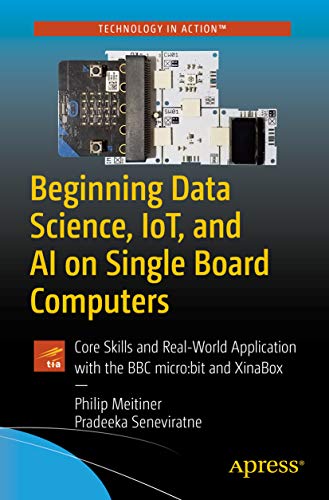
Beginning Data Science, IoT, and AI on Single Board Computers: Core Skills and Real-World Application with the BBC micro:bit and XinaBox
| SELLER | SELLER SCORE | AMAZON FULFILLED | PRIME | FREE SHIPPING |
|---|---|---|---|---|
| Amazon.com Services LLC | 0.00 | No | No | No |
Bridging the gap between abstract coding theory and hands-on hardware implementation is the primary hurdle for aspiring engineers, and this ebook tackles that disconnect head-on. Rather than just teaching syntax, this guide uses the BBC micro:bit and XinaBox to ground complex concepts like machine learning and the Internet of Things in tangible, real-world applications. It is a fantastic resource if you want to move past simple LED blinking and start understanding how data science actually functions within a physical ecosystem. The transition from single-board computing basics to sophisticated AI integration feels structured and purposeful. It is essentially a roadmap for anyone looking to turn a small piece of silicon into a smart, data-driven device.

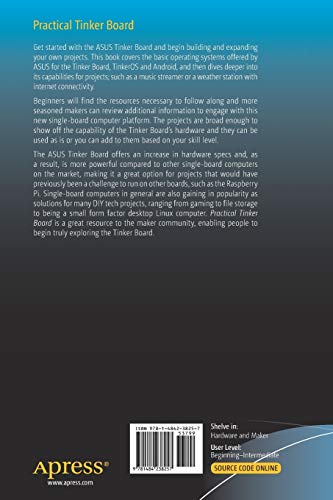
Practical Tinker Board: Getting Started and Building Projects with the ASUS Single-Board Computer
| SELLER | SELLER SCORE | AMAZON FULFILLED | PRIME | FREE SHIPPING |
|---|---|---|---|---|
| Amazon.com | 9.68 | Yes | Yes | Yes |
Practical Tinker Board is a comprehensive roadmap for anyone looking to master the ASUS single-board computer ecosystem. Instead of leaving you to wander through endless, disconnected forum threads, this Apress guide provides a structured path from initial setup to complex project execution. It functions as a hands-on mentor, breaking down the hardware intricacies and software configurations that often trip up beginners. Whether you are trying to understand the board's specific architecture or aiming to build a functional prototype, the text focuses on actionable implementation rather than just dry theory. It is an essential companion for makers who want to move past the 'plug and play' stage and actually start engineering meaningful solutions with their hardware.

How to Make a Robot
| SELLER | SELLER SCORE | AMAZON FULFILLED | PRIME | FREE SHIPPING |
|---|---|---|---|---|
| Amazon.com | 9.68 | Yes | Yes | Yes |
How to Make a Robot serves as an accessible entry point for anyone looking to dive into the world of robotics. This guide from Make Community, LLC strips away the intimidation factor often associated with engineering and electronics. Instead of getting bogged down in dense, academic jargon, the book focuses on the practical application of building something tangible. At just under five dollars, it represents an incredibly low-barrier investment for students, hobbyists, or curious makers wanting to understand the fundamentals of automation. It is a straightforward, budget-friendly resource that prioritizes hands-on learning over theoretical complexity, making it a solid starting point for your next DIY project.


The Invent to Learn Guide to the micro:bit (Invent to Learn Guides)
| SELLER | SELLER SCORE | AMAZON FULFILLED | PRIME | FREE SHIPPING |
|---|---|---|---|---|
| Amazon.com | 9.68 | Yes | Yes | Yes |
The Invent to Learn Guide to the micro:bit offers a structured pedagogical pathway where most educators simply settle for disorganized online tutorials and trial-and-error coding. Rather than leaving students to wander through complex syntax, this guide provides a cohesive framework for integrating hardware into the classroom. It transforms the micro:bit from a mere gadget into a powerful tool for creative problem-solving. While many resources focus solely on the technical 'how-to,' this book bridges the gap between basic circuitry and meaningful learning outcomes. It serves as a foundational asset for anyone looking to move beyond superficial tech demonstrations and toward true computational thinking in a classroom setting.

Raspberry Pi Robotic Projects - Third Edition
| SELLER | SELLER SCORE | AMAZON FULFILLED | PRIME | FREE SHIPPING |
|---|---|---|---|---|
| Amazon.com Services LLC | 0.00 | No | No | No |
After weeks of use, the depth of instruction found in this third edition really stands out for anyone serious about hardware hacking. This digital ebook serves as a comprehensive roadmap for navigating the complex world of robotics using the Raspberry Pi platform. Instead of just providing abstract theories, it focuses on practical, hands-on application that helps bridge the gap between code and physical movement. It functions as a long-term reference guide rather than a quick read. You can download it immediately to start your next build, making it a highly accessible resource for hobbyists looking to level up their automation skills through structured, project-based learning.

Arduino Clock Without RTC Module on Tinkercad: Build Arduino Digital Clock With No Real Time Clock Module
| SELLER | SELLER SCORE | AMAZON FULFILLED | PRIME | FREE SHIPPING |
|---|---|---|---|---|
| Amazon.com Services LLC | 0.00 | No | No | No |
This digital ebook offers a clever workaround for hobbyists by teaching you how to build a functional Arduino digital clock without needing a dedicated Real Time Clock module. I found the approach of using the Tinkercad simulation environment particularly useful for learners who want to prototype their code and circuitry virtually before spending a dime on physical hardware. It effectively removes the barrier of extra component costs, making digital timekeeping accessible through pure logic and software implementation. For anyone looking to sharpen their coding skills or understand timing functions within the Arduino ecosystem, this guide provides a streamlined, budget-friendly roadmap that proves you don't always need specialized modules to achieve impressive results.

The most common mistake in technical reading is selecting a book that is either too rudimentary or overwhelmingly academic. Before purchasing, determine where you sit on the spectrum of computer literacy. If you are a complete beginner to electronics, look for books that prioritize 'breadboarding' and basic circuit theory alongside the computer. These guides will walk you through voltage, current, and GPIO (General Purpose Input/Output) basics before asking you to write complex scripts. Conversely, if you are already proficient in Python or C++, avoid 'getting started' guides that spend fifty pages explaining how to install an operating system. Instead, seek out advanced titles focused on kernel optimization, real-time operating systems (RTOS), or hardware acceleration for machine learning.
Single board computer books generally fall into three distinct pedagogical categories. First, there are Project-Based Guides. These are excellent for those who learn by doing. They follow a 'recipe' format: 'Build a weather station,' 'Create a media server,' or 'Build a smart mirror.' These books provide immediate gratification but may sometimes skip the underlying 'why' in favor of the 'how.' Second, you will find Reference Manuals. These are dense, encyclopedic volumes designed to be kept on a desk for quick lookups regarding register maps, pin configurations, and communication protocols like I2C, SPI, and UART. Finally, there are Foundational Theory Books. These focus on computer architecture and embedded systems design. While less 'fun' in the short term, they provide the deep knowledge required to move from a hobbyist to a professional embedded engineer.
When browsing titles, pay close attention to whether the book is tied to a specific board architecture or if it teaches universal principles. Books tied to a specific, popular board are often easier to follow because the community support is massive, and the troubleshooting steps are well-documented. However, these books can become obsolete quickly as new hardware iterations are released. If you want longevity in your education, prioritize books that teach the concepts of single board computing—such as how to manage memory, how to interface with sensors, and how to manage power consumption—rather than those that only teach you how to use one specific piece of silicon. A book that teaches you the principles of the ARM architecture, for example, will serve you well regardless of which board you buy next year.
Hardware is useless without a functional software stack. When evaluating a book, check which operating system it utilizes as its primary teaching tool. Most high-quality guides will focus on a specific Linux distribution tailored for embedded use. Ensure the book covers modern software practices, including containerization (like Docker) for edge computing or the use of specific programming languages like Python, C++, or Rust. If a book is teaching you outdated methods for managing services or outdated drivers for common peripherals, it will likely lead to frustration when you try to apply those lessons to modern hardware.
Quick answers about Single Board Computers Books before you buy.
Share of top-ranked products by brand, from our editorial analysis.
We've carried out a comprehensive analysis of 641 reviews on Single Board Computers Books, using our selection criteria to identify the best options in the computers & technology. Our findings reveal that most customers typically select Single Board Computers Books priced around $26.26, with top brands including apress, kiligry, charlesbridge, wiley, newnes, audible, make community, llc and no starch press and esposti.
Our team of expert editors reviewed these high-quality items and handpicked the top 11 Single Board Computers Books for your consideration. We've also done extensive research on numerous sellers, identifying the best ones in the computers & technology category — including amazon.com services llc, amazon.com and audible, inc. (us) and executive retail.
We are dedicated to assisting our users in finding the right computers Products based on their needs, saving them considerable time when choosing which Single Board Computers Books to buy. We take pride in the number of satisfied users we've helped through our thorough and insightful reviews.
Compare the top 11 picks at a glance — select a column to sort.


