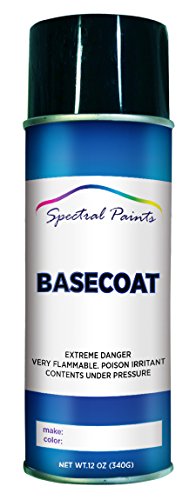
Understanding Pigment Density and Translucency
The defining characteristic of a spectral paint is how the pigment interacts with light. Unlike opaque paints that sit on the surface to hide what is underneath, spectral sprays often utilize micro-pigments designed to allow light to pass through the layer, hit the primer, and bounce back. When shopping, you must decide if you need a 'tint' or a 'cover.' A tint is highly translucent and is best used over a metallic base to create a color-shift effect. If you are looking for a high-coverage spray that still maintains a spectral shimmer, look for formulations labeled as 'semi-translucent.' Always test the opacity on a scrap piece of material to ensure you don't accidentally obscure the fine details of your model.
Base Layer Compatibility and Surface Tension
Spectral sprays are notoriously finicky regarding their substrate. Because these paints often rely on light refraction, the texture of the surface beneath them is critical. A matte primer will absorb light and kill the spectral effect, while a gloss primer will enhance it. When selecting a spray, check the compatibility notes: some spectral formulas are optimized specifically for metallic bases, while others are designed to work over black or white. Furthermore, consider the 'flow' of the spray. High-quality spectral aerosols should have a fine atomization to prevent 'pooling,' which can cause the spectral pigments to clump and create uneven, blotchy reflections.
Color Shift and Iridescence Profiles
Not all spectral paints are created equal. Some offer a 'linear' shift, where the color changes predictably based on the angle of view (e.g., green to blue). Others offer a 'multi-chromatic' effect, where a single spray might catch hints of violet, gold, and teal simultaneously. When making your decision, define your aesthetic goal. If you want a subtle, realistic sheen, opt for a single-shift pigment. If you are working on sci-fi or fantasy pieces that require an otherworldly, magical glow, look for multi-chromatic or interference-style sprays. Be aware that the intensity of the shift is often highly dependent on the color of the primer used underneath.
Drying Time and Layering Capabilities
Because spectral paints are often applied in thin, translucent layers to build depth, the drying time is a crucial decision factor. If a spray dries too quickly, you won't be able to blend colors effectively, leading to visible 'lines' where one color meets another. If it dries too slowly, you risk dust contamination or 'sagging' on vertical surfaces. Look for professional-grade aerosols that specify a 'fast-dry' or 'quick-set' formula if you plan on heavy layering. Additionally, ensure the paint is chemically compatible with your previous layers. You do not want a spectral topcoat to react with your acrylic primer and cause the finish to bubble or peel.
Application Environment and Safety
Finally, remember that spectral pigments are often composed of specialized metallic or pearlescent particles that require a controlled environment. To get the best results, avoid spraying in high-humidity areas, which can cause 'blushing' (a cloudy white haze) in the finish. Always ensure you have adequate ventilation, as the high-solvent content required to keep spectral pigments in suspension can produce strong fumes. A good spectral spray should be used in a well-ventilated workspace with a consistent temperature to ensure the most even particle distribution.