Understanding Welding Processes: MIG, TIG, and Stick
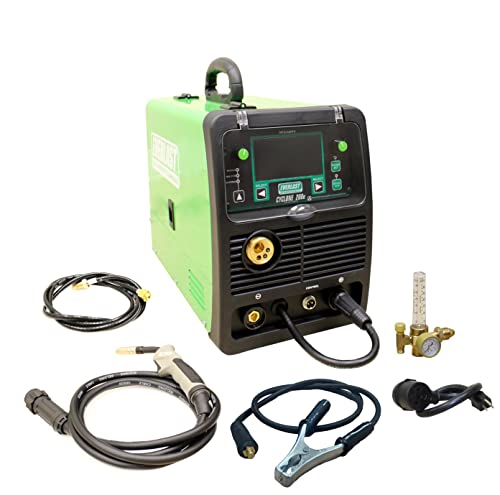
The first decision in selecting welding equipment is determining which process aligns with your primary materials. MIG (Metal Inert Gas) welding is the gold standard for speed and ease of use, making it ideal for thick steel fabrication and high-production environments. If your work involves intricate, high-precision tasks—such as working with aluminum or thin-gauge stainless steel—a TIG (Tungsten Inert Gas) machine is essential for the clean, aesthetic beads it produces. For heavy structural work or outdoor repairs where wind might interfere with shielding gas, a Stick (SMAW) welder provides the ruggedness required to penetrate thick plates. Many modern units now offer multi-process capabilities, allowing you to switch between MIG, TIG, and Stick with a single machine, providing maximum versatility for a growing shop.
Duty Cycle and Thermal Management
One of the most overlooked aspects of welding equipment is the duty cycle. This metric represents the percentage of a ten-minute period that a machine can operate at a given amperage without overheating. For example, a 60% duty cycle at 200 amps means the machine can weld for six minutes before requiring a cooling period. If you are performing continuous, heavy-duty fabrication, a higher duty cycle is non-negotiable. Low-duty cycle machines are suitable for intermittent tasks, but they will stall during demanding projects, leading to frustration and potential damage to the internal components. When reviewing specifications, always look at the duty cycle at the specific amperage you intend to use most frequently.
In Canada, power availability can vary significantly between residential garages and industrial sites. You must determine if your workspace supports single-phase residential power or if you require three-phase industrial power. Many high-performance welders are designed to be dual-voltage, allowing you to plug into standard household outlets for lighter tasks or higher-voltage circuits for heavy-duty welding. Furthermore, consider the weight and form factor. If you are frequently moving your equipment between job sites or working in tight automotive chassis, an inverter-based machine is preferable. Inverter technology allows for much lighter, more compact units that do not sacrifice the precision or arc stability found in heavier, transformer-based machines.
Gas Compatibility and Shielding Requirements
The quality of your weld is heavily dependent on how well the arc is shielded from atmospheric contamination. When selecting your equipment, ensure the machine is compatible with the shielding gases required for your specific metal. MIG welding typically requires Argon/CO2 mixes or pure CO2, while TIG welding almost exclusively utilizes pure Argon. Ensure your equipment includes high-quality regulators and gas solenoids that provide a steady, consistent flow. Inconsistent gas delivery can lead to porosity and weak weld joints, undermining even the most expensive machine. High-quality equipment will feature precise gas control mechanisms to ensure your beads remain consistent throughout the entire project.