How to Choose a Microwave: Size, Power, and Features
Here's the short version. Match interior capacity to your household size, match wattage to how you actually cook, and only pay for features that solve a real problem you have. Get those three right and the specific brand barely matters. Get any one wrong, and you're looking at a return trip or a microwave that quietly annoys you for the next five years.
Most buying guides list four microwave types and call it done. This one gives you actual numbers, exact wattage ranges, exact cu ft per household size, exact clearance measurements, so you're evaluating a specific listing instead of guessing at a category.
What Type of Microwave Do You Actually Need? Start Here
There are four physical types, and picking the wrong one isn't a small mistake. It's a different purchase entirely.
|
Type |
Best for |
Installation needed |
Counter space impact |
|
Countertop |
Renters, apartments, anyone without existing OTR wiring |
None, just plug it in |
Takes up real counter space |
|
Over-the-range (OTR) |
Homeowners replacing a range hood |
Cabinet mount plus venting, often an electrician |
Frees counter space, adds cooking-area light and fan |
|
Built-in with trim kit |
Renovations, custom cabinetry |
Dedicated trim kit, not a countertop unit shoved into a gap |
None, fully integrated |
|
Drawer |
Families wanting counter space back without OTR complexity |
Cabinet or island cutout |
None, tucks below counter height |
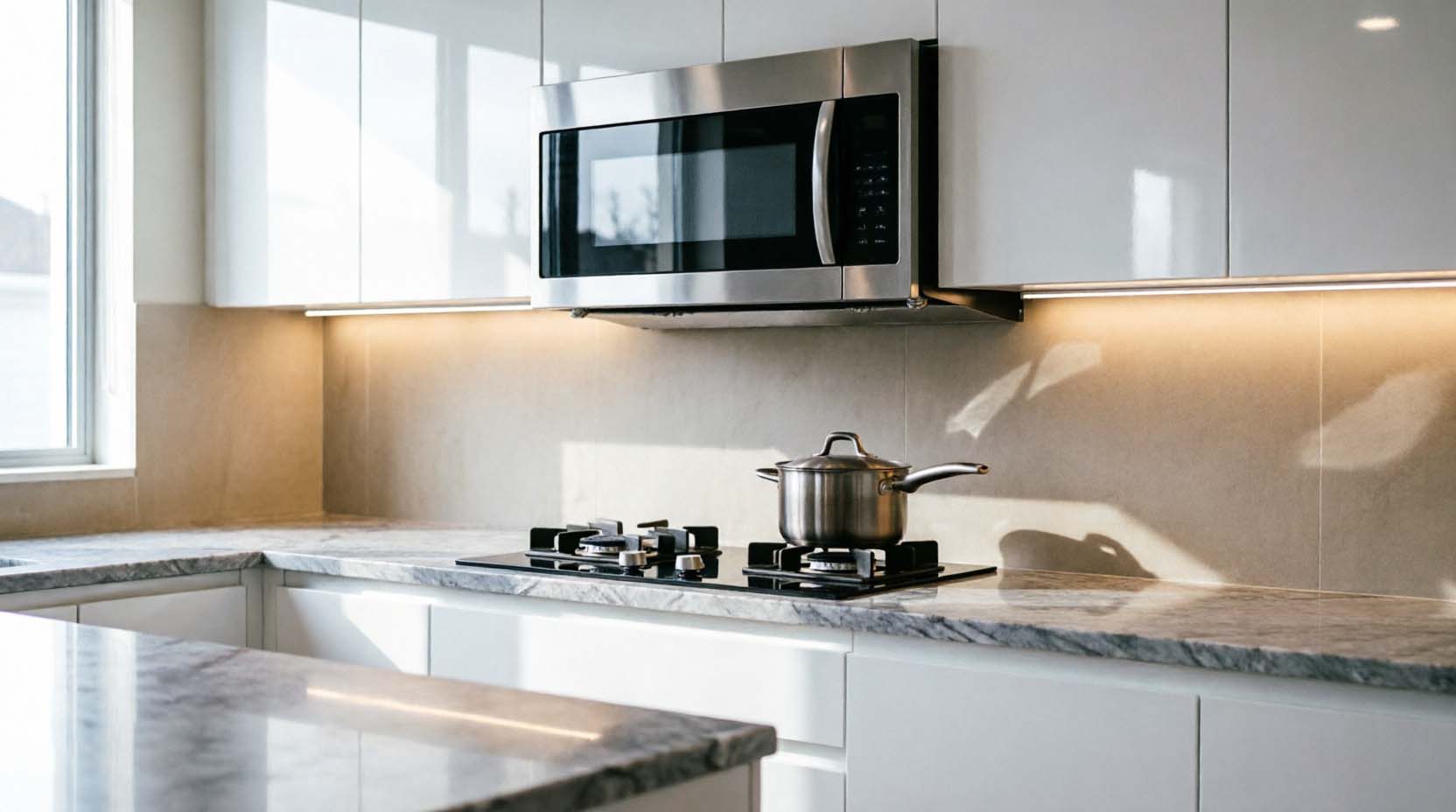
OTR units mount to a standard 30-inch cabinet width and need real clearance above the cooktop. Manufacturer specs commonly call for 13 to 18 inches between the cooktop and the microwave's bottom, though some professional installers recommend 20 to 24 inches for practical headroom with tall pots. Mounting height typically lands around 66 inches from the floor. None of this is a DIY weekend project for most people, and skipping the clearance check is exactly how people end up with a unit that runs hot or blocks pot lids from opening fully.
A renter in a small apartment is looking at countertop, full stop. A homeowner renovating a kitchen might replace an existing range hood with an OTR unit. A family wanting the counter back without an electrician visit often lands on a drawer model instead.
Microwave Size Guide: Interior Capacity vs. Exterior Footprint
Interior Capacity: What Cu. Ft. Really Means for Your Meals
Capacity isn't about how big the microwave looks sitting on your counter. It's about what actually fits inside: a dinner plate, a tall mug, a casserole dish.
|
Household size |
Interior capacity |
What it fits |
|
Single person, dorm, office |
0.5 to 0.7 cu ft |
Small plates, mugs, basic reheating |
|
Couple or small household |
0.9 to 1.1 cu ft |
Standard 10-inch dinner plate |
|
Family of 4 or more |
1.2 to 1.4 cu ft |
Casserole dishes, large mugs |
|
Heavy use, OTR replacement |
1.5 to 2.2 cu ft |
Batch reheating, large cookware |
A microwave rated for a family often looks barely bigger on the outside than a compact model. The real difference is internal cavity shape, so check the cu ft number directly rather than eyeballing the box size in a store aisle.
Exterior Footprint: The Measurement Mistake Buyers Always Make
Measure the actual cabinet opening or counter space, including clearance, not just the width you think looks about right. A countertop unit needs roughly 3 inches of clearance around the vents, usually the top and sides, for safe airflow. Built-ins and OTR units have to match cutout specs exactly, with no adjustable margin the way a countertop placement allows.
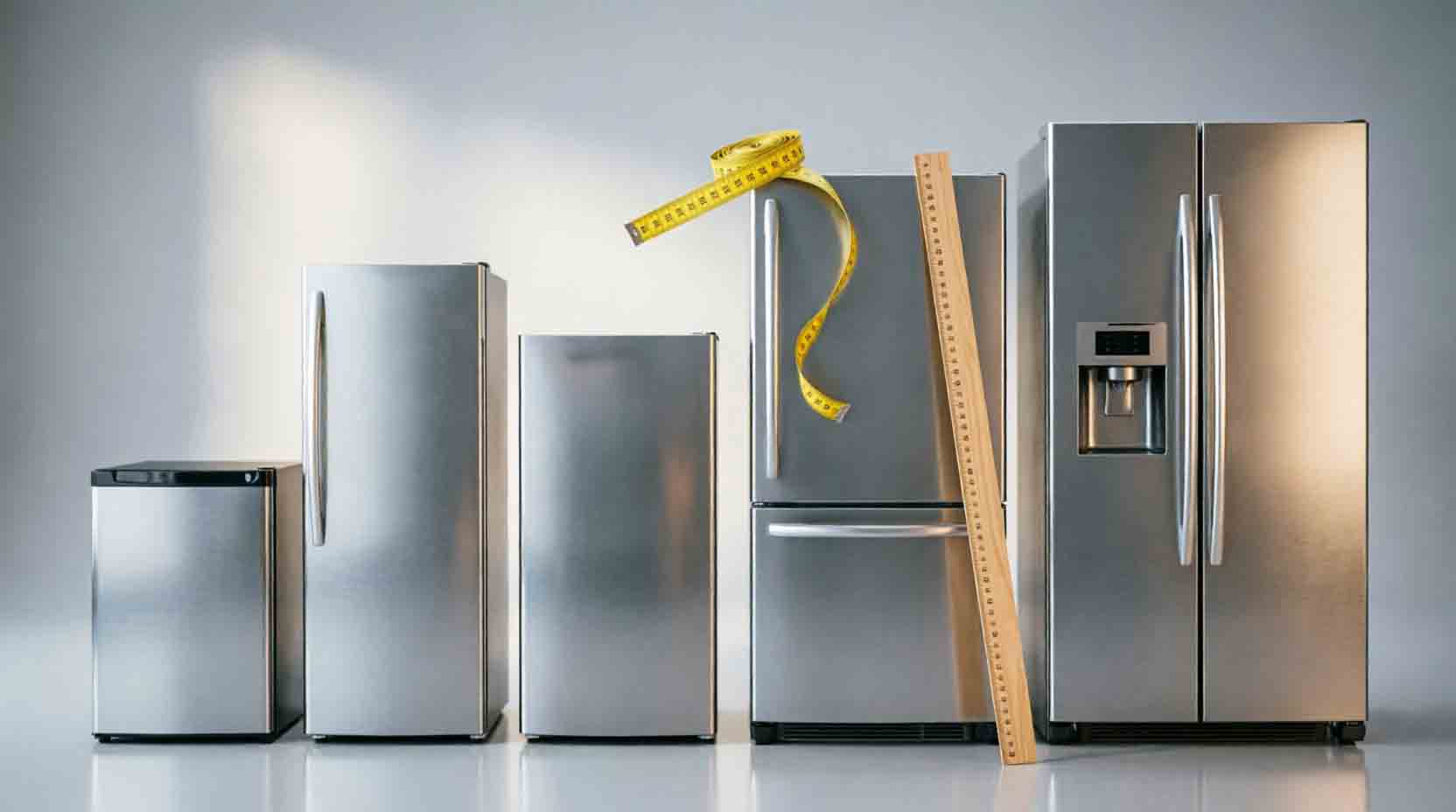
Measure twice. Width times depth times height, plus 3 inches of clearance, before you buy. A unit marketed as "compact" can still be too deep for a shallow apartment counter. Depth is the dimension people forget to check.
Microwave Wattage Guide: How Much Power Do You Need?
Wattage determines cooking speed and evenness, not just how hot the microwave gets. Higher wattage generally means faster, more even cooking, especially for denser foods like a frozen lasagna or a thick cut of meat.
|
Wattage |
What it's good for |
|
600 to 800W |
Light reheating only, beverages and small plates, uneven results on denser food |
|
900 to 1000W |
Solid all-purpose use, reheats and cooks most meals evenly |
|
1000 to 1200W |
Fast, even cooking for families, better for frozen meals and casseroles |
|
1200W+ |
Commercial-grade speed, mostly found in premium or larger units |
A 700W microwave will take noticeably longer and cook less evenly on a frozen lasagna than a 1000W unit will. Wattage isn't a nice-to-have spec you can ignore. It changes your actual cooking experience daily.
If you mostly reheat coffee and leftovers, 700 to 900W is genuinely fine. If you cook full meals or frozen dinners regularly, aim for 1000W or more.
Must-Know Microwave Features (and Which Ones Are Worth Paying For)
Sensor Cooking
Uses humidity and steam sensors to auto-adjust cook time instead of relying on a fixed timer guess. Worth it if you reheat a wide variety of foods often, since it cuts down on the overcooked edges, cold-center problem a flat timer can't account for.
Inverter Technology
This is about how power gets delivered, not how much power exists. A standard microwave pulses at full power, then cuts off repeatedly. An inverter model delivers a continuous, lower-intensity stream instead. That difference shows up clearly in tasks like defrosting meat evenly or melting chocolate without it seizing into a grainy mess. It's not a wattage upgrade. It's a delivery-method upgrade.
Convection or Air Fry Combo
Adds a real oven-style heating element and fan, genuinely useful if you want to roast or crisp food. Skip it if you already own a toaster oven or air fryer. You're paying extra and losing counter depth for capability you already have sitting on the counter next to it.
Preset Buttons, Child Lock, and Turntable On/Off
Presets are convenience, not necessity. Child lock matters directly if kids are in the house. A turntable on/off switch matters more than people expect, since it lets an oddly shaped dish sit flat instead of spinning into the cavity wall.
|
Feature |
What it does |
Worth the extra cost? |
Best for |
|
Sensor cooking |
Auto-adjusts time by humidity/steam |
Yes, for varied reheating |
Households cooking diverse leftovers |
|
Inverter technology |
Continuous lower-power delivery |
Yes, for defrosting and delicate cooking |
Frequent meat defrosting, delicate reheating |
|
Convection/air fry |
Adds oven-style heat and fan |
Only if you lack an oven alternative |
Small kitchens without a second appliance |
|
Wi-Fi connectivity |
Remote start, app control |
Rarely |
Most buyers stop using the app within weeks |
Countertop vs. Over-the-Range vs. Built-In: Which Fits Your Kitchen?
|
Type |
Installation difficulty (1-5) |
Venting |
Renovation impact |
|
Countertop |
1, plug-and-go |
None required |
None |
|
Over-the-range |
4, often needs an electrician |
Vents outside or recirculates through a charcoal filter |
Replaces range hood entirely |
|
Built-in |
4 to 5, needs a trim kit |
Depends on model |
Requires cabinetry planning |
|
Drawer |
3, needs a cutout |
Minimal |
Requires cabinet or island modification |
OTR is not a simple swap. Anyone without existing OTR wiring and venting infrastructure is looking at a contractor or electrician job, not a weekend plug-and-play purchase. Renters should generally avoid this category entirely, since it's rarely something a landlord will sign off on or that makes sense to install in a space you don't own.
The SPF Method
Three questions, tied directly to what actually determines whether you'll be happy with this purchase in a year.
S, Space. Measure your exact spot: width times depth times height, plus 3 inches of clearance. Match that to interior cu ft based on household size, not the box size on the shelf.
P, Power. Match wattage to how you actually cook. 900W for reheating-focused households. 1000W or more for families cooking full meals or frozen dinners regularly.
F, Features. Only pay for features that solve a problem you genuinely have. Inverter for frequent defrosting. Convection only if you don't already own an oven alternative. Skip the rest, including most Wi-Fi connectivity.
If a microwave fails any one of these three checks for your situation, it's the wrong microwave, regardless of the brand name or the review count.
Who Should Skip Certain Features
- Skip a convection/air-fry combo if you already own a toaster oven or air fryer. You're paying for redundant capability and losing counter space for no real gain.
- Skip chasing 1200W-plus "commercial-grade" power if your household mainly reheats leftovers and coffee. It's overkill for casual use, and the price premium doesn't match the actual benefit you'll notice.
- Skip inverter technology if you rarely defrost meat or cook delicate items. It's a genuine upgrade for specific cooking styles, not a universal must-have.
- Skip Wi-Fi-connected models unless you have a specific reason to want remote start. Most buyers open the app once during setup and never again.
- Skip OTR entirely if you're renting or don't have existing venting infrastructure. It's a contractor job disguised as an appliance purchase, and most landlords won't approve the modification anyway.
Final Word
Space, power, features, in that order. Measure your actual spot before anything else, match wattage to your real cooking habits, and only pay for features solving a problem you actually have.
Run any microwave you're considering through the SPF Method before adding it to your cart. If it fails on space, power, or an honest features check, it's the wrong one for you.
Browse PickSmartly's Small Kitchen Appliances category to apply this framework to specific in-stock options.
For more on how PickSmartly evaluates and scores individual products, see our scoring methodology page.
Frequently Asked Questions
Is a higher wattage microwave always better?
No. Past roughly 1200W, home cooking sees diminishing returns for the price. Match wattage to how you actually cook rather than chasing the highest number on the shelf.
Can I replace an over-the-range microwave with a countertop model?
Only if you don't need it to handle the venting and range-hood function of the OTR unit it's replacing. A countertop model won't vent cooking smoke or steam from the range below it.
Do I really need an inverter microwave?
Depends on your cooking habits. It's worth it for frequent defrosting or delicate reheating tasks, and skippable if you mainly do basic reheating with no real defrosting needs.
What's the difference between microwave wattage and power levels?
Wattage is the microwave's maximum output, a fixed spec of the unit itself. Power levels are the 1 to 10 dial setting that reduces output below that maximum for a specific task, like defrosting. They're related but not the same number.
How much clearance does a microwave need for ventilation?
A countertop unit generally needs about 3 inches of clearance around the vents. An OTR unit needs 13 to 18 inches between the cooktop and its underside at minimum, with some installers recommending 20 to 24 inches for comfortable use with tall cookware.
Is a convection microwave worth it if I already have an oven?
Usually not, if the oven already covers your roasting and crisping needs. The combo mainly earns its keep in kitchens without a second full-size cooking appliance.
Is a 700W microwave too weak for regular use?
Not for light reheating, coffee, small plates, basic leftovers. It becomes a real limitation for frozen meals, dense casseroles, or anything needing even heat throughout, where the extra time and uneven results genuinely show up in the final result.
Does a bigger microwave always mean more power?
No. Exterior size and interior capacity relate to wattage only loosely. A compact 0.9 cu ft model can carry the same 1000W motor as a larger 1.5 cu ft unit, so check the wattage spec directly rather than assuming size predicts power.